
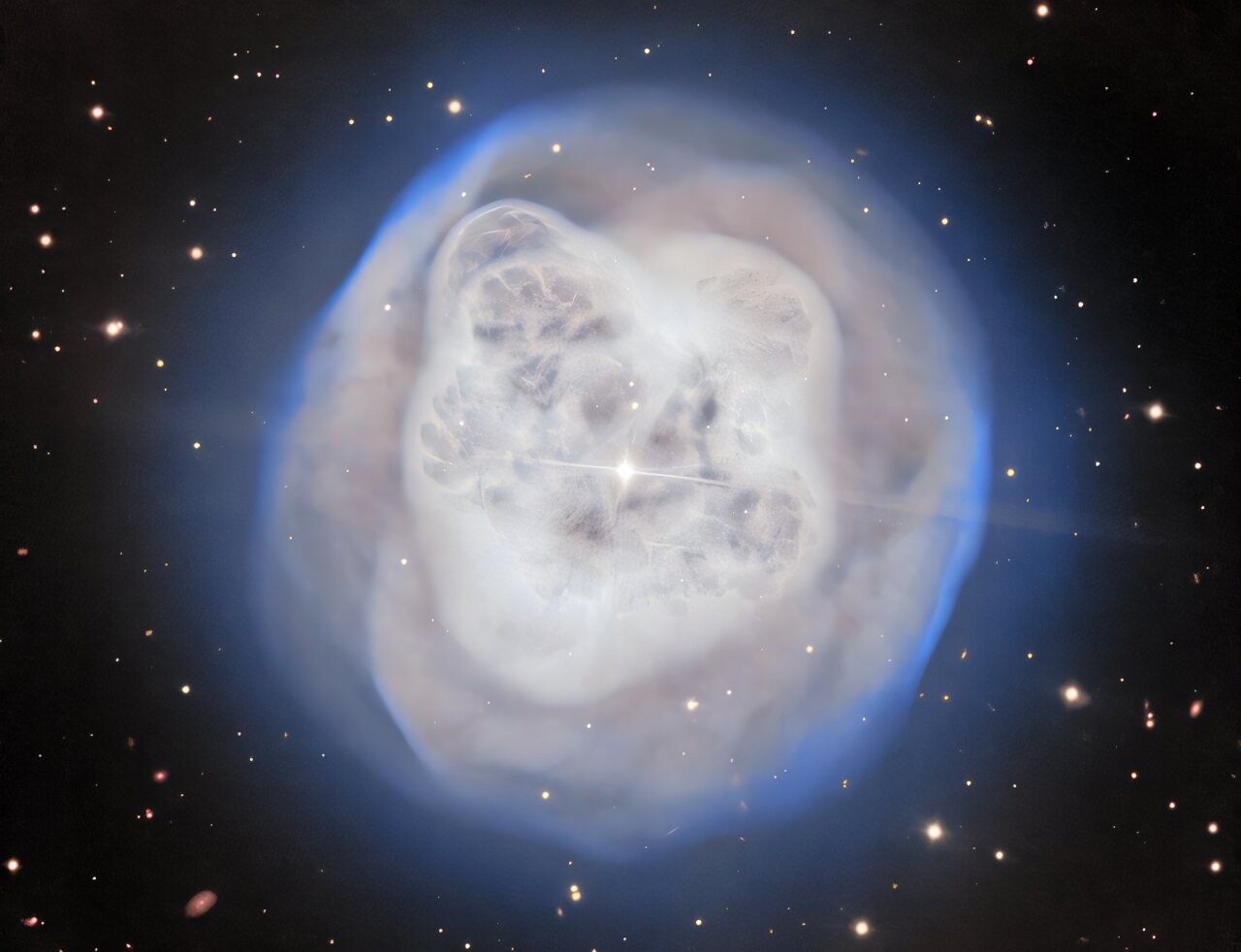
At the summit of Maunakea in Hawaii, the 8.1-meter Gemini North telescope has captured stunning images of the Crystal Ball Nebula, also known as NGC 1514. This fascinating nebula, with its mesmerizing glow of gas, provides clues about the death of a star 1,500 years ago.
Its asymmetrical shape is influenced by the complex interaction of two stars in a binary orbit at its center, shaping how gases are dispersed into space. This not only offers astronomers a chance to study the past but also provides a detailed view of the processes involved in the formation of planetary nebulae, which are essential for understanding stellar evolution.
But what is the significance of this nebula for astronomy enthusiasts and astrophotographers? The Crystal Ball Nebula is not only a splendid object to observe but also a window into the science of star evolution. Recent studies suggest that planetary nebulae like NGC 1514 play a vital role in the recycling of material within galaxies. Through careful photometry and astrophotography, enthusiasts can observe the vibrant hues of ionized gas, providing a spectrum of colors that delights the eyes and stimulates the imagination.
Thus, gazing into the Crystal Ball Nebula is not just a journey into cosmic history, but an invitation to explore the future of our universe. With advanced instruments, modern astronomers can interpret the visual signals emitted by dead stars like an open book, where each page represents billions of years of evolution and change in the cosmos.