
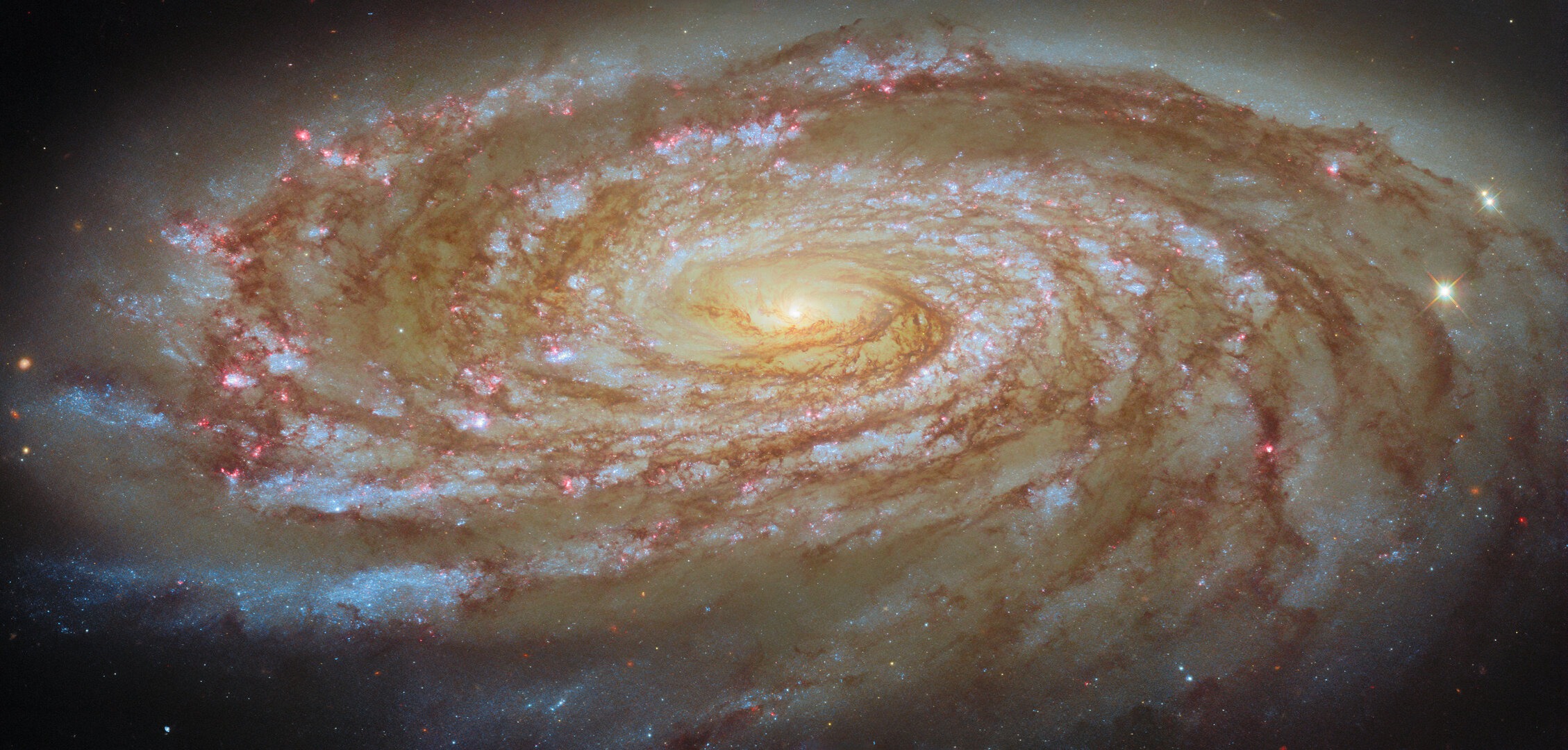
Deep within the vast cosmos, galaxy clusters stand as some of the universe`s most massive and captivating structures. These collections of galaxies, bound together by gravity, offer a unique window into the processes shaping matter on the grandest scales and the evolution of the universe itself.
Recently, NASA and the European Space Agency (ESA) have captured a stunning and detailed image titled `Journey to the centre of a galaxy cluster,` providing a breathtaking view of these colossal cosmic systems. The image reveals the intricate complexity and stunning beauty of galaxy clusters and highlights the interactions between cluster galaxies and the intergalactic medium surrounding them.
A galaxy cluster is essentially a gravitationally bound collection of hundreds to thousands of galaxies. Our own Milky Way is part of a smaller grouping known as the Local Group, which includes the Andromeda galaxy and several dozen smaller galaxies. Yet some clusters loom far larger, containing numerous galaxies whose combined mass influences large-scale cosmic structure and dynamics. These giant clusters serve as natural laboratories for studying dark matter, dark energy, and galaxy formation and evolution.
Rather than being a simple photograph, the ESA`s image is a composite created from multi-wavelength data, gathered across X-rays, visible light, and infrared wavelengths by a fleet of powerful space telescopes. This approach reveals features that are invisible in ordinary light alone, such as vast clouds of hot plasma — intergalactic gas heated to millions of degrees — that spans the space between galaxies within clusters.
At the cluster`s center, immense gravitational forces often cause galaxies to collide and merge. These cataclysmic events significantly reshape the involved galaxies, triggering bursts of star formation or, conversely, suppressing it by stripping galaxies` gas needed to create new stars. By probing such centers, astronomers gain crucial insights into galactic dynamics and the role of unseen dark matter, which shapes the gravitational landscape without emitting light but profoundly influences galaxy motions and interactions.
Moreover, the cluster`s massive gravity can bend light from faraway background galaxies in a phenomenon called gravitational lensing. This effect allows scientists to map the cluster`s mass distribution, especially the elusive dark matter, which cannot be observed directly.
Modern astronomy and astrophotography harness these images not only to tell gripping cosmic stories but also as essential tools to understand the fundamental laws governing the universe. `Journey to the centre of a galaxy cluster` serves as a visual beacon inspiring astronomy enthusiasts, connecting them deeply with the cosmos through vivid imagery.
As technology continues to advance, humanity will delve ever deeper into the universe`s intricate structures, uncovering the mysteries of galaxy formation along with the enigmatic nature of dark matter and dark energy. ESA`s imagery marks significant milestones in this grand cosmic adventure, offering fresh perspectives and vital clues in our quest to comprehend an ever-expanding universe.
Source: ESA