
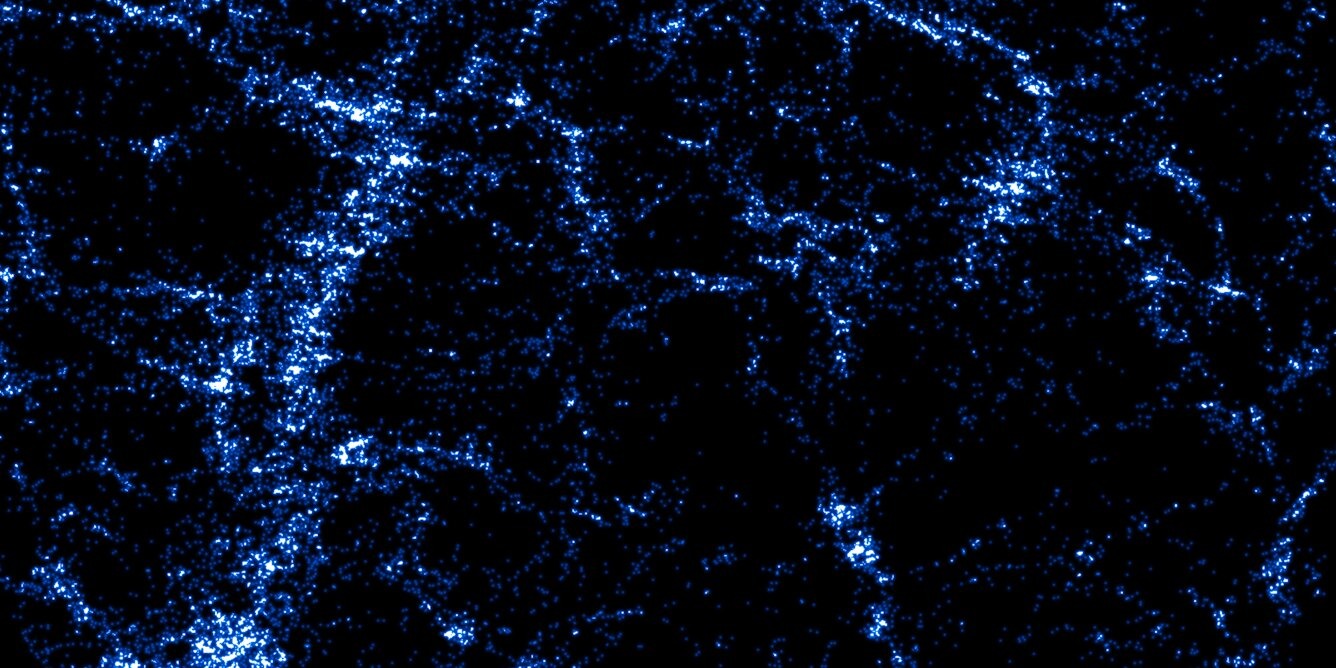
Modern cosmology rests on a foundational and elegant assumption, known as the cosmological principle: if we look at the universe on sufficiently large scales, matter should be distributed evenly, without preferred directions or major clusters skewing the picture. This hypothesis simplifies our understanding of the universe`s structure and forms the basis for most current models about the cosmos` evolution and composition.
However, recent studies have spotlighted a potential fracture in this universal unity. Astrophysics researchers have uncovered evidence suggesting that the universe is not as uniform as previously believed. Analyses of cosmic observation data reveal a matter distribution that challenges the idea that the universe behaves homogeneously over vast cosmological distances. On the contrary, there are complexities in its components and structure, indicating the cosmological principle might require fundamental rethinking.
Scientific background
The cosmological principle, formulated in the first half of the 20th century, states that on large scales the universe is isotropic and homogeneous. Under this paradigm, the universe has no visible center or edge, and observers, regardless of their location, should essentially see the same universe. This principle has been a cornerstone for building modern cosmological models, including the Lambda-CDM model that describes a universe dominated by dark matter and dark energy.
Nevertheless, new research indicates that matter distribution reveals anomalies and inhomogeneities on large scales – cosmic structures might be more complex than anticipated. This finding could affect our understanding of the universe`s expansion and how primordial elements aggregated to form galaxies, galaxy clusters, and other known structures.
Implications for astronomy and astrophotography enthusiasts
For astronomy and astrophotography enthusiasts, these discoveries open a fascinating new framework for observation and interpretation. If the universe is less uniform, the images collected by our telescopes could contain unexplored clues about cosmic structure and large-scale matter evolution.
From photographing star fields to searching for galaxy clusters or observing fluctuations in the cosmic microwave background radiation, these anomalies add extra motivation to explore the sky with even more passion and attention. It is not just about capturing the universe’s beauty but also about contributing to its profound understanding, as every picture and every observation may represent a small yet essential step toward unraveling the mysteries tied to matter distribution across the cosmos.
What lies ahead in cosmic research
The future of cosmological research will need to encompass reassessing how current models describe the universal structure. We must continue exploring using advanced telescopes, satellites, and networks of radio telescopes, alongside sophisticated computer simulations to test new hypotheses that challenge the old uniformity concept.
Furthermore, these findings hint at the possibility of a universe whose appearance varies more with direction and region than previously thought, which may have profound implications for the Big Bang theory and our understanding of the cosmos` beginning and future.
In conclusion, the universe, in all its vastness, continues to surprise us with complexity and diversity. While the cosmological principle has been a guiding light for science, new discoveries challenge us to look more closely, think more deeply, and listen more carefully to the whispers of the cosmos in our quest for cosmic truth.
Source: Phys.org Astronomy