
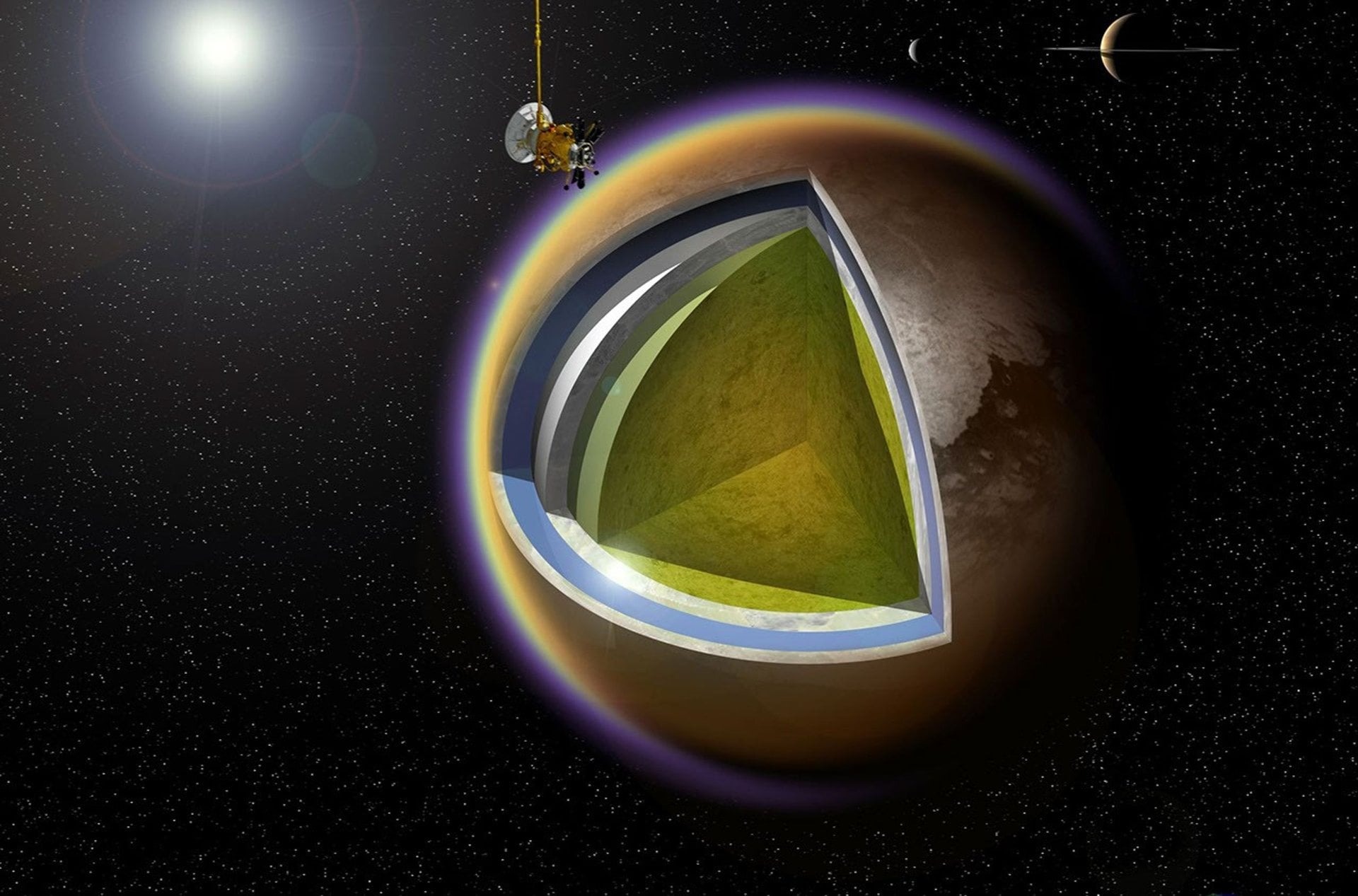
Titan, the largest moon of Saturn, has recently emerged as a focal point for astronomers, space engineers, and astrophotography enthusiasts alike. This renewed interest stems from groundbreaking research highlighting Titan`s extraordinary natural resource base and its potential utilization for future human space missions.
Supported by NASA, a recent study has conducted a comprehensive assessment of Titan`s resources and their applicability in In Situ Resource Utilization (ISRU) - a technology that involves harnessing local materials to support human life and operations directly on site. ISRU is crucial for reducing the cost and complexity of long-duration space missions, as it minimizes the need to transport supplies from Earth.
Titan stands out in the Solar System due to its dense, nitrogen-rich atmosphere, vast hydrocarbon lakes and seas containing methane and ethane, and unique environmental conditions. The study compares Titan`s resources with those on other well-studied destinations like the Moon and Mars, which have been traditional targets for human colonization aspirations.
The main conclusion drawn is that Titan offers unparalleled potential for exploration and human settlement. Several key advantages support this assessment:
- Abundant hydrocarbons: The methane and ethane lakes and seas provide valuable fuel and raw materials for various technologies;
- Dense atmosphere: Primarily composed of nitrogen, which can be chemically transformed into life-supporting and industrial resources;
- Cold but stable environment: The surface temperature of about -179 degrees Celsius preserves certain chemical compounds that degrade swiftly on other celestial bodies;
- Potential for generating technological and biological feedstocks: Researchers are investigating how Titan`s resources can be converted into materials suitable for construction, survival, and space agriculture.
Scientifically, this study builds on data gathered by past missions such as Cassini-Huygens, which provided detailed imagery and insight into Titan`s atmosphere and surface. Advanced chemical modeling and ISRU technology developments continue to shape how future human missions may exploit these resources, promoting autonomy in space.
Despite the notable technical challenges involved—including mapping suitable terrain with radar, extracting and processing hydrocarbons under extreme conditions, and safeguarding equipment against frigid temperatures—the opportunities far outweigh the difficulties. The study suggests Titan could become a hub for energy production and raw material extraction, supporting sustainable human presence and expansion in our Solar System.
This potential positions Titan favorably in the ongoing quest to establish the first functional extraterrestrial habitat. For astronomy and astrophotography enthusiasts, this represents a new frontier—beyond the traditional focus on Mars and the Moon—where humans may live and explore extraterrestrial environments.
Beyond scientific significance, this endeavor presents a cultural and technological challenge that will inspire worldwide communities to contribute through sky watching, astrophotography, and direct involvement in space research.
In summary, Titan is not just a mysterious celestial body but also a promising platform for humanity`s future exploration efforts—an essential point on our cosmic map deserving keen attention. Every scientific breakthrough brings humanity closer to realizing dreams of interplanetary travel and settlement, with Titan poised as a central destination in this extraordinary space adventure.
Further information and sources can be found on Universe Today at this link.
Source: Universe Today