
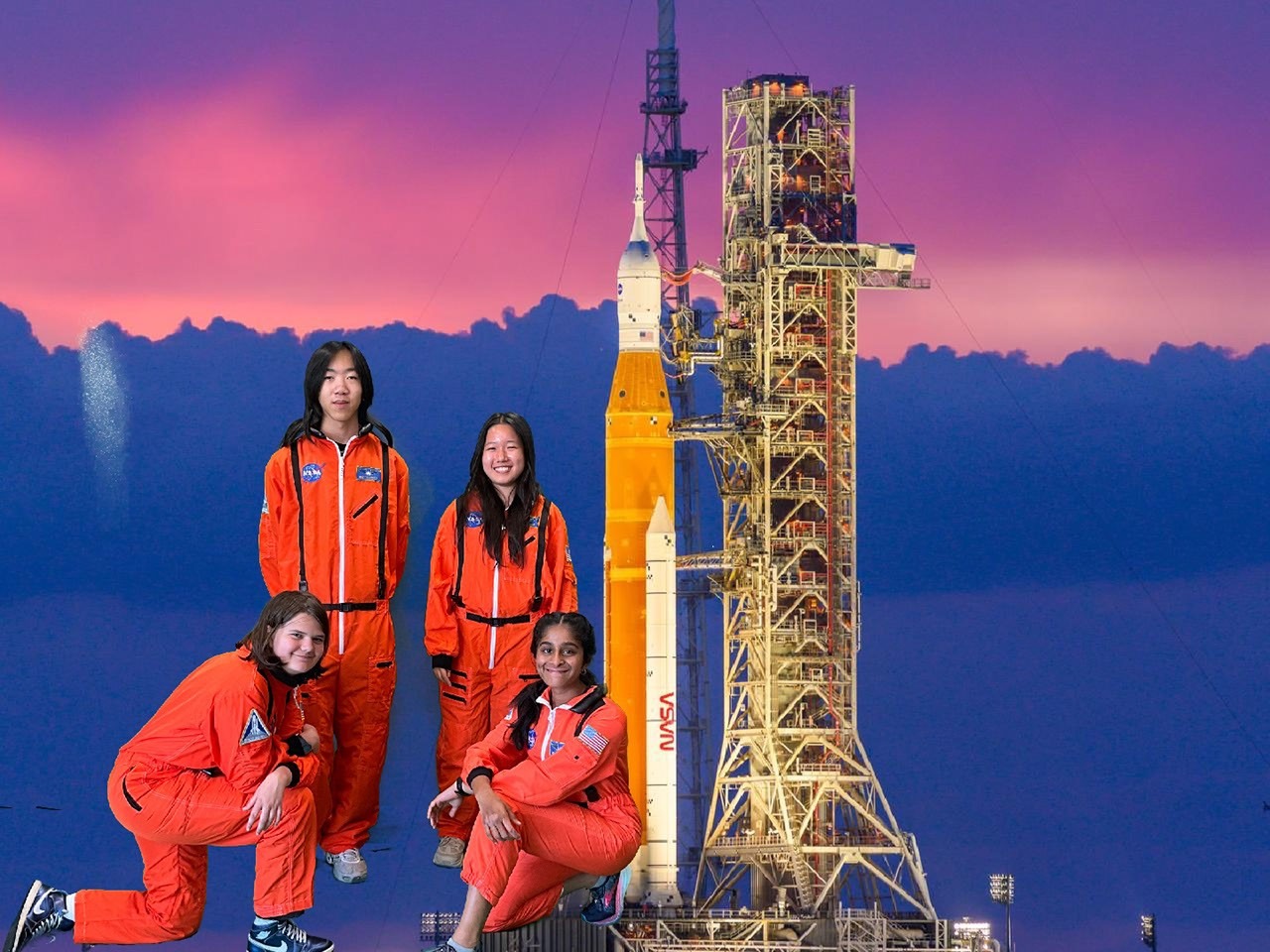
The Northwest Earth and Space Science Pathways (NESSP) project recently marked the successful conclusion of its 2025-2026 ROADS (Rover Observation And Discoveries in Space) from Earth to Venus National Challenge, an event that has captured the imagination of aspiring young scientists and space enthusiasts alike. Bringing together students from the Pacific Northwest region of the United States, the competition invited participants to delve into the mysteries of planetary exploration by designing and simulating rover missions on the challenging planet Venus.
Venus, our closest planetary neighbor, presents some of the toughest hurdles for space exploration due to its extreme environmental conditions. Its atmospheric pressure exceeds that of Earth by over 90 times, temperatures soar above 460 degrees Celsius, and its clouds are laden with corrosive sulfuric acid. These factors make Venus an intriguing but unforgiving world, demanding innovative technological solutions for any robotic explorers.
The ROADS challenge tasked students with conceptualizing rover designs capable of surviving and conducting scientific observations amid this hostile environment. This challenge blended engineering, planetary science, and data analysis, fostering an integrated learning experience that goes beyond textbook theory into hands-on application.
Supported by NASA scientists and educators, participants used cutting-edge resources and mentorship to develop their rover models and mission plans. They constructed simulations and tests replicating the crushing pressure and searing temperatures of Venus, enabling them to experiment with materials, sensors, and navigation technologies that might one day be part of real exploratory missions.
This competition also galvanized skills central to STEM education—robotics, programming, collaborative teamwork, and analytical thinking—preparing students for future careers in science and technology. By aligning clear academic goals with a captivating space context, the NESSP project succeeded in making Planetary Science accessible and exciting for young learners.
The rich scientific backdrop adds another layer of significance to the challenge. Venus has intrigued astronomers and planetary scientists for decades, due to its enigmatic sulfuric acid clouds, volcanic activity, and recent discussions around potential biosignatures in its atmosphere, which ignite questions about possible microbial life forms or unusual chemical processes.
Unlike Mars or the Moon, Venus missions remain limited because of the planet`s inhospitable conditions, making any invention that can cope with those extremes a valuable scientific contribution. The student projects in ROADS not only tackled theoretical designs but also practical issues, such as communication through dense atmosphere, energy generation under thick cloud cover, and the durability of rover components.
The competition culminated in presentations to a panel comprising NASA engineers, university professors, and space science experts. The young innovators demonstrated extraordinary creativity, problem-solving skills, and scientific understanding, earning commendations that celebrate both their effort and potential impact.
For astronomy and astrophotography enthusiasts, this initiative emphasizes the vital relationship between technology, science visualization, and data acquisition. The simulated imagery and graphical models created during the challenge reflect how multidisciplinary approaches enrich our perception of distant worlds and inspire further exploration.
In summary, the Northwest Earth and Space Science Pathways project and the ROADS from Earth to Venus Challenge represent a compelling model of educational innovation. They transform learning into an exciting scientific adventure, nurture the next generation of space explorers, and strengthen ties between students, educators, and the broader scientific community, all while deepening our understanding of one of the most fascinating planets in our solar system.
Source: NASA