
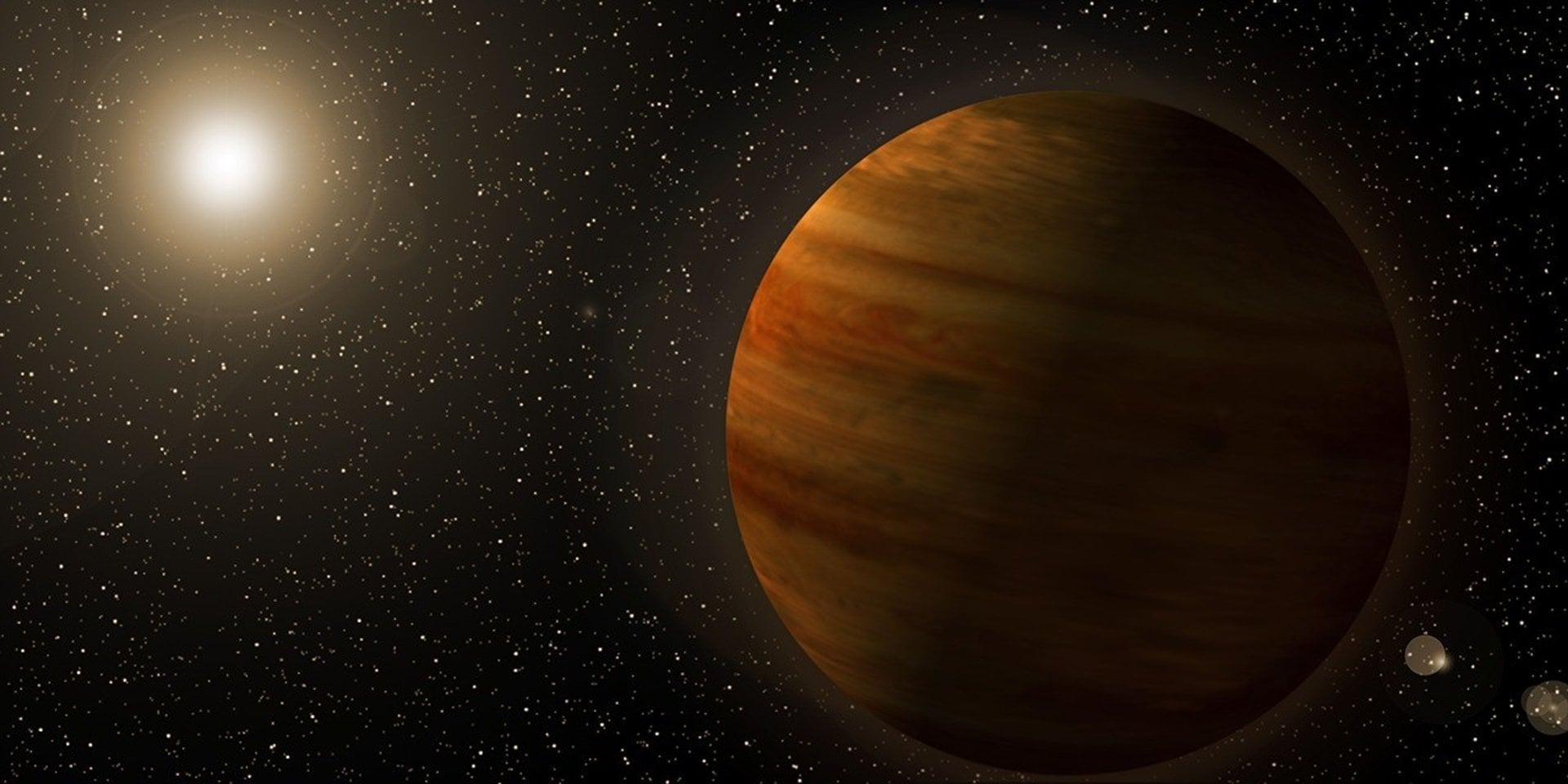
Using a groundbreaking technique drawn from Einstein`s theory of relativity, astronomers have uncovered a Jupiter-like planet hidden within the archived data from NASA`s Transiting Exoplanet Survey Satellite (TESS). This discovery marks the first successful application of gravitational microlensing by TESS, opening a new chapter in the search for worlds beyond our solar system.
Scientific context and significance of gravitational microlensing
Gravitational microlensing is a phenomenon predicted by Einstein`s general relativity theory, describing how massive objects curve spacetime around them. When a massive object, such as a star or planet, passes between an observer and a distant source of light, the source`s light is bent and temporarily magnified, creating a gravitational lens effect. Observing this effect can reveal objects normally invisible to our telescopes, such as distant exoplanets or dark objects in space.
Traditionally, microlensing has been used mainly by dedicated projects because detecting such events requires continuous and careful monitoring of a large number of stars. TESS, known for its transit method – measuring dips in starlight caused by planets crossing in front of stars – adopting this new detection technique is a significant technological and scientific breakthrough.
Discovery and exploitation of TESS data
Analyzing archived data provided a unique opportunity to apply a different technique to already collected datasets. Researchers employed sophisticated algorithms to identify microlensing event patterns in TESS recordings. Due to the satellite`s ability to monitor broad sections of the sky with exceptional precision, they detected a massive, Jupiter-like planet orbiting a star in a path not previously observed directly.
The planet has a mass several times that of Jupiter and belongs to the category of giant gas exoplanets. Its presence confirms that TESS data archives contain many undiscovered surprises, and combining traditional methods with innovative ones significantly expands the exoplanet research domain.
Implications and future prospects
This discovery highlights the scientific potential of data from existing space missions and the importance of developing and applying modern data processing techniques. In the future, combining space observatories like TESS with gravitational microlensing methods may open new avenues for identifying planets in wide orbits or difficult to detect by traditional methods such as transit or radial velocity.
Moreover, this success encourages the astronomical community to explore observational archives even more broadly, aiming to uncover unknown worlds, and to prepare future missions that simultaneously leverage multiple complementary methods. For astronomy enthusiasts and astrophotographers, this discovery demonstrates that the universe continues to offer new chances to explore and understand its mysteries, with modern technologies guiding us toward spectacular finds even in previously collected data.
In conclusion, the discovery using microlensing in TESS data is not only a confirmation of relativity theory applied in astronomy but also a significant step toward discovering exoplanets previously difficult to detect, bringing us one step closer to a deeper and fascinating understanding of the universe in which we live.
Source: Universe Today