
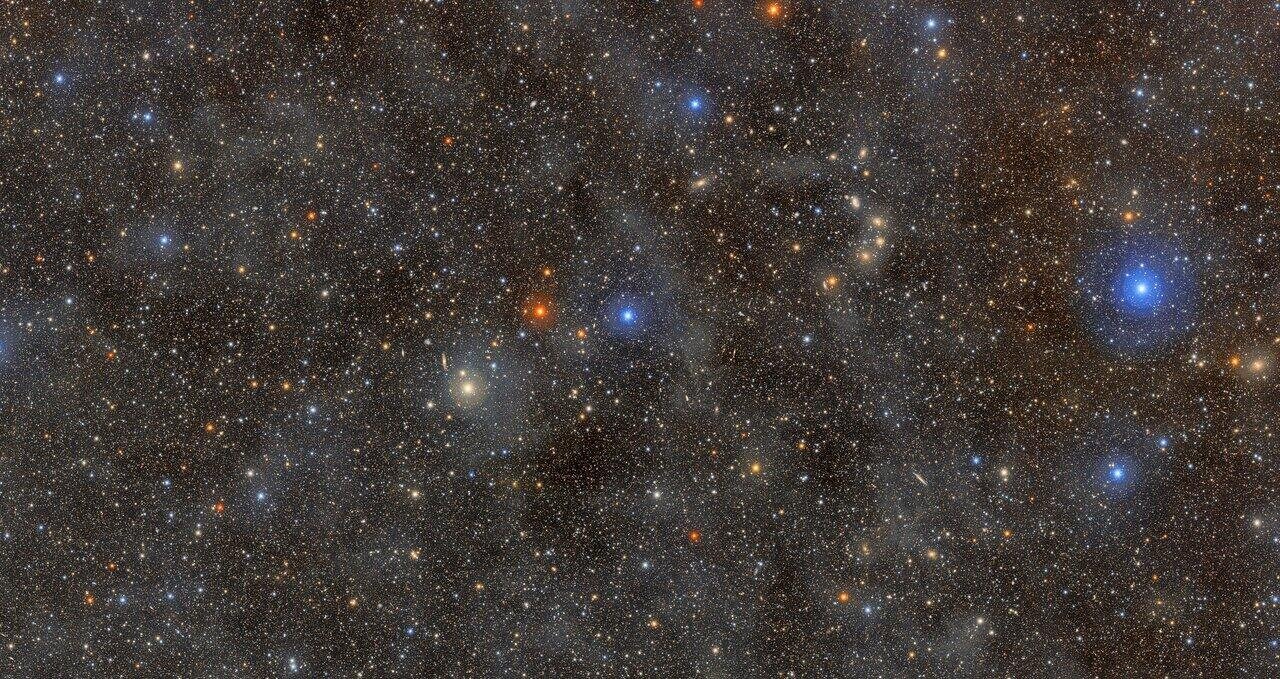
In late 2026, the Vera C. Rubin Observatory in the United States officially commenced full operations for the Legacy Survey of Space and Time (LSST), marking one of the most ambitious and comprehensive astronomical imaging surveys ever undertaken. This project, supported jointly by the National Science Foundation (NSF) and the Department of Energy (DOE), aims to observe and map a vast portion of the night sky over a ten-year period, generating an unprecedented treasure trove of data on the cosmos.
A key highlight of the LSST initiative is the extensive international collaboration that fuels its success. Among the significant contributors are Japanese researchers and engineers, whose expertise and advanced technologies cultivated during the development and operation of the Subaru Telescope have bolstered several crucial aspects of LSST. From developing sophisticated software systems to assisting in daily operations, the Japanese teams are an integral part of the project’s backbone.
Scientific context and the significance of LSST
The LSST is distinguished by its cutting-edge capabilities, including an 8.4-meter primary mirror telescope paired with a 3.2 gigapixel camera, the largest digital camera ever constructed for astronomical use. This powerful combination enables Rubin Observatory to capture deep, high-resolution images of the sky and collect data on billions of celestial objects—stars, galaxies, asteroids, and transient phenomena such as supernovae and near-Earth objects.
The overarching scientific objectives of LSST revolve around helping astronomers and cosmologists answer some of the most profound questions in modern astrophysics. For instance, by mapping the distribution and behavior of billions of galaxies, scientists hope to glean new insights into dark matter and dark energy, two mysterious components that dominate the mass-energy content of the universe but remain poorly understood. Moreover, detecting transient events and rapidly changing phenomena will improve our understanding of the dynamic universe and potentially enhance planetary defense by identifying hazardous asteroids early.
The role and contributions of Japanese researchers
Japan`s involvement in LSST draws on considerable experience earned through the Subaru Telescope, an 8.2-meter optical-infrared telescope renowned globally for its advanced instrumentation and outstanding image quality. Located atop Mauna Kea, Hawaii, Subaru’s operations have laid the groundwork for tackling the immense technical challenges of next-generation big-data astronomy projects like LSST.
Japanese engineers and scientists have actively contributed to developing the highly specialized LSST software infrastructure that manages and analyzes the extensive data the observatory generates nightly. Their roles encompass optimizing data pipelines, improving image processing algorithms, and ensuring robust system operations. This technical partnership ensures that LSST runs smoothly, enabling effective data collection and distribution to the global scientific community.
Currently, over 80 researchers from Japan participate in various scientific investigations by accessing LSST data. This involvement not only facilitates cutting-edge research but also fosters integration of LSST findings with detailed follow-up observations from the Subaru Telescope. Such synergy enhances the scientific return significantly by enabling astronomers to validate and explore LSST detections with more precise and targeted studies.
Implications for the astronomy and astrophotography community
The fully operational LSST holds tremendous promise for both professional astronomers and enthusiastic amateur astrophotographers. The abundant stream of data and imagery will empower real-time monitoring of transient celestial phenomena, improve the census of solar system objects, and open opportunities for citizen science projects, allowing enthusiasts worldwide to contribute actively to data analysis and discovery.
Moreover, the successful international collaboration exemplified by Japanese involvement highlights the importance of global knowledge exchange. Such partnerships drive technological innovation, broaden resource sharing, and accelerate scientific advancements in space exploration.
Looking forward, as the volume of LSST data grows year by year, the astronomical community anticipates a revolutionary leap in understanding the cosmos. This multi-faceted project is poised to reshape modern cosmology, fundamental physics, and astrophysical research through its comprehensive sky survey and innovative methodologies.
In summary, the activation of full LSST operations at the Vera C. Rubin Observatory marks a pivotal moment in 21st-century astronomy. The crucial contributions from Japanese researchers and engineers enrich this landmark project, illustrating the power of international cooperation in unveiling the universe`s deepest secrets and forging new frontiers in the exploration of space.
Source: Phys.org Astronomy