
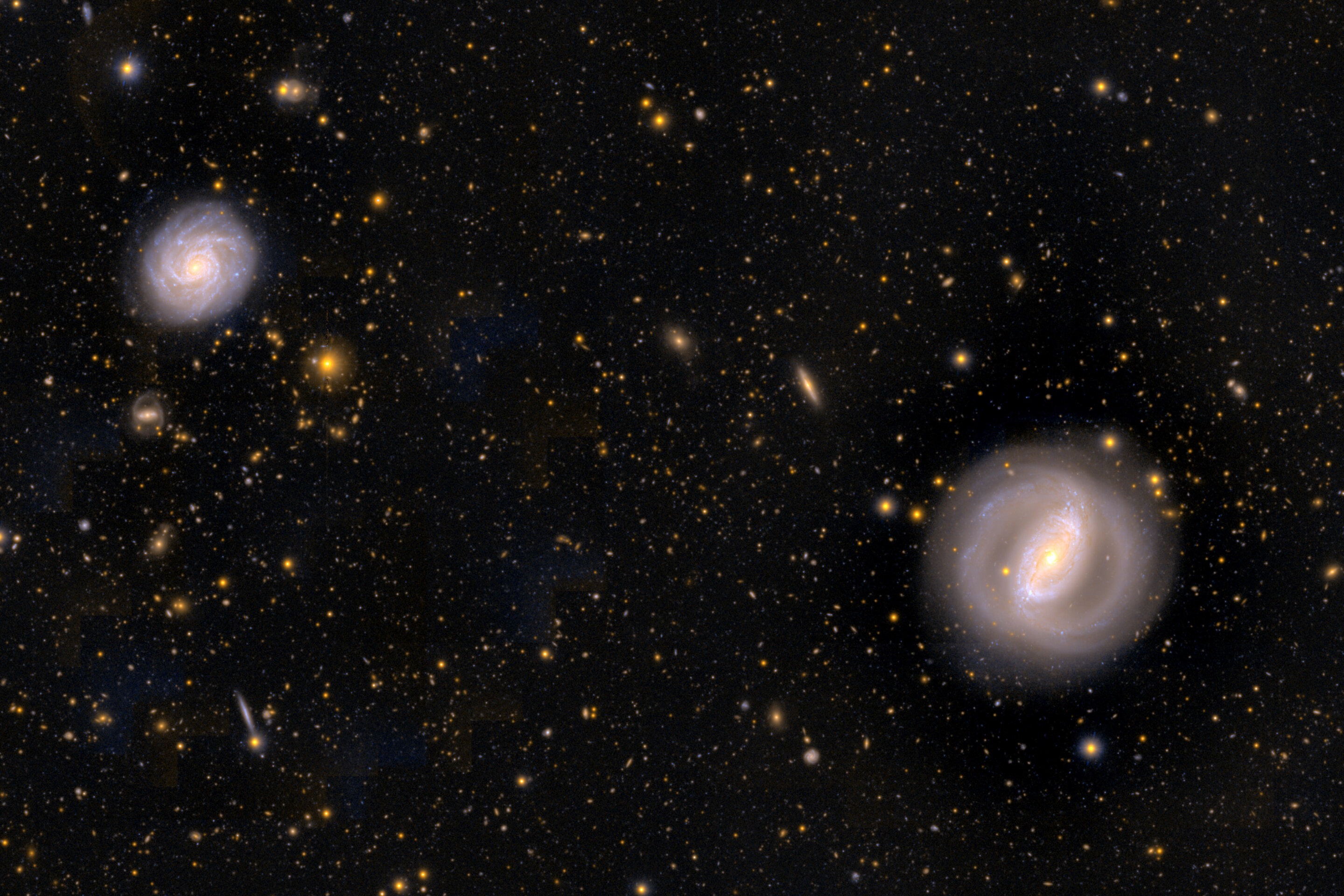
Deep within the vast reaches of the cosmos, approximately 80 million light-years from Earth, shines a remarkable pair of galaxies that captivate the eyes of astronomy enthusiasts and astrophotographers alike. The pair, consisting of the barred spiral galaxy NGC 3504 and the classic spiral galaxy NGC 3512, sits proudly within the boundaries of the Leo constellation.
This recently released image offers a stunning overview of these two galactic worlds, framed by a breathtaking background sprinkled with numerous distant galaxies, highlighting the universe`s endless complexity and mystery.
Scientific context and galaxy characteristics
NGC 3504 is classified as a barred spiral galaxy, meaning it features an elongated bar-shaped structure composed of stars and interstellar matter extending through its core. Such bars play a crucial role in galactic dynamics, channeling gas toward the nucleus, which can trigger intense star formation or even activate a central active galactic nucleus.
By contrast, NGC 3512 is a simple spiral galaxy, without a central bar, exhibiting gracefully winding spiral arms. This classic spiral structure suggests a less disrupted form, providing astronomers with an opportunity to study the evolutionary differences and interaction dynamics between galaxies with different internal forms.
Galactic interaction and system evolution
Despite being physically close to each other, current research finds no clear evidence of active gravitational interaction between NGC 3504 and NGC 3512. This is particularly intriguing since galaxy pairs often undergo interactions that can lead to mergers, structural changes, or shifts in star formation rates.
Studying these galaxies alongside other multiple galaxy systems deepens our understanding of how gravitational forces shape galaxy evolution over cosmic time. Interactions often spark star formation bursts or redistribute galactic material, influencing the long-term growth and transformation of galaxies.
Engaging astronomy enthusiasts and the importance of astrophotography
Images like this serve as an inexhaustible source of inspiration for astronomy lovers, offering a glimpse of the universe`s immense beauty and aiding in the educational process surrounding galaxy structures and cosmic phenomena.
Astrophotography bridges science and art, making it possible to capture fine details of celestial objects otherwise invisible to the naked eye. Modern techniques in imaging and processing deep space photos unveil subtle structures and cosmic events essential for our understanding of the cosmos.
Where and how to explore such stunning images and information
If you are eager to stay up to date with astronomy news and enjoy breathtaking images from deep space, websites like Phys.org Astronomy provide excellent starting points. These platforms merge accessible information with impressive visuals and up-to-date scientific insights.
In conclusion, the galaxy pair NGC 3504 and NGC 3512 is more than a visual marvel of our universe; it is a window into the cosmic processes governing galaxy formation and evolution. Ongoing research will undoubtedly bring further fascinating discoveries and revelations in the future.
Source: Phys.org Astronomy