
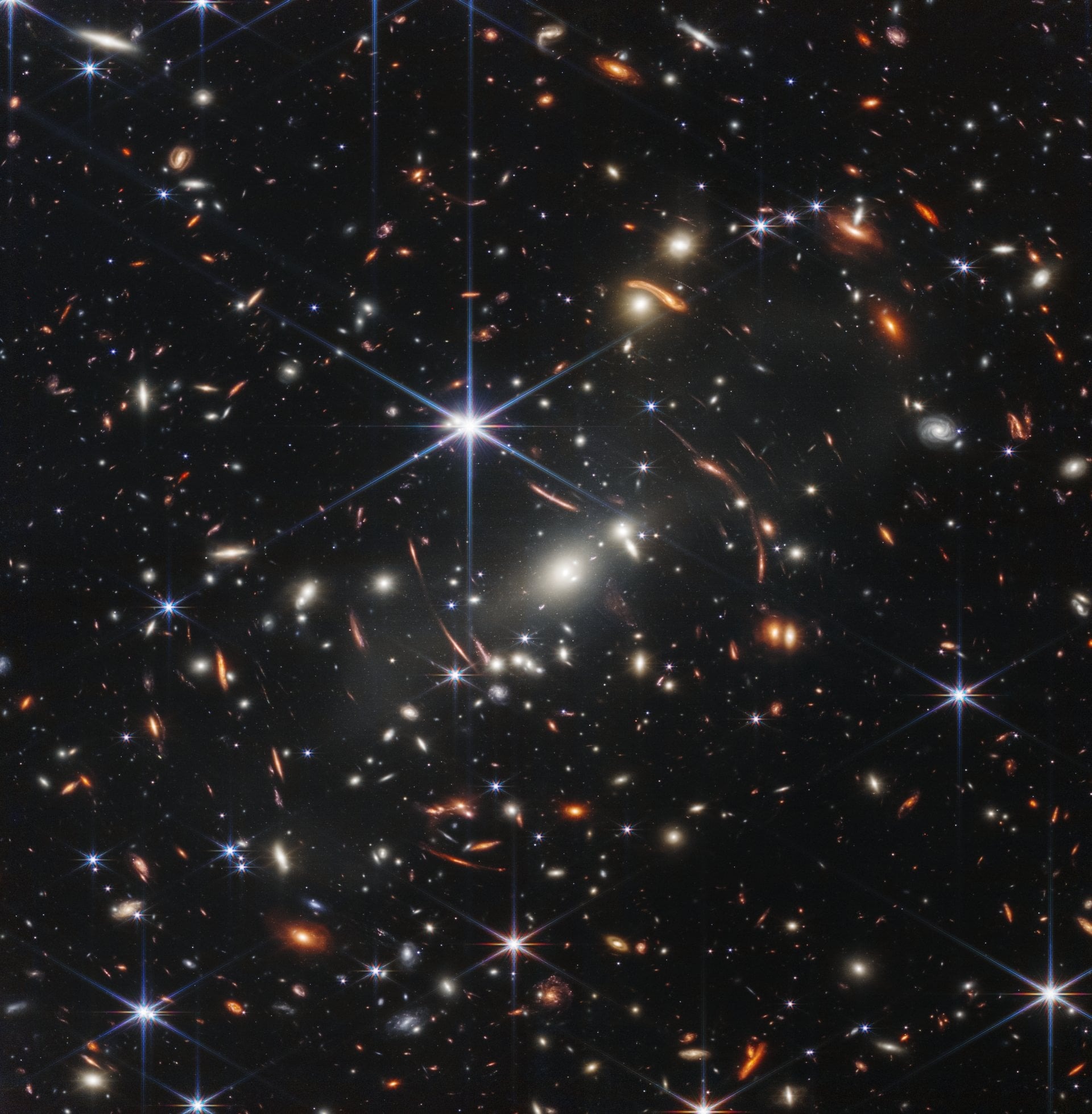
Throughout history, humanity`s understanding of its place in the cosmos has undergone profound transformations that have challenged long-held beliefs. From the geocentric model, which placed Earth at the center of the universe, we gradually arrived at a heliocentric perspective where Earth is just one planet orbiting an ordinary star, the Sun. Later, we realized that our Sun is part of a vast spiral galaxy called the Milky Way, which itself is one among billions of galaxies populating the observable universe.
These scientific revolutions systematically dethroned humankind`s perceived special status in the cosmos. Now, two contemporary philosophers propose taking this demotion one step further — suggesting that consciousness, the very essence we tend to associate exclusively with ourselves, might instead be a far more widespread and enigmatic phenomenon.
An article recently published on Universe Today explores this radical idea: consciousness may not be the exclusive domain of humans or even higher animals but could appear in myriad forms across a diversity of life, or perhaps in non-biological systems as well. According to this philosophy, awareness might be distributed and emergent rather than localized to a singular entity, challenging traditional ideas of what it means to be conscious.
What is consciousness?
Consciousness is commonly understood as the subjective experience of awareness — the ability to recognize oneself and perceive the environment from a first-person perspective. It includes phenomenal qualities, often referred to as qualia, which are inherently difficult to measure or observe objectively. Scientists find consciousness particularly perplexing because it spans neuroscience, philosophy, and physics, resisting easy categorization.
Theories of extended consciousness
One reason to suspect consciousness is not uniquely human lies in the complexity of biological systems capable of information processing. Mammals, birds, and certain invertebrates exhibit behaviors suggesting forms of awareness different from, but no less valid than, human consciousness. Some theorists extend this outlook to suggest that even artificial neural networks—computer-based simulations designed to mimic brain functions—could harbor rudimentary consciousness.
In this sense, consciousness may be an emergent property of complex systems, independent of traditional biological boundaries. Such a view opens exciting avenues in AI research, ethics, and the search for extraterrestrial intelligence (SETI). If consciousness is indeed widespread, our imperative to recognize and engage with other forms of awareness across the cosmos gains new urgency.
Relevance to astronomers and astrophotographers
For enthusiasts of astronomy and astrophotography, who seek the mysteries of the universe through observation and imagery, embracing this concept can be both an intellectual and philosophical challenge. The universe might not merely be a mechanical system governed by physical laws but also a vast network of interconnected or distributed consciousnesses in ways unknown to us. SETI initiatives and advanced AI developments might thus incorporate this broader framework, considering that consciousness could be a universal phenomenon rather than an exclusively human trait.
Such a paradigm shift invites us to reconsider our methodologies and remain open to subtle or unconventional interpretations of astronomical data and observations. The telescopic images we capture may serve not only as scientific records but also as windows into potential worlds of awareness beyond our current comprehension.
Conclusions
Instead of viewing consciousness as a unique property conferred only to humans, we should consider it as a universal feature manifesting in diverse forms and degrees. This shift encourages interdisciplinary collaboration spanning philosophy, science, and technology, aiming to uncover the true nature of consciousness.
If we are merely one element in a vast, intricate spectrum of conscious phenomena extending beyond the limits of our biology, the universe reveals itself as a far more mysterious and astonishing realm to explore.
Source: Universe Today