
In the height of the Cold War, when the space race between the United States and the Soviet Union captivated global attention, Australia accomplished a remarkable feat that marked its entry into space exploration. The story of Australia`s first satellite, WRESAT, reveals a fascinating mix of opportunism, local innovation, and international collaboration, all achieved with limited resources and under an intense timeline of less than a year.
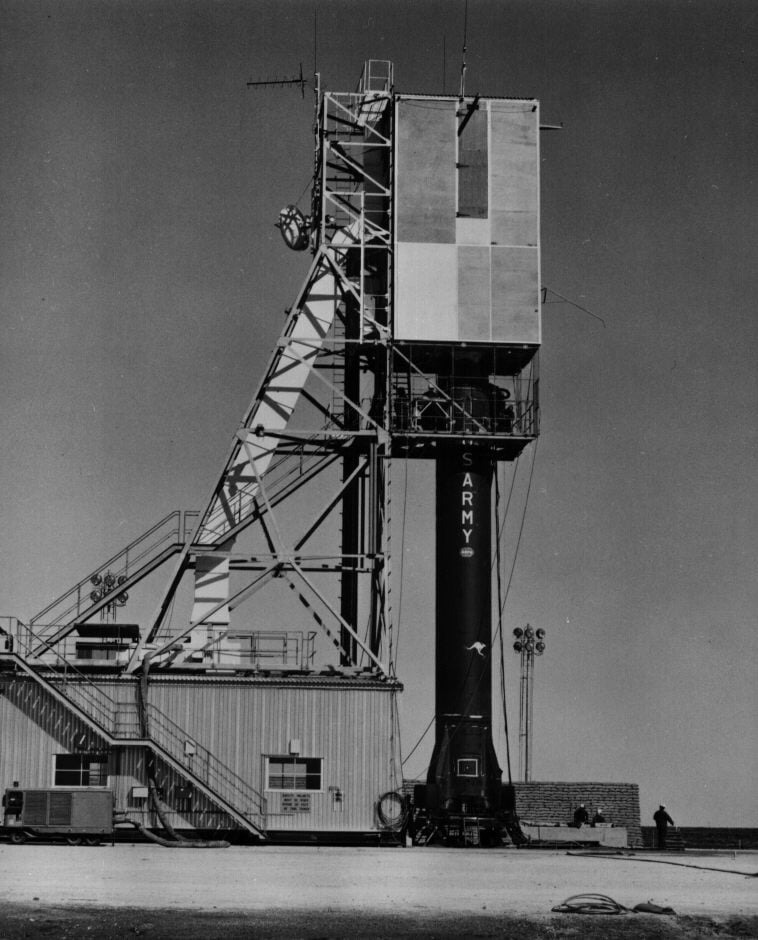
In 1967, the United States had a surplus rocket stored at the Woomera Test Range in South Australia, a well-known site for missile testing within the Western Alliance framework. Rather than letting this rocket remain unused, the Americans made it available to Australia for an ambitious purpose: launching a satellite built entirely on Australian soil.
Within less than twelve months, Australian engineers designed, built, and tested a compact satellite weighing around 45 kilograms, intended to orbit the Earth and relay scientific data about the space environment. The WRESAT (Weapon Research Establishment Satellite) was created to gather information about cosmic radiation and upper atmospheric conditions — critical data in an era when knowledge of space was crucial both for technological advances and military applications.
The project was filled with challenges. It was a rapid exercise in adapting to space technology, and the Australian team had to make do with limited resources but abundant ingenuity. The support provided by the Woomera facility was vital, offering not only the launch site but also the technical and scientific infrastructure necessary to facilitate the mission`s success.
On November 29, 1967, the modified American Redstone rocket, named Sparta for this mission, was launched from the Woomera range. The launch was a notable success, and the WRESAT satellite entered orbit, becoming the first Australian-made satellite to be launched into space. This moment marked a technological achievement but also a milestone for the Australian scientific and technological community, catalyzing the future development of the local space industry.
Beyond its technological role, the WRESAT launch had a symbolic significance, demonstrating that a nation outside the major space powers could contribute concretely to space exploration through determination, hard work, and international cooperation. This episode laid the foundation for future Australian space projects, including participation in global missions and the development of domestic satellite technologies.
Today, more than 50 years after this small satellite launch, the WRESAT story offers a valuable lesson for astronomy and astrophotography enthusiasts: the combination of unexpected opportunities, local resources, and strategic partnerships can lead to substantial achievements. For those who watch the night sky and capture stellar images, this history provides a fascinating context of how smaller countries can embark on the path of exploring the universe.
In conclusion, the WRESAT launch reflects a moment where pragmatism and determination outpaced technological and geopolitical constraints, proving that space is not only a domain reserved for superpowers but also a field open to innovations driven by the creativity and courage of smaller nations.
Source: Space Daily