
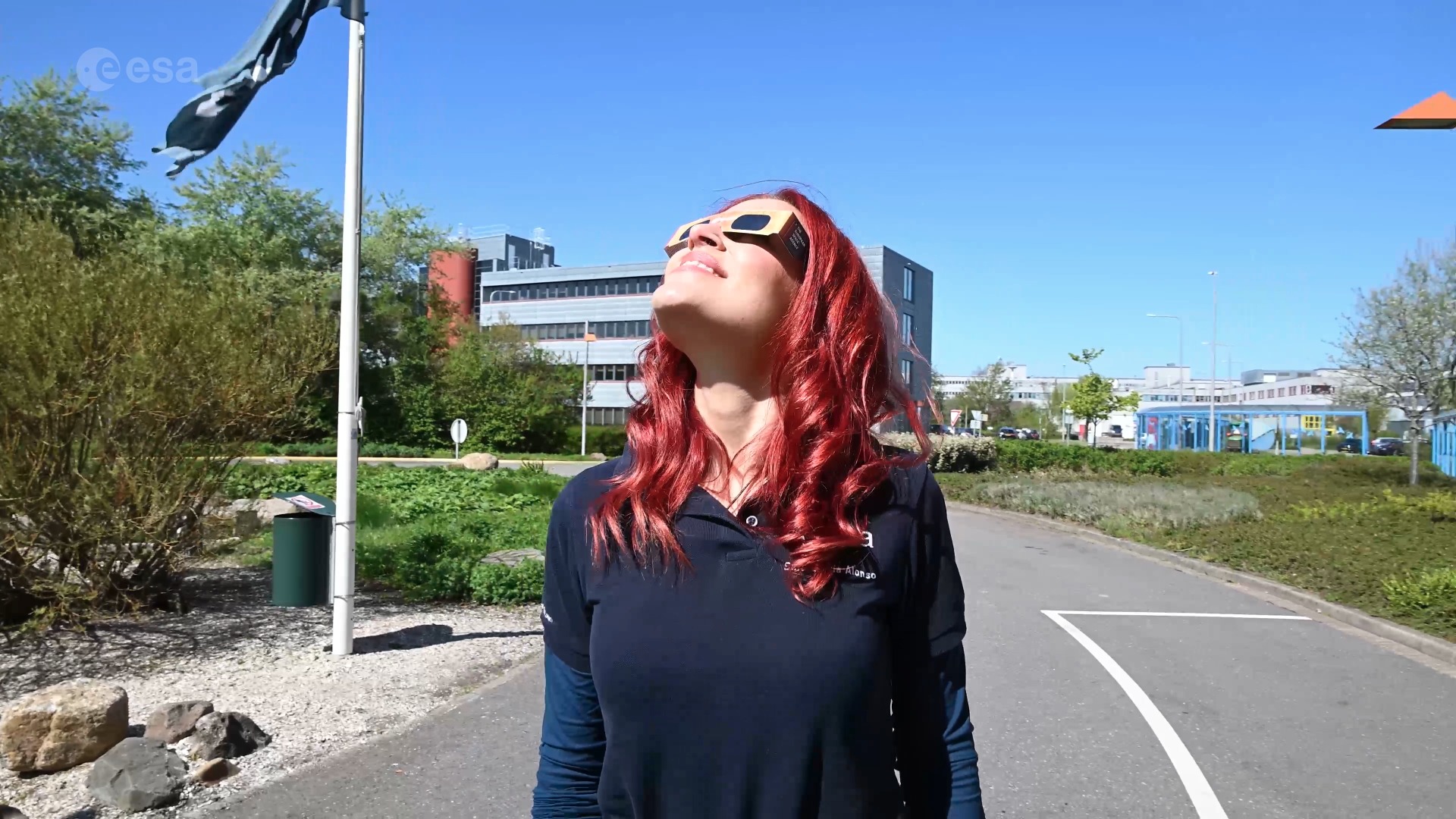
A solar eclipse is one of the most breathtaking astronomical events visible from Earth. It occurs when the Moon passes between the Sun and our planet, partially or completely blocking the Sun`s light and creating a stunning cosmic spectacle. However, witnessing this event safely requires adhering to certain guidelines, as looking directly at the Sun without proper eye protection can cause serious damage.
The European Space Agency (ESA) has released a helpful video guide that explains how to enjoy a solar eclipse without risking your eyesight. ESA`s reserve astronaut, Sara García Alonso, details the importance of using certified eclipse glasses and why regular sunglasses are not sufficient for safely viewing the phenomenon.
What happens during a solar eclipse?
A solar eclipse happens when the Moon moves directly between the Sun and Earth, obscuring the Sun`s rays either partially or fully. There are several types of solar eclipses: total eclipses, where the Sun is completely covered, revealing only the faint corona around it; partial eclipses, where only a portion of the solar disc is hidden; and annular eclipses, when the Moon covers the Sun`s center but leaves a bright ring or `annulus` visible.
During an eclipse, changes in light, temperature, and atmospheric conditions create a unique visual and sensory experience. Nevertheless, looking directly at the Sun without adequate protection exposes the eyes to intense ultraviolet and infrared radiation which can cause irreversible retinal damage.
Why aren`t regular sunglasses enough?
Normal sunglasses are designed to reduce visible light but do not provide sufficient protection against the harmful ultraviolet (UV) and infrared (IR) rays emitted by the Sun during an eclipse. Looking at the eclipsed Sun without specialized eyewear can cause a painless but permanent eye injury known as solar retinopathy. This is why it is essential to wear eclipse glasses that meet international safety standards to block out harmful radiation.
What types of protection are recommended?
Certified eclipse glasses with solar filters are the safest way to view the Sun during an eclipse. These filters are made from special materials that block 100% of UV radiation, 99.999% of IR radiation, and reduce visible light to safe levels. When choosing eclipse glasses, look for the CE (European Conformity) mark and certification to the ISO 12312-2 standard for direct solar viewing.
Also, be sure the glasses are intact — no scratches, cracks, or other damage that could compromise protection.
When is it safe to look directly at the Sun?
MOST importantly, it is safe to look directly at the Sun ONLY during the totality phase of a total solar eclipse, when the Moon fully covers the Sun and the sky darkens significantly. At all other times, even during partial phases, proper eclipse glasses must be worn. Removing eye protection prematurely puts your eyes at great risk.
Learning the timing of the eclipse and being prepared for these changes in visibility is crucial for a safe viewing experience. Enjoying this incredible cosmic event responsibly ensures your eyes remain healthy while witnessing one of nature`s greatest marvels.
Are there other ways to watch the eclipse?
Besides certified glasses, other safe methods include using pinhole cameras that project the eclipsed Sun`s image onto a surface, allowing indirect viewing without risking eye damage. Telescopes and binoculars can be used if equipped with specially designed solar filters following professional guidelines to avoid injuries.
Why is this event so important for astronomy and astrophotography enthusiasts?
A solar eclipse not only provides a stunning visual event but also offers unique scientific opportunities to study the Sun`s corona and atmospheric effects in unusual illumination conditions. For astrophotographers, it is a chance to capture rare and awe-inspiring images of a significant celestial phenomenon.
Since the event itself is fleeting and the best viewing locations may be limited, preparation and safe equipment are vital for making the most of this extraordinary occasion.
In summary, following expert recommendations and using proper eye protection lets you experience one of the most magnificent astronomical shows safely. ESA offers valuable educational resources and informative materials to help you prepare thoroughly for the next solar eclipse, so be sure to check them out!
For more information and to watch the explanatory video, visit ESA`s website at: how to safely watch a solar eclipse.
Source: ESA