
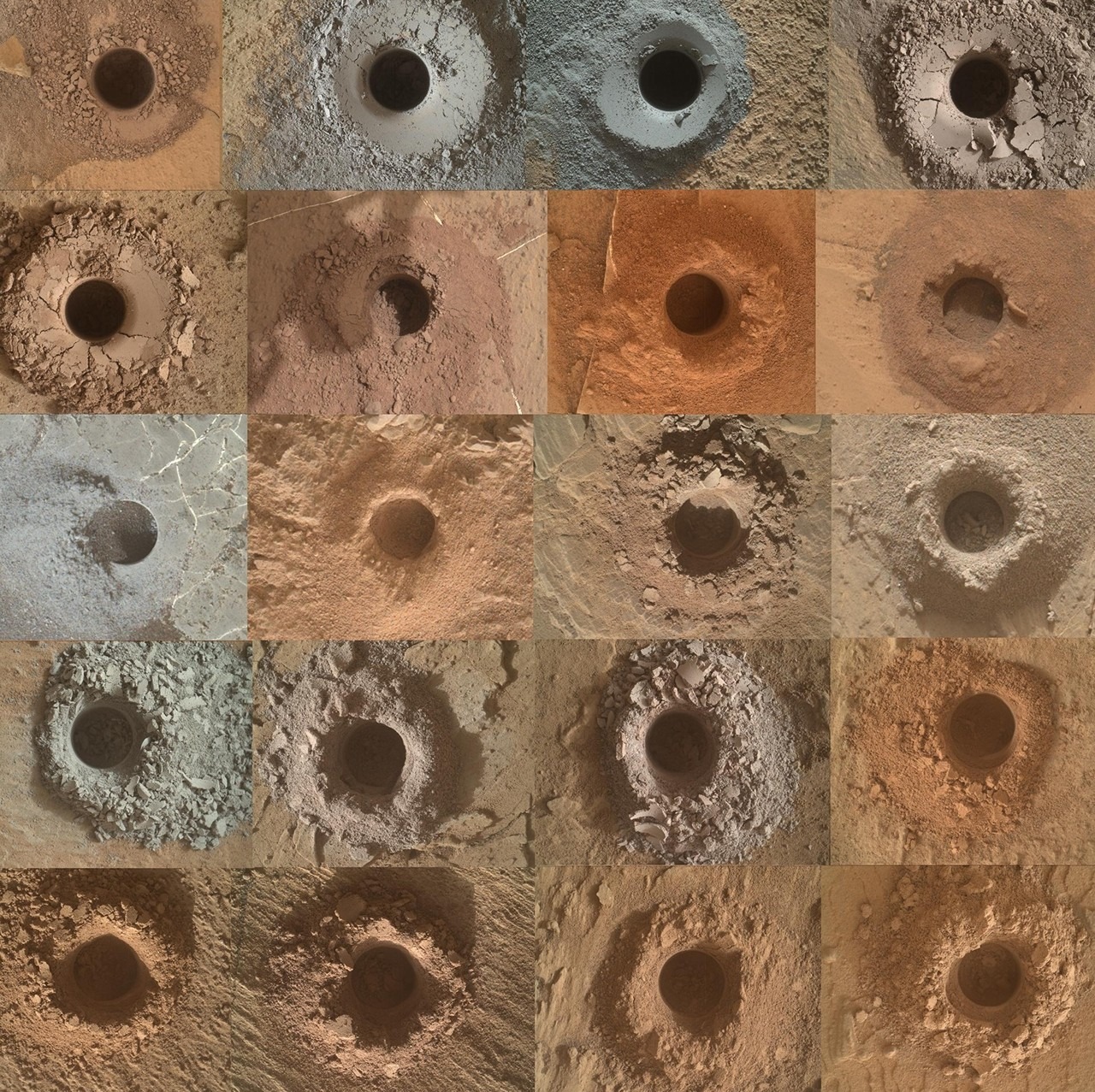
In the ongoing quest to unravel the mysterious geological and climatic history of the Red Planet, NASA scientists have taken a significant step forward by employing a new mineralogical marker that could provide the key to understanding ancient environmental conditions on Mars.
The study, based on 20 Martian samples collected by the Curiosity rover, has focused on a mineral called hematite, an iron oxide commonly found on Mars, which has a direct connection to the presence and dynamics of water in the planet`s past. Hematite is known to form in the presence of water, and the study of the size of its crystallites at different elevations has revealed new insights into the climate that characterized ancient Martian epochs.
Researchers observed that the size of hematite crystallites varies significantly depending on the elevation where the samples were collected, suggesting that climatic conditions were influenced by topographical or altitude-related factors in ancient times. This mineralogical difference offers a novel marker, which helps deduce environmental variations on Mars over millennia, shedding light on a climate that might have been more complex and dynamic than previously thought.
Beyond providing important clues about the distribution of liquid water on ancient Mars, these findings have major implications for understanding the planet`s potential to have supported life. Curiosity, launched in 2011, has explored the Gale Crater region, a basin believed to have once hosted a lake or an active hydrological system. Detailed analysis of this mineral not only enhances knowledge about the geological and climatic transformations of the planet but also provides a promising method for future studies as rovers and planned human missions investigate the Martian soil in greater depth.
Mineralogy thus plays a crucial role in astrobiology and planetary geology, with hematite, whose physical properties can be detected by rover instruments, becoming a window through which scientists can explore the past of an environment that may once have supported life.
The discovery offers an additional tool in the researchers` arsenal to understand climatic and environmental changes on Mars, also providing new perspectives for future exploration missions. As such, the study strengthens the connection between geology and planetary climatology, demonstrating how mineral analysis can pave the way toward comprehending the evolutionary processes that have shaped the Red Planet.
Source: NASA