
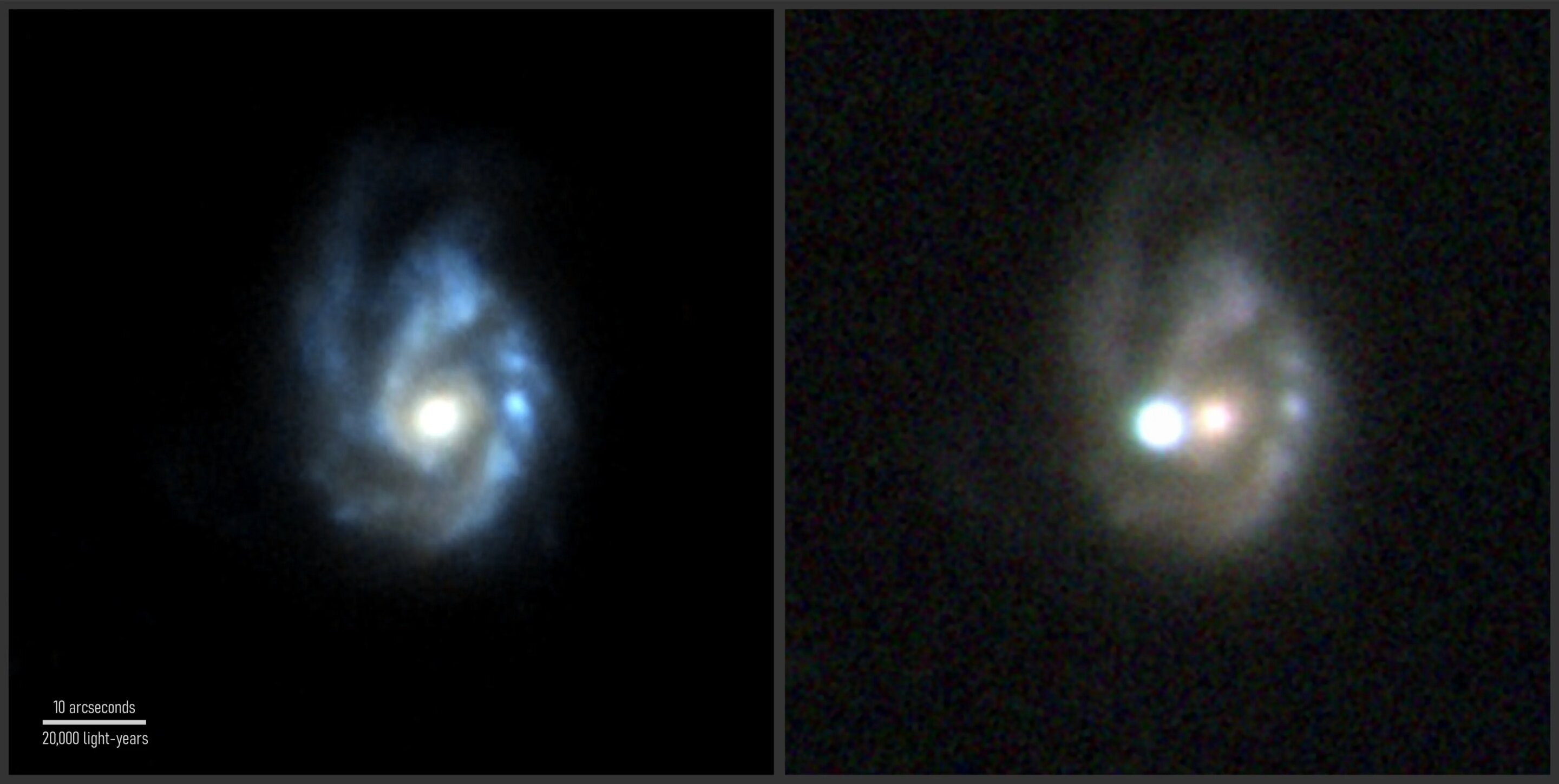
A team of researchers from LSU has played a crucial role in an extraordinary breakthrough: the first clear detection of gamma rays emanating from a superluminous supernova, achieved through data obtained by NASA`s Fermi Gamma-ray Space Telescope. This landmark discovery provides fresh insight into the energy source powering some of the most dazzling stellar explosions in the universe, linked to magnetars - neutron stars with incredibly strong magnetic fields and immense power.
Supernovae are cosmic phenomena marking the explosive deaths of massive stars. In particular cases known as superluminous supernovae, the brightness far exceeds that of typical supernovae, shining hundreds of times more intensely. Despite extensive study, the exact mechanism driving this extreme luminosity has remained a major mystery for decades.
A critical clue comes from examining gamma radiation, which is the highest-energy form of electromagnetic radiation found in the cosmos. Theoretically, magnetars, which form from massive stars collapsing into neutron stars with incredibly powerful magnetic fields, can release enormous amounts of energy in the form of gamma rays and X-rays. Until now, a clear observational detection attributing gamma rays directly to a superluminous supernova had not been confirmed.
Using the Fermi Telescope, the LSU researchers analyzed data from a superluminous supernova and identified a definitive gamma-ray signal indicative of a powerful magnetar energizing the explosion. This observational confirmation is a vital piece of the complex puzzle illustrating how these explosions achieve such extraordinary brightness.
Beyond its scientific fascination, this discovery carries significant implications for our understanding of massive star evolution and the physical processes triggering violent stellar explosions. Magnetars, although compact objects with a mass comparable to our Sun, have volumes considerably smaller, resulting in magnetic fields billions of times stronger than Earth`s. The release of energy stored in these fields helps explain much of the phenomenal luminosity of superluminous supernovae.
The findings are built upon the diligent work of the LSU team and the precise instrumentation aboard the space telescope, shedding new light on cosmic dynamism. Researchers plan to continue monitoring superluminous supernovae, aiming to detect further gamma-ray signals to better grasp the diversity and underlying mechanisms of these ultra-bright phenomena.
Astronomy and astrophotography enthusiasts will find these insights particularly compelling, as they bring us closer to unraveling cosmic processes and provide an explanation for some of the brightest and most spectacular stellar explosions ever observed.
Source: Phys.org Astronomy