
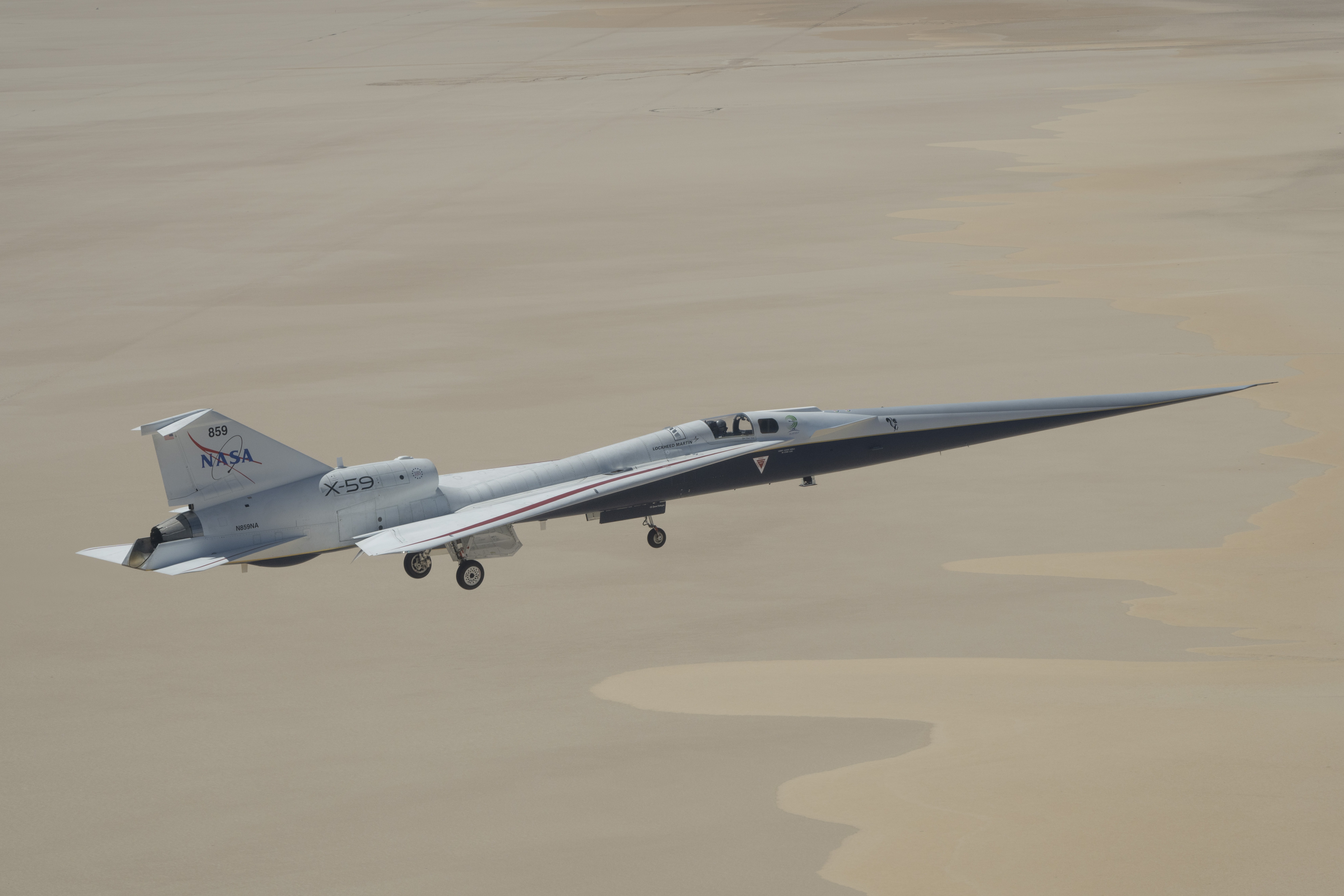
NASA is on the cusp of a historic milestone in supersonic aviation as it prepares its X-59 aircraft for its first supersonic flight. This project is poised to revolutionize the way we perceive rapid air travel by significantly reducing the noise typically associated with supersonic flights, which until now has been a major obstacle in the commercialization of such flights.
The X-59, also known as QueSST (Quiet SuperSonic Technology), is developed by NASA in partnership with Lockheed Martin and stands as a significant technological advancement in supersonic research. Its primary goal is to test a novel aircraft design that greatly diminishes the sonic boom produced when surpassing the speed of sound, potentially allowing supersonic flights over populated areas without disturbing residents.
The scientific context behind this innovation originates from the study of shock waves generated by aircraft exceeding the speed of sound—approximately 767 mph (1235 km/h) at sea level. Traditionally, flying at such speeds involves a loud sonic boom, a powerful noise burst that restricts the use of supersonic flight in commercial aviation due to international regulations prohibiting supersonic overflight of urban areas owing to its significant noise pollution.
X-59 is engineered to produce such a quiet sonic signature that the sonic boom is perceived on the ground as a soft thump, analogous to the closing of a door rather than a loud explosion. This has been proven through simulations and prior wind tunnel tests, alongside meticulous flight model experiments. The entire fuselage is aerodynamically optimized to control shock wave formation efficiently, with its unique long nose and sleek shape playing critical roles in reducing noise.
The preparation for the X-59`s first supersonic flight is a crucial phase involving a series of rigorous tests including system functional checks, onboard system assessments, and fine-tuning the aircraft`s performance prior to reaching supersonic speeds. The primary mission is to demonstrate the technological capability to operate safely and comfortably while minimizing the sonic impact on the environment.
Upon completion of this phase, NASA plans to collaborate with regulatory bodies and commercial airlines to develop standards and regulations that will enable quiet supersonic commercial flights. This advancement could transform the aviation industry by dramatically shortening travel times on long-haul routes such as New York to Paris or Tokyo to San Francisco.
Besides its benefits for civil transportation, the technologies refined through the X-59 program have the potential to influence military and space applications where managing aerodynamic noise remains a critical concern.
Astronomy and astrophotography enthusiasts may find great interest in the progress of the X-59, not only for its impact on supersonic travel but also due to the technological innovations that offer new insights into atmospheric dynamics and advanced control of aerial and space vehicles.
In summary, NASA``s X-59 heralds a new era of aviation where the elegance of supersonic flight merges with a respect for the acoustic environment of communities. The upcoming inaugural supersonic flight will be watched globally and represents a major step forward toward normalizing flights at speeds exceeding the sound barrier without the historically disruptive sonic effects.
Source: HubbleSite