
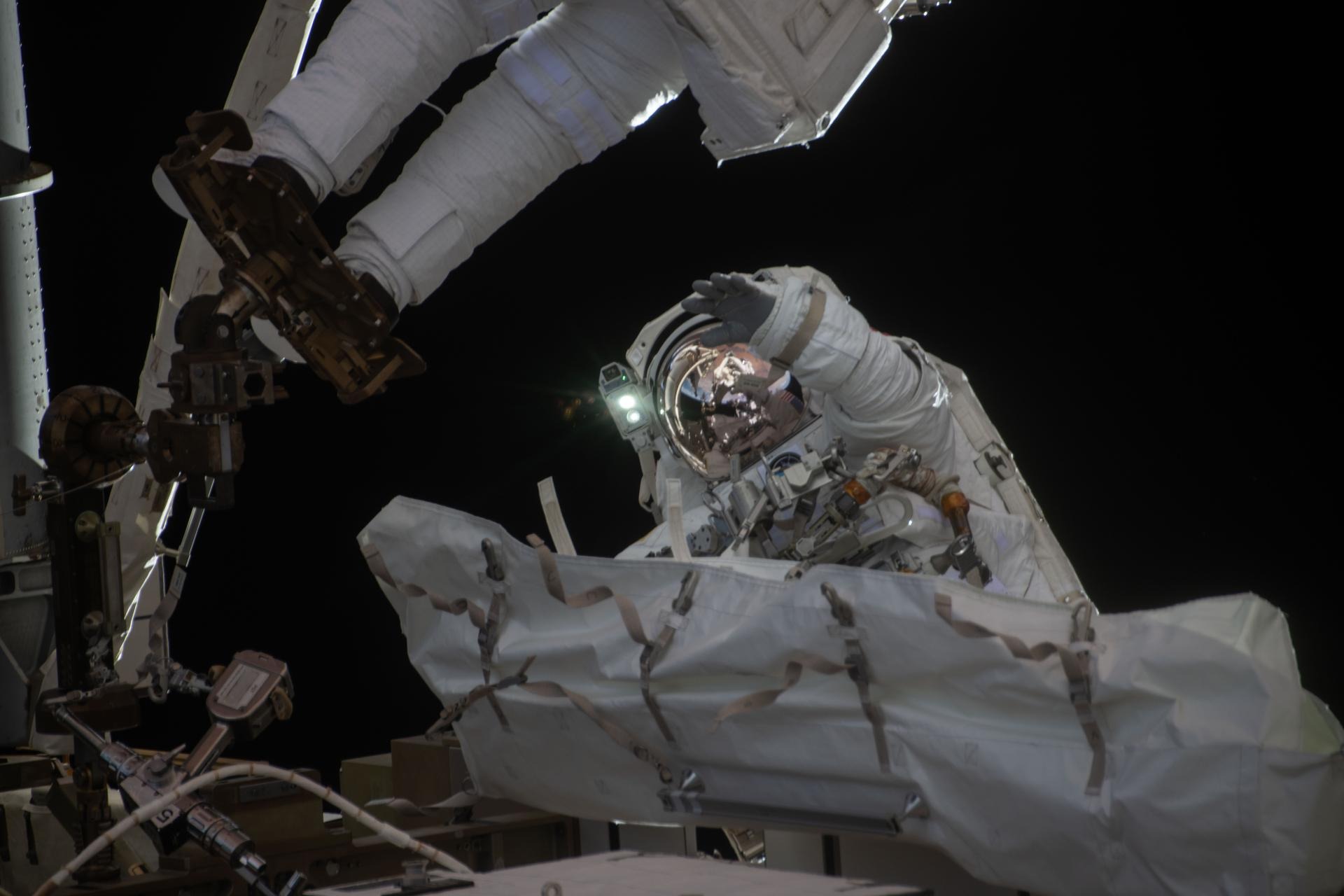
On June 30, 2026, NASA astronauts are set to perform Spacewalk 95, a critical extravehicular activity outside the International Space Station (ISS), aimed at replacing a worn wrist joint on the station`s Canadarm2 robotic arm. This operation is important for maintaining the equipment`s high performance and ensuring continued support for other missions relying on the ISS infrastructure.
Spacewalks, technically known as extravehicular activities (EVAs), involve astronauts leaving the pressurized environment of the space station to work in the vacuum of space. Equipped with specialized suits that provide life support, astronauts carry out repairs, upgrades, and scientific experiments that are vital to the functionality and longevity of orbital platforms.
Scientific and technical background
Canadarm2 is a highly sophisticated robotic arm approximately 17 meters long, designed with multiple joints to provide dexterity in orbit. Mounted on the ISS, Canadarm2 is used for various critical tasks such as manipulating cargo, supporting astronauts during spacewalks, moving station modules, and assisting docking procedures. The arm represents Canada`s significant contribution to the international collaboration behind the ISS.
Throughout its operational life, the arm`s joints face wear and tear from external influences such as microgravity, cosmic radiation, and extreme temperature fluctuations. Replacing a joint is an intricate and demanding task that requires precise coordination and skill from astronauts, supported by mission control teams on Earth.
During Spacewalk 95, the crew will remove the degraded joint and install a new replacement, ensuring the robotic arm retains its full operational capability. This in-orbit maintenance guarantees the ISS remains a functional and adaptable platform for ongoing scientific research and logistical operations.
Preparations and significance of the spacewalk
NASA has announced comprehensive media coverage for the upcoming walk and will host a news conference before the EVA to detail the mission objectives, procedures, and equipment involved. Given the inherent risks and complexities of spacewalks, the broader scientific community and space enthusiasts worldwide closely follow these events.
Maintaining infrastructure aboard the ISS is vital for the station`s role as a hub for microgravity research, technology testing for lunar and Martian missions, and as an inspirational platform for education and public outreach. Canadarm2 plays a key role by deftly handling cargo resupply vehicles from agencies like ESA, JAXA, and NASA, as well as supporting critical docking and assembly tasks.
Replacing the wrist joint on Canadarm2 is, therefore, a strategic action to extend the life of this invaluable tool and ensure the sustainability of ISS operations well into the future.
What to watch for astronomy and astrophotography enthusiasts
NASA offers live coverage of spacewalking activities, providing a unique opportunity for observers and astrophotographers to witness astronauts working in the stark, beautiful environment of space. These live streams include explanations and visual demonstrations, allowing enthusiasts to deepen their understanding of orbital robotics and human spaceflight.
The upcoming spacewalk exemplifies advanced technology and international cooperation in space exploration. Keeping the robotic systems on the ISS in peak condition is essential for ongoing scientific missions and future ventures into deeper space.
For further updates and detailed coverage, follow official NASA channels and trusted astronomy portals such as subcer.ro, which provide ongoing reports about the latest developments in space science.
Source: HubbleSite