
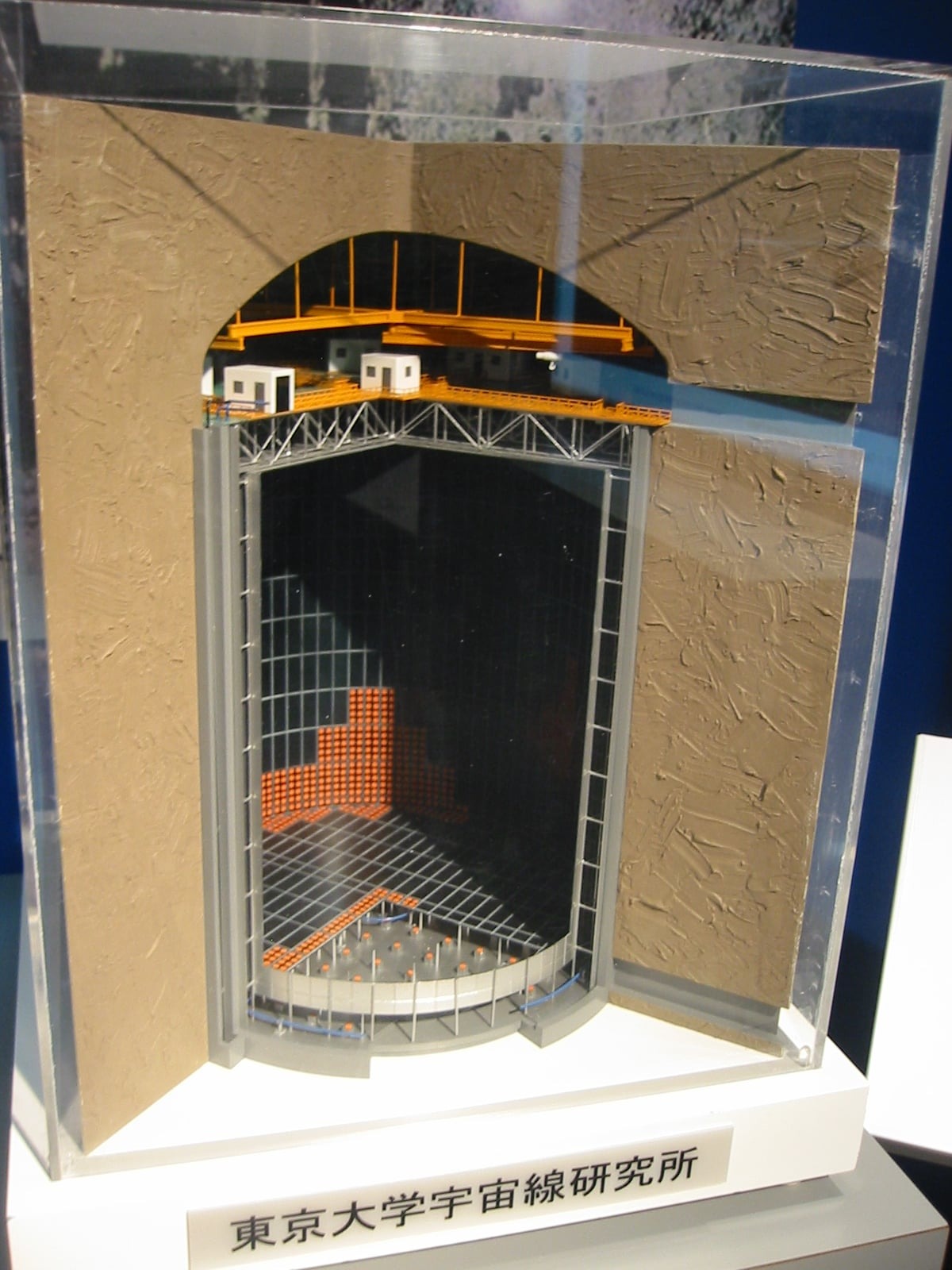
Deep beneath the Earth`s surface, in a laboratory located about one kilometer underground, a team of Japanese and international researchers may have made a significant breakthrough in detecting a cosmic phenomenon that has long eluded direct observation: a sound wave originating from every supernova that has ever exploded across the universe. This sound, or more precisely, this faint `whisper,` represents the combined echo of countless stellar explosions that have shaped the cosmos and the evolution of matter within it.
The instrument responsible for this potential detection is one of the most sensitive detectors in the world, situated in Japan. Its function is to listen for ultra-weak signals generated by particles and sound waves that propagate through the cosmic medium, reaching Earth with nearly imperceptible intensity. If confirmed, this discovery could revolutionize the way we track the birth and death of stars, providing a new approach to observing supernovae — not just through their emitted light and radiation, but by detecting a universal type of `sound,` created by the accumulation of all these stellar cataclysms.
What are supernovae and why do they matter?
Supernovae are violent explosions marking the end of a star`s life cycle. They play a fundamental role in the cosmos by dispersing heavy elements like iron, nickel, and other precious metals essential for planet formation and the emergence of life. Traditionally, detecting supernovae relies on optical observations and electromagnetic waves emitted during the explosion. However, these methods have limitations, often hindered by distance, cosmic dust, or other diffusing phenomena.
Sound waves and supernovae
Though space is largely a vacuum, there exist phenomena involving sound waves generated by extremely subtle oscillations in the cosmic medium, interpreted as echoes of cosmic events. Detecting these sound waves on a universal scale was previously impossible due to the weakness of the signal and Earth-based interference. However, deep underground, the Japanese detector drastically reduces environmental noise, enabling the observation of previously inaccessible signals.
This detector employs advanced technology to record and interpret these cosmic vibrations, potentially resulting from the combination of vibrations produced by billions of supernovae occurring at different distances and times throughout the universe`s history. Such a signal would be akin to a cosmic symphony, where each stellar explosion adds a unique note, essential for understanding universal evolution.
Implications of the research
If these results are validated, they could transform astrophysicists` approach to studying supernovae by providing a novel method of monitoring stellar activity through the detection of cosmic sound waves. This might open avenues for more detailed observations of heavy element formation, interstellar gas dynamics, and a deeper comprehension of how the universe has developed over billions of years.
Additionally, this technology promises to help astronomy and astrophotography enthusiasts gain a better grasp of phenomena affecting light and matter in space, offering a new dimension for observing the sky and celestial events.
Currently, the discovery remains preliminary, requiring further validation and complementary studies to rule out terrestrial phenomena or possible interference. Nevertheless, the scientific community is enthusiastic, and the prospect of hearing the universe`s `whispers` brings humanity closer to understanding the profound mysteries governing the cosmos.
Sources: Universe Today
Source: Universe Today