
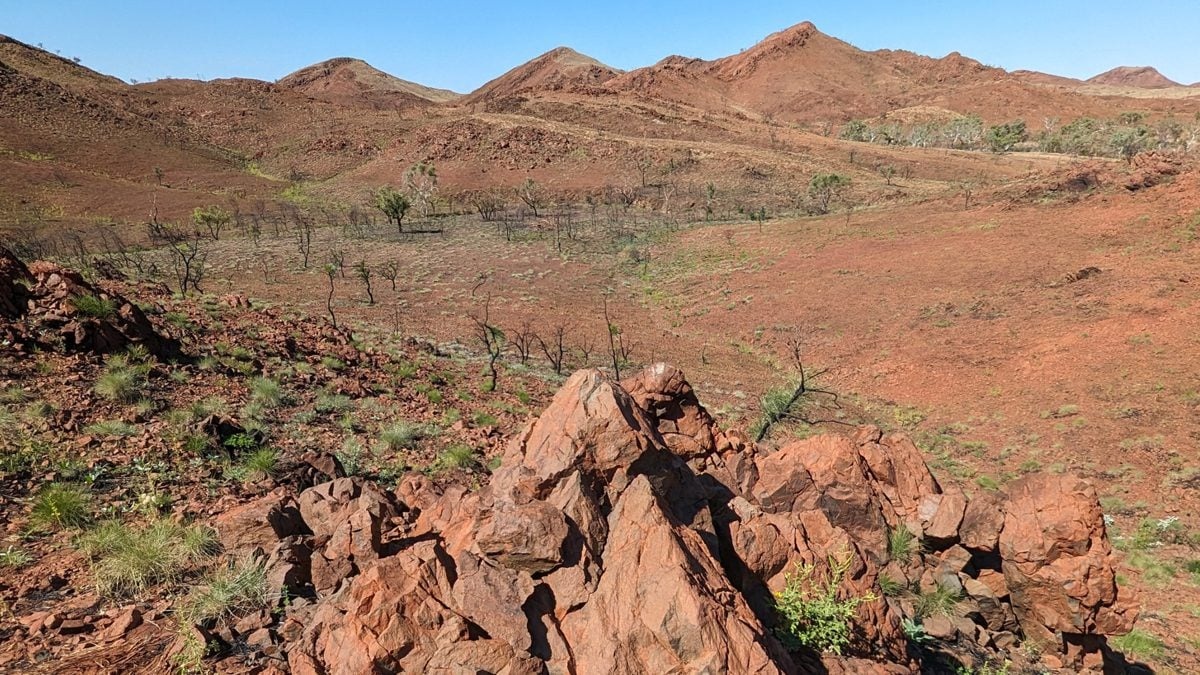
In a groundbreaking scientific investigation, a team of researchers has precisely determined the age of the oldest known impact crater on Earth. This feat was achieved through detailed analysis of exceptional mineral samples, most notably a zircon crystal found within ancient rocks in Western Australia, specifically in a region known as North Pole Dome.
The North Pole Dome area is part of the Pilbara Craton, a geologic region renowned for its ancient, well-preserved rocks providing a unique window into Earth`s early history. By examining the minerals within these rocks, the researchers employed advanced mineral dating techniques that allowed them to pinpoint the exact timing of the cosmic impact which created the crater. The impact event was dated to approximately 3.024 billion years ago, with only a minor margin of error spanning a few million years. This precise figure offers a concrete date for an event that had previously been subject to considerable estimation.
Leading the research team is Chris Kirkland, a scientist belonging to the Timescales of Mineral Systems group at Curtin University’s School of Earth and Planetary Sciences. According to Kirkland, these findings resolve a longstanding scientific question about when this significant impact occurred in Earth’s geological timeline.
Why does such a discovery matter? Impact craters form when meteoroids or other celestial bodies collide violently with Earth’s surface, generating structures that can dramatically change local and even global environments. These impacts can influence the trajectory of life on Earth by causing environmental shifts and mass extinctions. Knowing the exact timing, scale, and frequency of such impacts is crucial for understanding both Earth’s history and the conditions within our early solar system.
The minerals used in these dating processes are typically zircons—tiny crystals capable of preserving geochemical information over billions of years, even under extreme geological conditions. Dating these crystals involves measuring the ratios of radioactive isotopes and their decay products, essentially functioning as highly reliable and ancient geological clocks, a method known as radiometric dating.
In the context of the North Pole Dome, analyzing the zircon crystal alongside other minerals allowed scientists to confirm the impact event’s age with remarkable accuracy. This discovery sheds light on the Archean Eon, a time when Earth was still young and subjected to a harsher environment including frequent bombardments by extraterrestrial objects.
This breakthrough exemplifies not only the power of modern mineral dating techniques but also holds great interest for astronomy and astrophotography enthusiasts who follow how cosmic phenomena affect our celestial neighborhood. Understanding impact craters bridges the story of Earth with the vast cosmos it inhabits.
Future research will continue to analyze other ancient craters and associated minerals, each new finding adding a piece to the intricate puzzle of planetary history. For now, this study confirms that Earth harbors crystalline memories billions of years old, waiting to be decoded through innovative and captivating scientific methods.
Source: Universe Today