
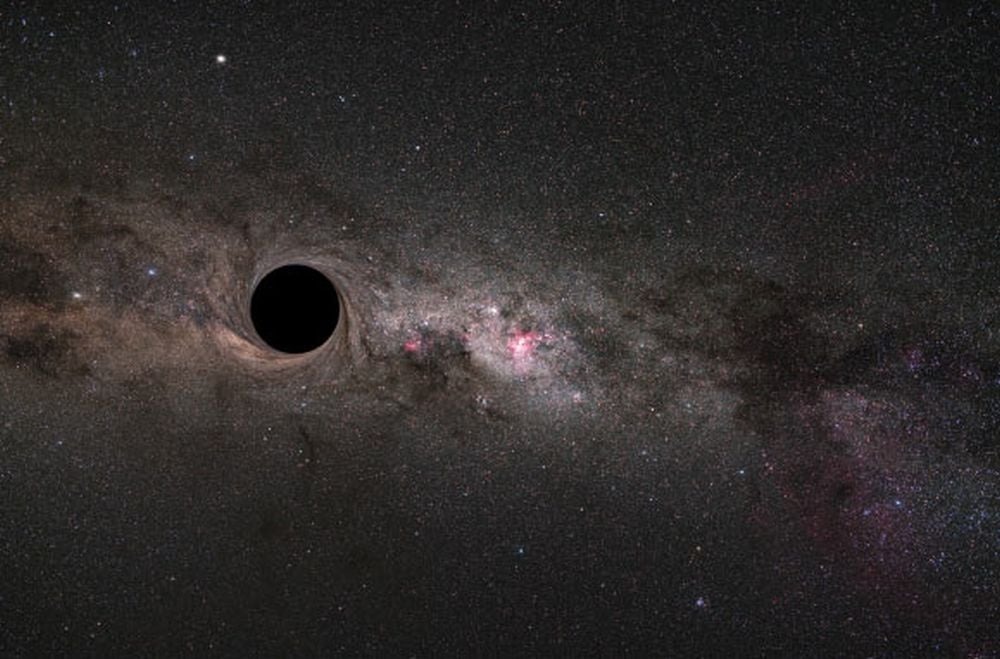
Black holes have long fascinated both scientists and astronomy enthusiasts alike. Among the most enigmatic cosmic objects are primordial black holes (PBHs) – hypothetical entities believed to have formed in the very early Universe as a result of collapsing dense pockets of subatomic matter. Unlike typical black holes, which originate from the deaths of massive stars, PBHs come from regions of immense density shortly after the Big Bang, making their origin and characteristics quite distinct and intriguing.
In recent years, theoretical physicists and astrophysicists have been exploring possible interactions between PBHs and other stellar objects. A new study sheds light on a remarkable mechanism by which these primordial black holes might trigger Type Ia supernova explosions, which are critical cosmic phenomena used by astronomers to measure cosmic distances and understand the expansion of the Universe.
Type Ia supernovae are traditionally understood as thermonuclear explosions of white dwarfs – extremely dense and compact stellar remnants formed from medium-mass stars. White dwarfs generally do not explode spontaneously; rather, they do so upon reaching a critical mass through material accumulation, often from a nearby companion. This new research proposes that a primordial black hole traveling through a white dwarf could initiate a unique process causing the white dwarf to explode.
As a PBH passes through the white dwarf, it begins to accrete the star`s matter, gradually increasing temperature and pressure in its immediate vicinity. This accretion can disrupt the white dwarf`s delicate hydrodynamic balance, ultimately resulting in a runaway thermonuclear explosion akin to a Type Ia supernova. Interestingly, these events could be associated with specific chemical signatures that differ from classical Type Ia supernovae, potentially explaining some supernova explosions with unusual elemental abundances.
This mechanism opens intriguing avenues for the detection of PBHs. Since these primordial black hole-triggered supernovae might exhibit unique chemical fingerprints, astronomers can look for such anomalies in supernova remnants. The signatures might include distinct ratios of elements like carbon and oxygen or rare isotopes formed during these atypical explosions.
The field of astrophotography and observational astronomy can play a vital role here, especially through detailed spectral studies in visible light and X-rays. Capturing and analyzing these events will help scientists confirm or refute the existence of primordial black holes by observational means. Such discoveries would provide invaluable insight into the nature and distribution of PBHs, shedding light on early Universe conditions and the evolution of cosmic structures.
Beyond their cosmological significance, understanding PBHs also has implications for the mystery of dark matter. Primordial black holes are considered one of the candidates for dark matter, and detecting their interactions with stellar objects could revolutionize our understanding of the Universe`s composition.
In summary, the study presents an innovative perspective on how primordial black holes may manifest through direct interaction with white dwarfs, triggering Type Ia supernovae that bear unique chemical properties.
This advancement paves the way for greater collaboration between observational astronomers and theoretical researchers, blending complex modeling with empirical data to deepen our knowledge of these complex phenomena.
As high-performance observatories and future space missions enhance their capabilities to monitor and analyze supernova explosions with increasing precision, the hope remains high to confirm or disprove PBHs in the cosmos. These findings not only clarify rare types of supernovae but may fundamentally transform how we perceive cosmic formation and structure.
For astronomy and astrophotography enthusiasts alike, these are exciting times. Every new discovery peels back one more layer of the profound mysteries of our Universe.
Source: Universe Today