
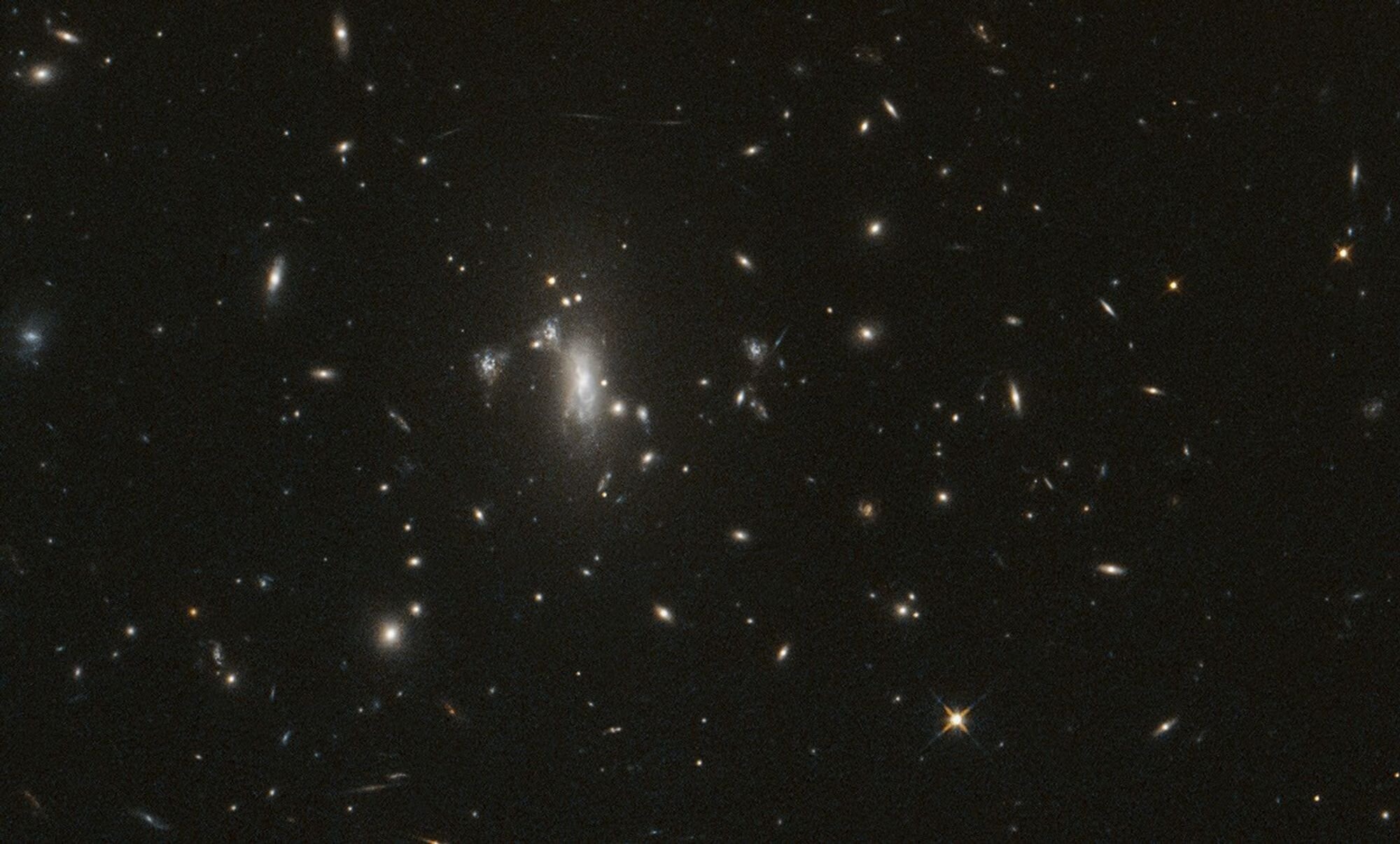
On September 19, 2026, NASA`s Hubble Space Telescope completed its remarkable 200,000th orbit around Earth, marking a significant milestone for this space observatory that continues to transform our understanding of the universe.
For over three decades, Hubble has provided unparalleled images and data of the cosmos, from distant galaxies and glowing nebulae to planets within and beyond our solar system. Launched in 1990, its mission has far exceeded the original expectations in both longevity and scientific impact.
One of Hubble`s recent scientific endeavors is the search and study of gravitationally lensed supernovae. This phenomenon occurs when light from a distant supernova is bent and magnified by the gravitational field of a massive galaxy located between the source and the observer. This natural cosmic lens effect enables Hubble to observe detailed cosmic events that would otherwise remain hidden to ground-based telescopes.
The importance of detecting and analyzing lensed supernovae lies in their role as powerful tools to measure the expansion rate of the universe and to test cosmological models. For instance, these observations support efforts to better understand dark energy, the mysterious force accelerating cosmic expansion. Hubble`s capability to observe in visible and ultraviolet wavelengths makes it an essential instrument for such precise measurements.
Reaching the milestone of 200,000 orbits, the mission team reflects on its achievements while looking forward to the future. Hubble continues to operate in synergy with other space telescopes like the James Webb Space Telescope, providing crucial information that helps build a clearer picture of our cosmos. The global community of astronomers and astrophotography enthusiasts eagerly anticipates the new discoveries that will emerge from Hubble`s ongoing mission.
Even after 36 years in space, the Hubble Space Telescope stands as a remarkable example of durable technology and scientific excellence, continually pushing the boundaries of time and space to bring us a unique perspective on the mysteries of the universe.
Source: Phys.org Astronomy