
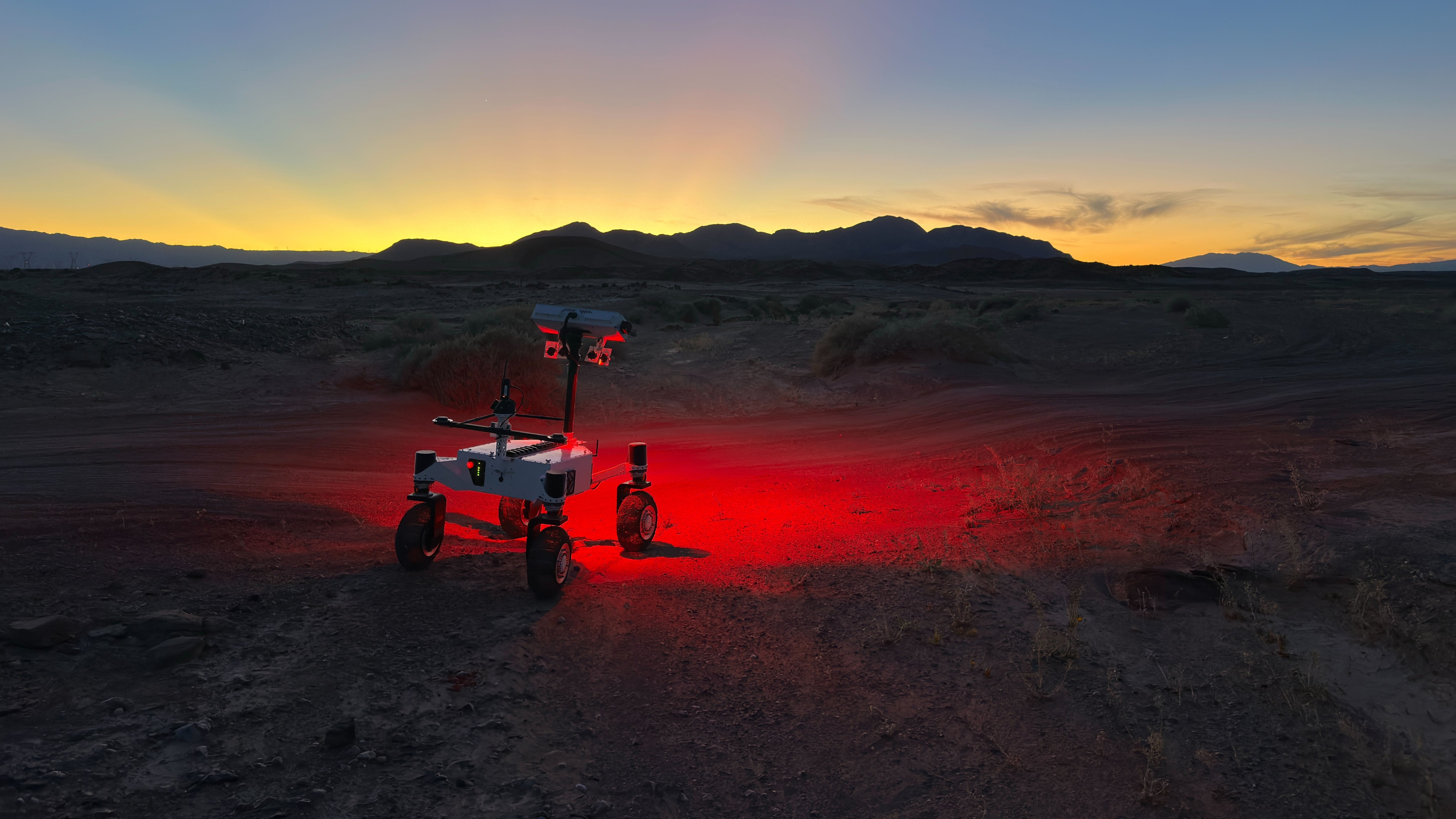
Space exploration continues to make rapid strides forward, and NASA exemplifies this through advanced testing conducted in the harsh Colorado Desert of Southern California. Recently, a compact four-wheeled rover traveled approximately 16 miles (26 kilometers) with minimal human intervention, testing promising technologies intended for upcoming missions to the Moon and Mars.
The scientific context behind these experiments stems from the ongoing evolution in robotic exploration techniques. Rovers — robotic vehicles that move over the surfaces of other celestial bodies — have become indispensable for space research, providing critical data about geology, atmospheres, and environments capable of supporting life. Previous missions, such as NASA`s Mars rovers Spirit, Opportunity, and Perseverance, have demonstrated the importance of autonomy and the ability to cover extensive distances over varied terrain, conditions difficult to replicate in laboratory settings.
The recent tests aim to validate advanced autonomous navigation, control systems, and data collection capabilities under conditions closely resembling extraterrestrial ones. The Colorado Desert offers a rugged and challenging terrain, including rocks, sand, uneven surfaces, and climatic variations that mimic lunar and Martian landscapes. During tests, the rover successfully traversed 26 kilometers with minimal operator input.
A key focus of these tests is vehicle autonomy. On the Moon or Mars, communication delays with Earth make real-time remote control impossible. Rovers must independently chart paths, avoid hazardous obstacles, identify scientifically significant targets, and relay relevant data back to human operators for further analysis.
The technologies being tested include cutting-edge image processing systems and artificial intelligence algorithms capable of pattern recognition, soil slippage evaluation, and risk anticipation. This process involves collecting large volumes of data from high-precision sensors and high-definition cameras mounted on the rover, all analyzed in real-time to make optimal navigation decisions.
NASA intends for these capabilities to support both robotic and potentially crewed operations in the future. Lunar exploration through the Artemis program and Mars colonization plans will require close cooperation between robots and humans, each complementing the other`s capacities to investigate and survive in hostile environments.
Furthermore, these tests hold significant interest for astronomy and astrophotography enthusiasts. Understanding how rovers interact with their environments helps these enthusiasts better appreciate photographic techniques used in low-light or extraterrestrial surface conditions, as well as the challenges behind capturing images that reveal the unique characteristics of the Moon and the Red Planet.
In summary, testing advanced capabilities for rovers destined for the Moon and Mars represents a major leap forward in automated space exploration. Vehicle autonomy combined with sophisticated AI and sensor technologies paves the way for a new era of cosmic discovery. The Colorado Desert provided both a tough testing ground and a valuable data source for optimizing future missions, bringing humanity closer to the day when humans and robots will work side by side exploring other worlds.
Source: NASA