
Our universe is in a continuous state of expansion, and this expansion is accelerating more and more over the past few billion years. The intriguing phenomenon behind this acceleration is attributed by physicists to a mysterious component called dark energy, which creates an effect of negative pressure, causing space itself to expand faster.
Dark energy has become the dominant influence in the universe`s evolution for roughly the last 3-4 billion years, marking the beginning of what is called the dark energy era. During this period, ordinary matter and the forces that previously governed cosmic evolution become less influential compared to dark energy`s effects.
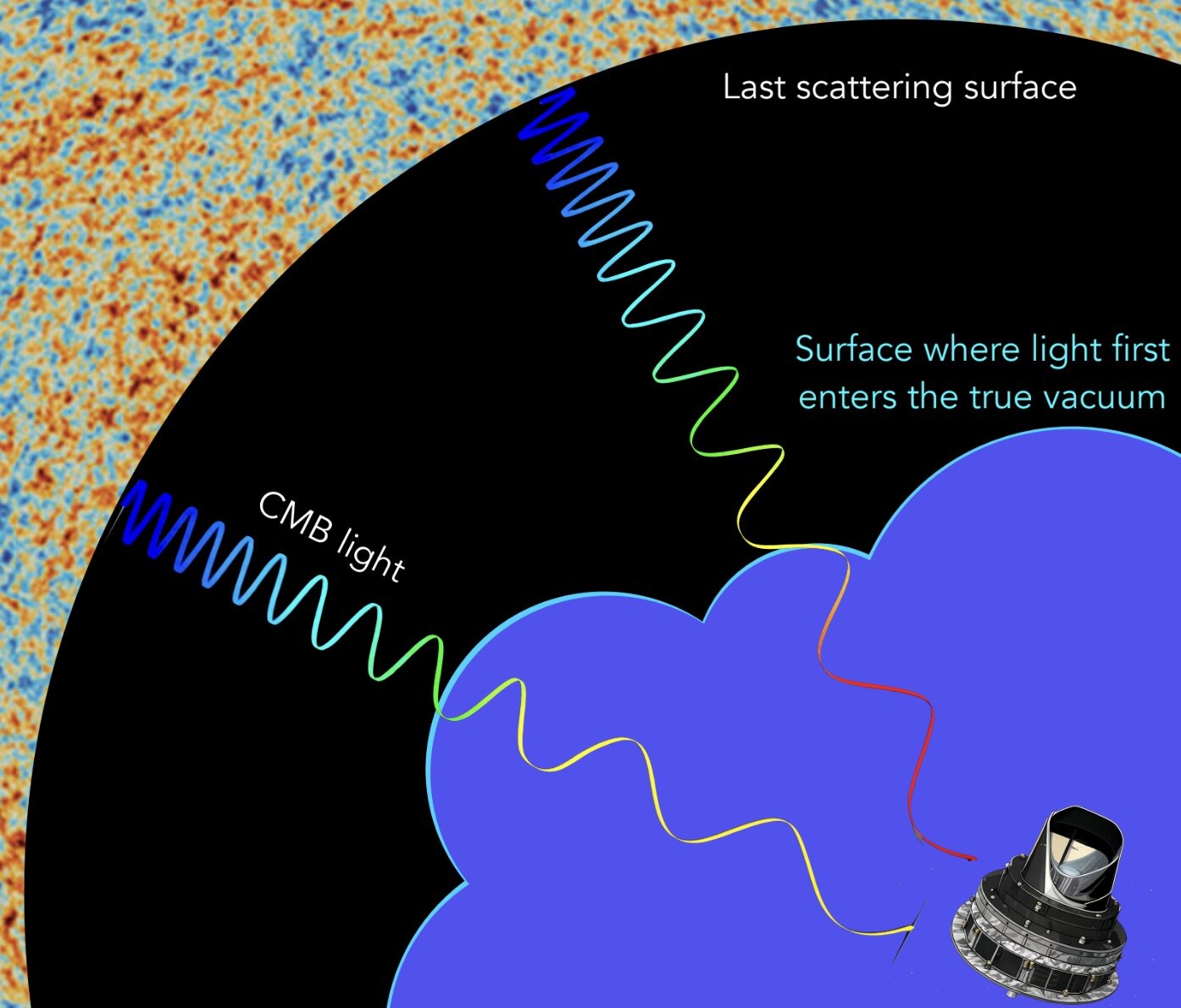
Recently, a new study reported on Phys.org has sought to set limits on possible phase transitions occurring in this era of the universe. Phase transitions refer to fundamental, abrupt changes in the physical state of a system, similar to everyday phenomena like ice melting or water evaporating. In the cosmic context, such transitions could significantly affect the properties of dark energy, and thus the way that the universe expands.
The research investigates whether dark energy has remained constant or might have undergone phase changes during this epoch, potentially explaining certain anomalies seen in cosmological measurements. By combining data from astronomical observations and rigorous theoretical frameworks, the researchers have significantly narrowed the parameter space where such a transition could have occurred.
The scientific background of this investigation ties into the broader effort by the scientific community to unravel the enigmatic nature of dark energy. Dark energy accounts for nearly 70% of the total mass-energy content of the universe and underpins modern models of cosmic evolution. Nevertheless, its true nature remains a profound mystery, with varying hypotheses proposing anything from cosmological constants to scalar fields or dynamic models involving phase transitions.
For astronomy enthusiasts and astrophotographers, these findings offer direct benefits, as understanding how the universe expands affects interpretations of images and data gathered by ground-based and space telescopes. Cosmic photographs captured with advanced instruments may reveal phenomena indirectly influenced by the properties of dark energy.
The methodology employed in this study combines observations from several sources: type Ia supernovae, the cosmic microwave background radiation, and measurements of the universe`s large-scale structure. These diverse datasets help constrain theoretical models and establish precise limits on the possibility of phase transitions in the dark energy epoch.
The conclusions drawn from this research are crucial for upcoming space missions and observatories aiming to decode the properties of dark energy in more detail. By narrowing the range of possibilities, scientists can better focus resources on promising avenues and shape a deeper understanding of the cosmic destiny.
In this way, the work contributes both to clarifying fundamental aspects of cosmology and to supporting astronomy and astrophotography enthusiasts in interpreting observed phenomena. It provides a rigorous, up-to-date framework for understanding dark energy and the universe`s evolution over the last several billion years.
Source: Phys.org Astronomy