
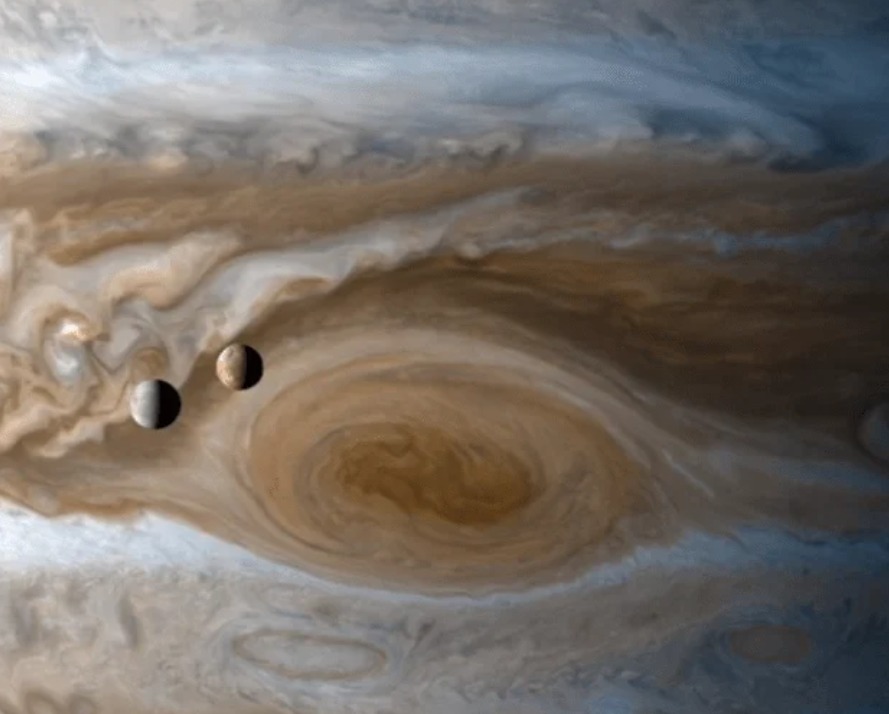
Starting from late 2026 and continuing into early 2027, amateur and professional astronomers alike will have a rare and spectacular opportunity to witness the Jovian moon mutual eclipse season. This special period, occurring roughly every seven years, offers a unique window to observe the fascinating interactions between Jupiter`s four largest moons — Io, Europa, Ganymede, and Callisto — as seen from Earth.
Scientifically, this phenomenon hinges on the slight inclination of the moons` orbits relative to our line of sight from Earth. Under certain conditions, one moon passes in front of another or casts its shadow upon it, creating mutual transits and eclipses. These events are not only visually impressive but also provide valuable data to study the orbital dynamics, physical properties, and atmospheres of these moons, further refining our astronomical models.
The 2026-2027 mutual eclipse season of the Jovian moons is particularly interesting because of the specific orbital alignments and positions of the satellites during this period. It begins in the second half of 2026 and extends into the spring of 2027, offering an extended timeframe when Jupiter and its moons are optimally visible during nighttime hours from Earth. Throughout these months, multiple events will occur in which one moon either blocks the reflected light from another (transit) or casts a shadow across it (eclipse).
For astronomers and enthusiasts, the significance of this season is multifold. First, mutual eclipses enable exceedingly precise measurements of the moons` positions and motions, vital for verifying and improving orbital models. Additionally, variations in brightness during eclipses provide insights into the surface compositions and tenuous atmospheres of the satellites. These observations contribute to our understanding of Jupiter`s system, home to some of the most intriguing bodies in the Solar System.
Astrophotographers consider this period a thrilling challenge since these mutual events are relatively brief and require well-planned observing sessions with suitable equipment. Their images can reveal dramatic shifts in illumination and the relative positions of the moons, creating a mesmerizing interplay of light and shadow set against Jupiter`s massive disc. Moreover, systematically documented photos and timing help the scientific community by supplementing professional data.
The peak of this season is anticipated in November 2026, when the frequency and magnificence of mutual eclipses will be at their highest. Observers with small to medium telescopes will be able to track changes in the moons` brightness and position, while dedicated astrophotographers can capture fine details of the shadows and lunar outlines using cameras attached to their instruments.
It is important to note that such phenomena are not visible all the time from Earth, due to the inclination of the Jovian moons` orbits and the varying position of Jupiter in the sky. Therefore, when such a season occurs, it is a must-see event. The last occurrence was in 2019, and the next will not happen until 2033, making 2026-2027 a special moment to deepen our knowledge and enjoyment of these celestial dances.
Various online resources and software tools will be available to assist amateur astronomers in predicting the exact times of each mutual eclipse, calculating the moons` precise locations, and planning observing sessions. It is advisable to follow astronomy websites and astrophotography communities for updates, tips, and detailed guides.
In summary, the Jovian moons` mutual eclipse season of 2026-2027 is an exciting event on the astronomical calendar that offers educational, scientific, and aesthetic rewards. By watching Jupiter during this timeframe, we gain a window into the synchronized dance of its moons, revealing hidden secrets and the wonders of this miniature planetary system.
Source: Universe Today