
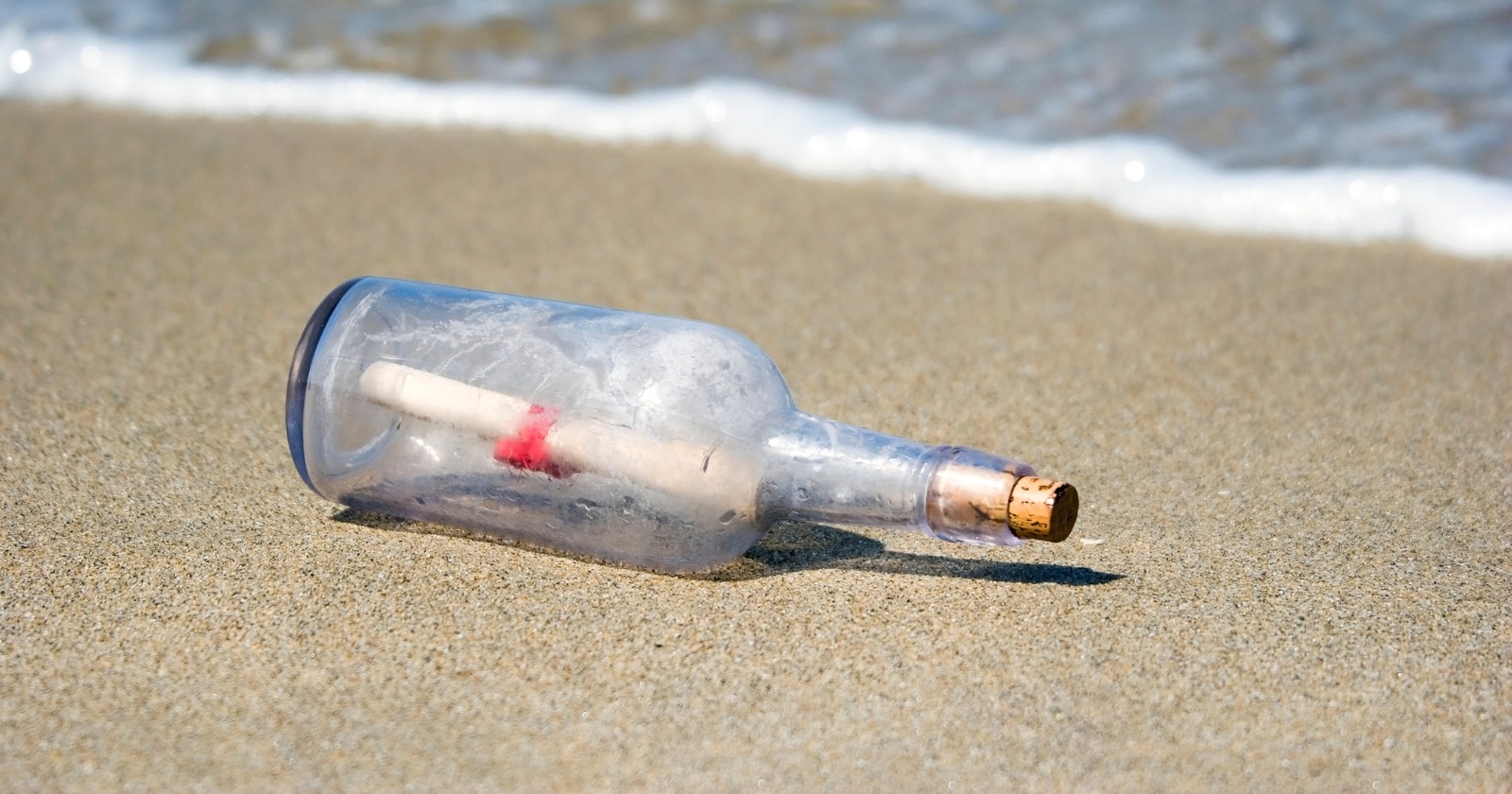
In 2018, a woman walking along an Australian beach stumbled upon something truly extraordinary – a bottle that had drifted through the oceans for an astonishing 132 years. This bottle, cast into the sea in 1886 by a German captain, contained a message documenting a scientific experiment designed to chart ocean currents. Today recognized as the oldest recovered message in a bottle, its story offers a fascinating glimpse into the history of maritime exploration and oceanographic study.
The scientific and historical context of messages in bottles
The concept of using bottles to study ocean currents is not new. Between 1864 and 1933, German sailors and oceanographers systematically released thousands of bottles into the sea, each containing a note with details about the ship’s location and time of release. Their ingenious objective was to track the routes taken by ocean currents by recording where and when these bottles were eventually found. The data collected helped scientists understand the complex patterns of ocean movement, vital for navigation, trade, and scientific research.
These messages included precise information such as the ship`s name, the date, and the place of release. In an era before GPS and satellites, this was one of the few practical empirical methods to monitor ocean water movement.
The 1886 experiment and its modern discovery
The bottle found on the Australian beach is part of such an experiment carried out in 1886. The German captain tossed it overboard near the German coastline, accurately documenting this event in the ship`s logbook. After more than a century, the bottle made its way to Australia – thousands of kilometers away, after an incredible and mysterious journey riding ocean waves.
The message inside the bottle remained perfectly legible, and its contents matched exactly the records kept in the captain`s logbook. This confirmation validated the integrity of the experiment, the robustness of the method, and the remarkable preservation of a bottle message despite harsh marine conditions.
What does this discovery teach us?
This 132-year-old bottle is more than just a relic. It is a window in time connecting us with the scientific efforts of the 19th century and the ways in which humans sought to understand the natural world before the era of modern technology. The study of ocean currents remains crucial today for astronomy and astrophotography, as climate and atmospheric conditions affect night sky observations, and understanding water and air movement helps improve weather forecasting.
Furthermore, the story underscores the importance of persistence in research and the creative methods scientists have used to study natural phenomena. For astrophotography enthusiasts searching for optimal sky viewing conditions, comprehending the factors influencing atmospheric clarity adds an extra layer of fascination and knowledge.
This rediscovered bottle also reminds us of the deep connection between humanity and the sea – a vast, mysterious domain that has inspired and fascinated generations. The German origins of the project and its eventual Australian destination illustrate how science transcends continents, keeping alive the human desire to know and explore.
Implications and future perspectives
Beyond its historic and scientific value, this discovery raises questions about the potential of messages in bottles today. With modern technologies, traditional methods could be combined with digital tools such as GPS beacons and satellites to conduct far more sophisticated experiments in studying oceanic movement and its atmospheric impacts.
For the astronomy and astrophotography community, opportunities to better understand natural factors affecting observation conditions will likely continue to expand, while stories like that of this bottle remind us to always keep a watchful eye on the past to understand the present and confidently face the future.
Thus, messages in bottles – once simple symbols of curiosity and exploration – remain an emblem of the relationship between humans, nature, and science, symbolizing the scientific adventure that links past and present in the most unexpected and magical ways.
Source: Space Daily