
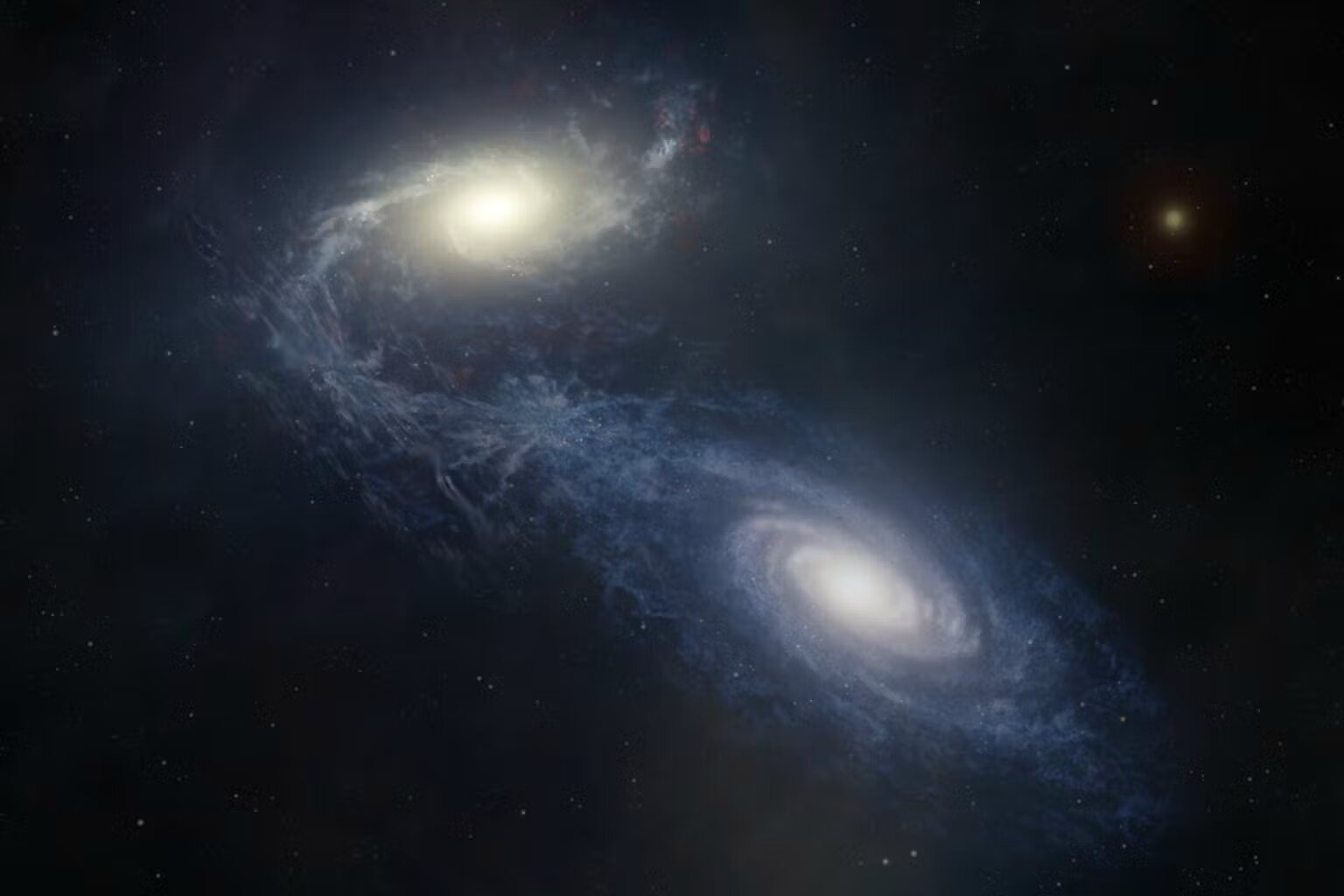
Billions of years ago, a young spiral galaxy began to grow in a crowded region of the universe. This fascinating process of expansion and integration of gas, along with smaller companion galaxies, unfolded over billions of years, leading to the bright central accumulations and spiral arms we observe today.
Astronomers and astrophysicists often use terms such as "space archaeology" to describe their work in understanding the formation and evolution of galaxies. Recent studies have confirmed that these spiral galaxies are not just simple shapes of matter but also clues that can help us understand cosmological processes of the past. By employing sophisticated observations and advanced imaging techniques, researchers can "read" the history of these impressive structures.
Understanding the evolution of spiral galaxies has profound implications for cosmology, as it provides insight into the distribution of matter in the universe and the dynamics of forming galaxies. Furthermore, this research can influence astrophotography techniques, enhancing how spectacular images of these structures are captured in the sky.
By using the Hubble Telescope and other modern observations, astrophysicists have realized that many spiral galaxies exhibit spiral arms, formed through complex gravitational interactions that occur over time. These interactions not only contribute to the formation of galactic structures but also allow them to incorporate materials that enhance the central luminosity of the galaxy.
The relevance of these discoveries is substantial for those passionate about astronomy. It emphasizes how the evolution of the universe is far more dynamic than we previously believed. Astrophotographers can greatly benefit from this knowledge, providing a natural "frame" for their photographic compositions.
As scientists continue to investigate the mysteries behind galaxy formation, it becomes evident that every observation contributes to the larger story of the universe. Spiral galaxies are not just visual attractions for enthusiasts; they are also symbols of the profound cosmic processes that guide us in our exploration of the cosmos.
Source: Phys.org Astronomy