
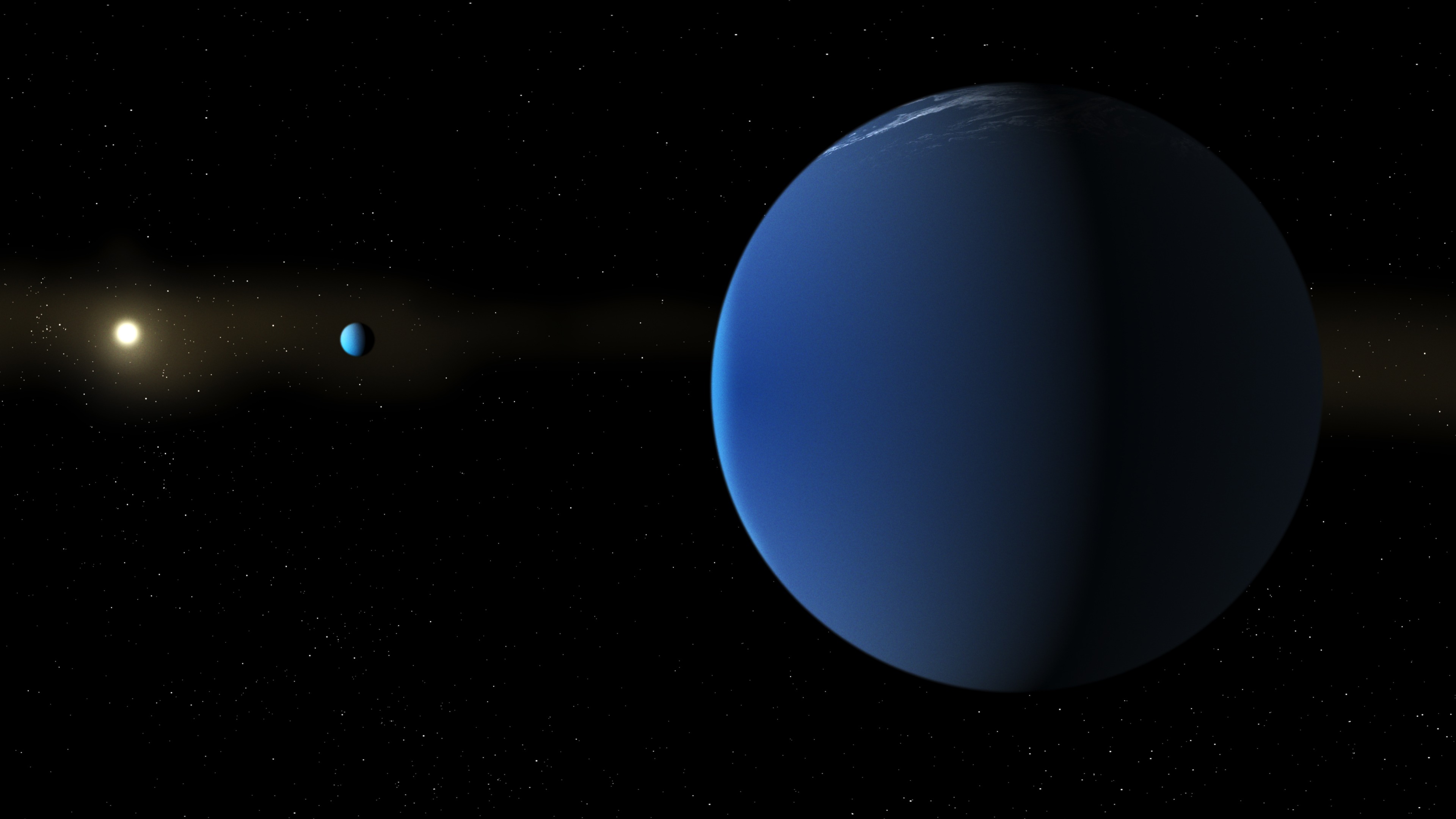
Space exploration never ceases to astonish us, and the latest revelation comes from NASA`s TESS mission (Transiting Exoplanet Survey Satellite). A research team has identified two new `super-puff` planets — gigantic worlds with extremely low densities, reminiscent of the fluffy texture of cotton candy. These ethereal planets stand out due to their enormous sizes, comparable to Jupiter, but with significantly lower masses, making them the puffiest planets ever found.
What are super-puff planets?
The term `super-puff` refers to an unusual category of exoplanets characterized by an exceptionally large volume-to-mass ratio. Simply put for astronomy enthusiasts, these planets are voluminous yet extremely lightweight, meaning their atmospheres are very diffuse. If one could hypothetically stand on these planets, the gravity would be far weaker than expected based on their size due to their low density.
Discovery through the TESS mission
TESS, NASA`s exoplanet-hunting satellite, is primarily tasked with identifying such nearby worlds by employing the transit method. This technique observes slight dips in a star`s brightness as a planet crosses in front of it. By analyzing these variations, scientists can deduce the planet`s size and density.
In the case of these two newly found super-puff planets, data indicate that, although similar in size to Jupiter, their masses are considerably smaller, resulting in extremely low densities. This suggests the presence of extended atmospheres, likely rich in hydrogen and helium, which give them their characteristic puffiness.
The significance of these discoveries
Finding super-puff planets provides valuable insights into planetary formation and evolution. Such giant planets with very low densities challenge existing models, as they exhibit unusual compositions and atmospheric processes that remain incompletely understood.
Moreover, these planets are excellent targets for atmospheric studies, due to their large size and rarefied atmospheres, allowing the detection of various chemical components through spectroscopic methods. Therefore, continued research on these planets could detail the conditions that give rise to such unusual planetary characteristics.
What next for the TESS mission and astrophotography?
The TESS mission continues to yield vast amounts of valuable data for both the astronomical community and astrophotography enthusiasts. Each discovery brings us closer to mapping our neighboring universe in greater detail, enabling both professional observers and amateurs to follow fascinating cosmic phenomena.
For astrophotography fans, such discoveries are inspiring in their quest to capture images of exotic planets and the stars that make up these intriguing systems. With increasingly accessible equipment, astrophotographers can indirectly contribute to our understanding of the cosmos by imaging and monitoring stellar variations.
In conclusion, discovering the puffiest planets so far via the TESS mission brings us closer to comprehending the complex diversity of planets and opens numerous opportunities for researchers as well as lovers of the starry sky. The future of astronomical discoveries looks more promising and exciting than ever.
Source: Webb Telescope News