
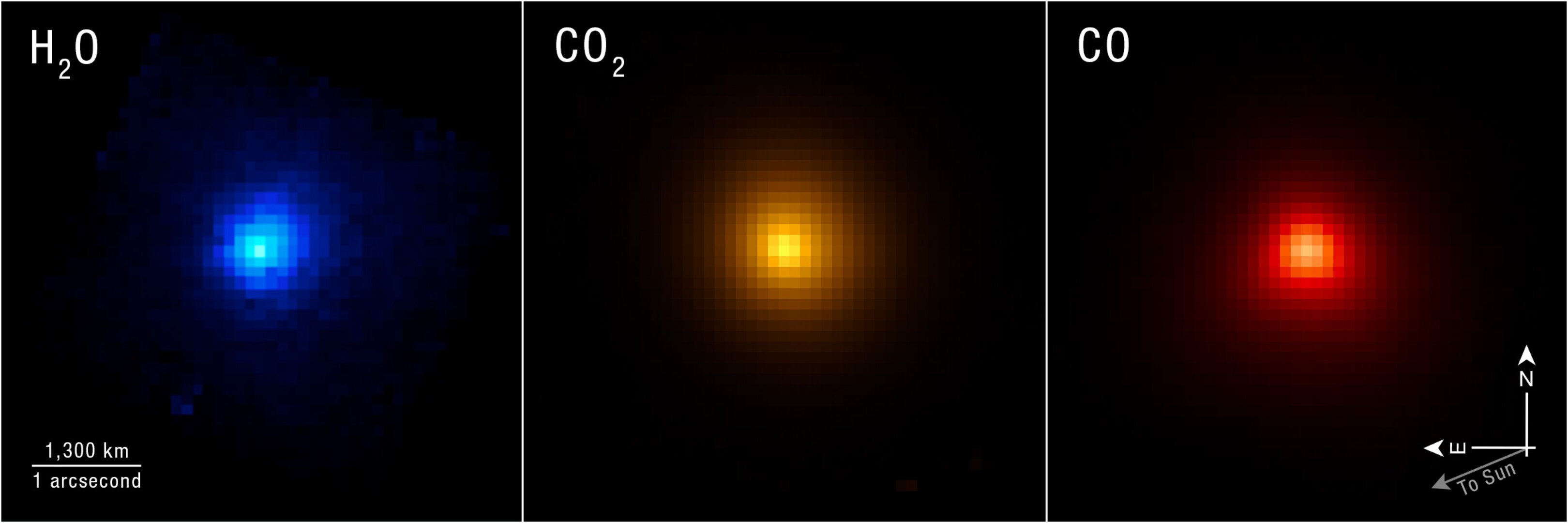
In a remarkable advancement in our understanding of the cosmos, NASA`s James Webb Space Telescope (JWST) has unveiled significant chemical insights about interstellar comet 3I/ATLAS, the third comet identified to originate from beyond our Solar System. These surprising findings concerning the comet`s composition are raising important questions about how common or rare the specific conditions that shaped our own Solar System might be.
Interstellar comets are objects that have traveled from other star systems and entered our Solar System, offering a unique glimpse into materials and chemical environments far beyond our local neighborhood. Before 3I/ATLAS, two other such interstellar visitors were detected: 1I/`Oumuamua and 2I/Borisov. Each discovery has added a piece to the puzzle of cosmic formation and evolution.
What sets 3I/ATLAS apart is the detailed chemical fingerprint it carries, which differs strikingly from typical Solar System comets. Using its sophisticated near-infrared instrument NIRSpec, the JWST was able to analyze the volatile compounds in the comet`s coma and tail with unprecedented sensitivity. This includes a variety of gases and molecules that hint at an origin environment fundamentally different from that which birthed our native comets.
Such observations suggest that 3I/ATLAS was likely formed in space conditions with a unique chemical makeup, possibly in the early phases of a different star system`s protoplanetary disk. This insight opens a window to understanding the chemical and physical processes occurring across the galaxy as stars and planets are born.
Comets are often regarded as pristine relics from the time of star and planet formation, icy bodies preserving the materials present in the primordial molecular clouds that collapse into stellar systems. Examining their composition helps astronomers piece together the environmental conditions and chemical pathways that have led to the formation of planets and, potentially, to the emergence of life.
The new data from 3I/ATLAS raises compelling questions about the uniqueness of the Solar System`s formation environment. If interstellar comets show very different chemical signatures, the implication is that planetary systems can vary widely in their makeup — potentially influencing the likelihood and nature of habitable worlds.
Beyond the scientific importance, these discoveries also captivate astronomy and astrophotography enthusiasts who eagerly track celestial visitors. The JWST`s data enables astronomers to refine their observational strategies, with the hope of detecting and studying many more such rare icy travelers from afar.
This research underlines the vastness and complexity of our galaxy, reminding us how many cosmic mysteries remain unsolved even with today`s advanced technologies. Comet 3I/ATLAS is not merely an interstellar wanderer; it is a crucial puzzle piece in the grand story of our cosmic origins.
For those interested in following this exciting journey of discovery, the European Space Agency provides up-to-date images and detailed reports on the ongoing revelations coming from the James Webb Space Telescope, promising many more exciting insights into the universe around us.
Source: ESA