
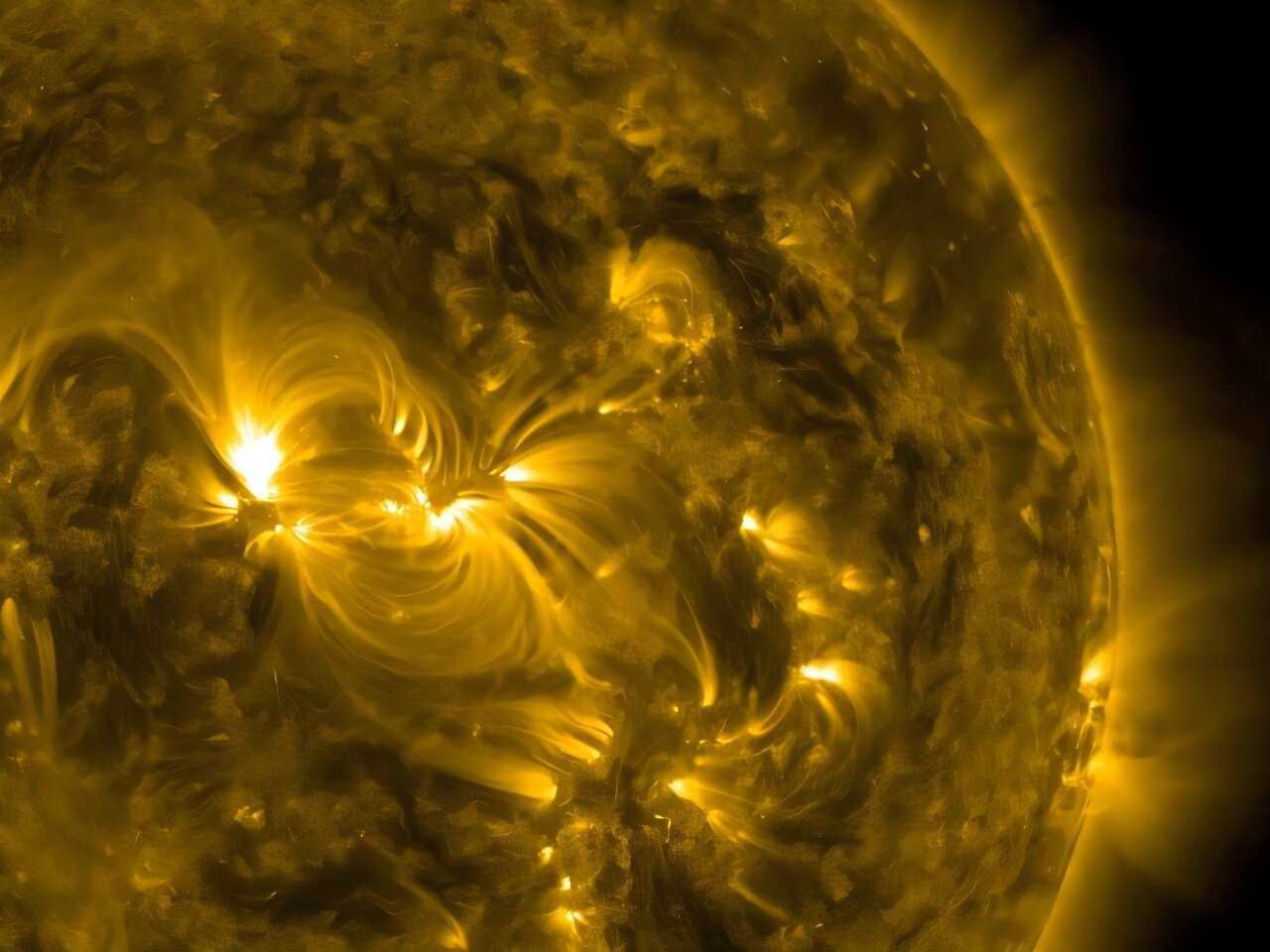
The Sun, our solar system`s central star, continues to captivate us with its complex internal processes that scientists strive to understand better. One of the most intriguing features of the Sun is the tachocline, an extremely thin but crucial layer located between the radiative zone and the convective zone. This narrow layer holds vital secrets about solar dynamics and has long puzzled researchers due to its remarkably small thickness compared to the Sun`s vast size. Recent studies, however, are shedding light on this enduring mystery.
The tachocline plays a pivotal role in generating what we call space weather — powerful eruptions that release high-energy particles and radiation influencing the space environment around Earth and other planets. Understanding why this layer remains so thin helps scientists uncover the mechanisms behind the solar magnetic field, which drives solar activity including solar flares and coronal mass ejections.
But what exactly is the tachocline? It is a transition zone between the Sun`s deep interior, where energy moves outward primarily by radiation, and the outer convective layer where turbulent flows of plasma circulate and transport energy. The tachocline is characterized by a sharp gradient in rotational velocity — a strong shear zone where layers spin at different speeds. This shear is essential in shaping the Sun`s magnetic dynamics and the solar magnetic field generated by dynamo processes.
What has astonished the scientific community is how extremely thin this tachocline remains, measuring only a few thousand kilometers thick despite the Sun`s diameter exceeding one million kilometers. Why such an intense shear zone remains so compact and stable has been a longstanding question.
A recent study published on Phys.org Astronomy presents significant advances in unraveling this mystery. Researchers found that deep magnetic fields combined with complex turbulent flows and fluid instabilities play a key role in maintaining the tachocline`s thinness. Practically, magnetic fields generated inside the Sun stabilize the layer and prevent it from broadening.
This breakthrough enhances solar internal dynamic models, which are critical for understanding solar physics and predicting space weather events that can disrupt technology and communications on Earth. The better we comprehend solar processes, the more effectively we can develop strategies to shield our assets from solar storms.
Furthermore, studying the tachocline contributes to astrophysical knowledge of how Sun-like stars function throughout the universe. This shear layer likely plays a similar role in generating stellar magnetic fields in other stars, making these discoveries important on a cosmic scale for both astronomy and astrophysics.
Astronomy enthusiasts and astrophotographers can follow these findings with interest, as solar phenomena influenced by tachocline dynamics affect observational conditions. For example, spectacular natural light shows like the aurora borealis and aurora australis arise from interactions between the solar magnetic field, solar wind, and Earth`s magnetic environment—phenomena directly linked to solar activity rooted in the tachocline.
Thus, the tachocline is a key layer for understanding the Sun, and explaining its extreme thinness opens new paths to exploring stellar activity and predicting space weather phenomena that impact everyday life on Earth.
In summary, recent research demonstrates that a deep understanding of the tachocline is essential for decoding the Sun`s internal dynamics and its influence on the solar system. For astronomers, astrophotographers, and enthusiasts alike, these discoveries strengthen our fascination with our star, continually revealing hidden mysteries beneath its surface.
Source: Phys.org Astronomy