
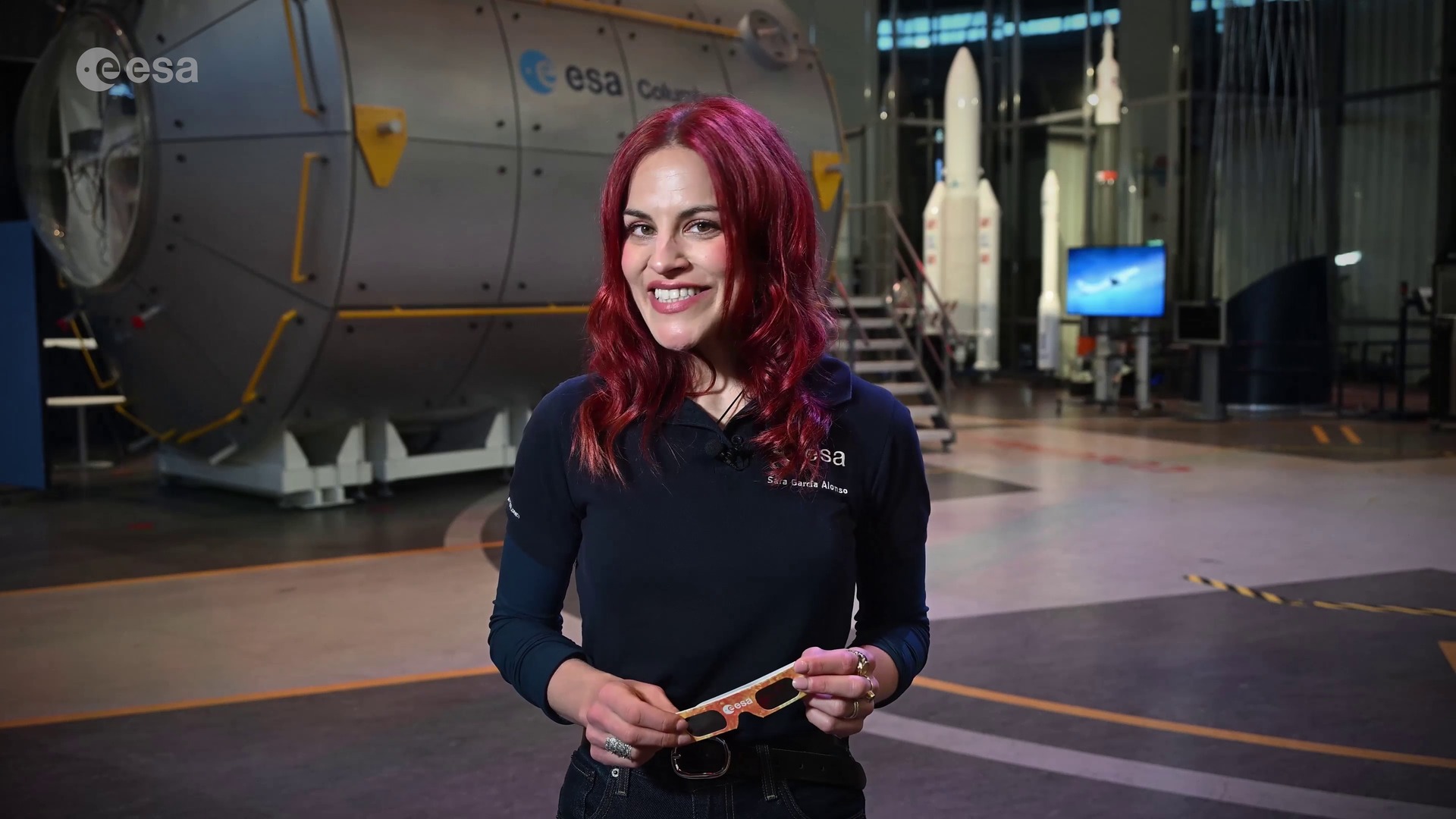
The Sun, our star at the center of the solar system, plays a vital role by providing energy and light necessary for life on Earth. However, despite its significance, many aspects of our Sun remain shrouded in mystery. To unravel these secrets, the European Space Agency (ESA) has launched a series of pivotal missions that study the Sun from space, delivering valuable insights into its behavior and its influence on both cosmic and terrestrial environments.
Currently, Europe operates several advanced tools and projects dedicated to understanding solar dynamics, the structure of the solar atmosphere, and various phenomena occurring on and around the Sun.
Scientific context: why is studying the Sun important?
The Sun emits a continuous stream of particles and radiation reaching Earth, which affect its atmosphere, climate, and even satellite communications. These emissions, known as solar wind, can trigger geomagnetic storms impacting electrical grids and technological systems. Additionally, comprehending the processes in the solar corona—the Sun`s extremely hot outer layer—helps to solve the mystery of why this region heats up to temperatures much higher than the Sun`s surface, a phenomenon not explained by traditional models.
European missions exploring the Sun
ESA has developed and supports several space missions that continuously monitor the Sun. Among the most notable are SOHO (Solar and Heliospheric Observatory), Solar Orbiter, and Proba-3.
SOHO – a pioneer in solar observation
Launched in 1995, SOHO is one of the longest-running and most successful solar observation missions. Positioned at the Lagrange point L1, about 1.5 million km from Earth, SOHO provides detailed images of the solar surface, magnetic activities, and the corona. It monitors solar wind and solar flares, offering early warnings for phenomena that can impact Earth.
Solar Orbiter – the closer solar explorer
Solar Orbiter is a more recent mission designed to fly unusually close to the Sun, studying it in detail with several advanced scientific instruments. This probe provides unprecedented perspectives on the Sun`s poles and magnetic structures that influence solar atmospheric behavior.
Proba-3 – creating an artificial solar eclipse in space
The technological innovation of the Proba-3 mission lies in creating an artificial solar eclipse in space. Two satellites work in precision formation to block direct sunlight, enabling detailed observations of the solar corona, the hot and mysterious outer layer of the Sun. This unique method opens new avenues for understanding how the corona heats up and its complex dynamics.
Significance of these studies for astronomy and astrophotography enthusiasts
Understanding solar phenomena directly impacts astronomy and astrophotography communities. Through the images and studies provided by these missions, enthusiasts can anticipate and admire solar events such as eclipses, sunspots, or auroras—all heavily influenced by solar activity. The data and visuals shared by ESA serve as an incredible source of inspiration and practical knowledge for those closely observing and capturing the night sky.
Conclusion
Europe`s study of the Sun through these modern and innovative missions represents a critical step toward protecting our planet and expanding scientific knowledge in astronomy. From SOHO`s detailed observations to Proba-3`s artificial eclipses, each project brings new understanding about the star sustaining life on Earth. This valuable information is not reserved solely for scientists but is also available to passionate communities, encouraging deeper discovery and appreciation of the wonders of the universe.
For astronomy and astrophotography enthusiasts, following these missions and assimilating their findings enhances the comprehension of complex connections between the Sun, cosmic space, and Earth. It inspires a fresh perspective when exploring and photographing the celestial sphere.
Image: ESA
Source: ESA