
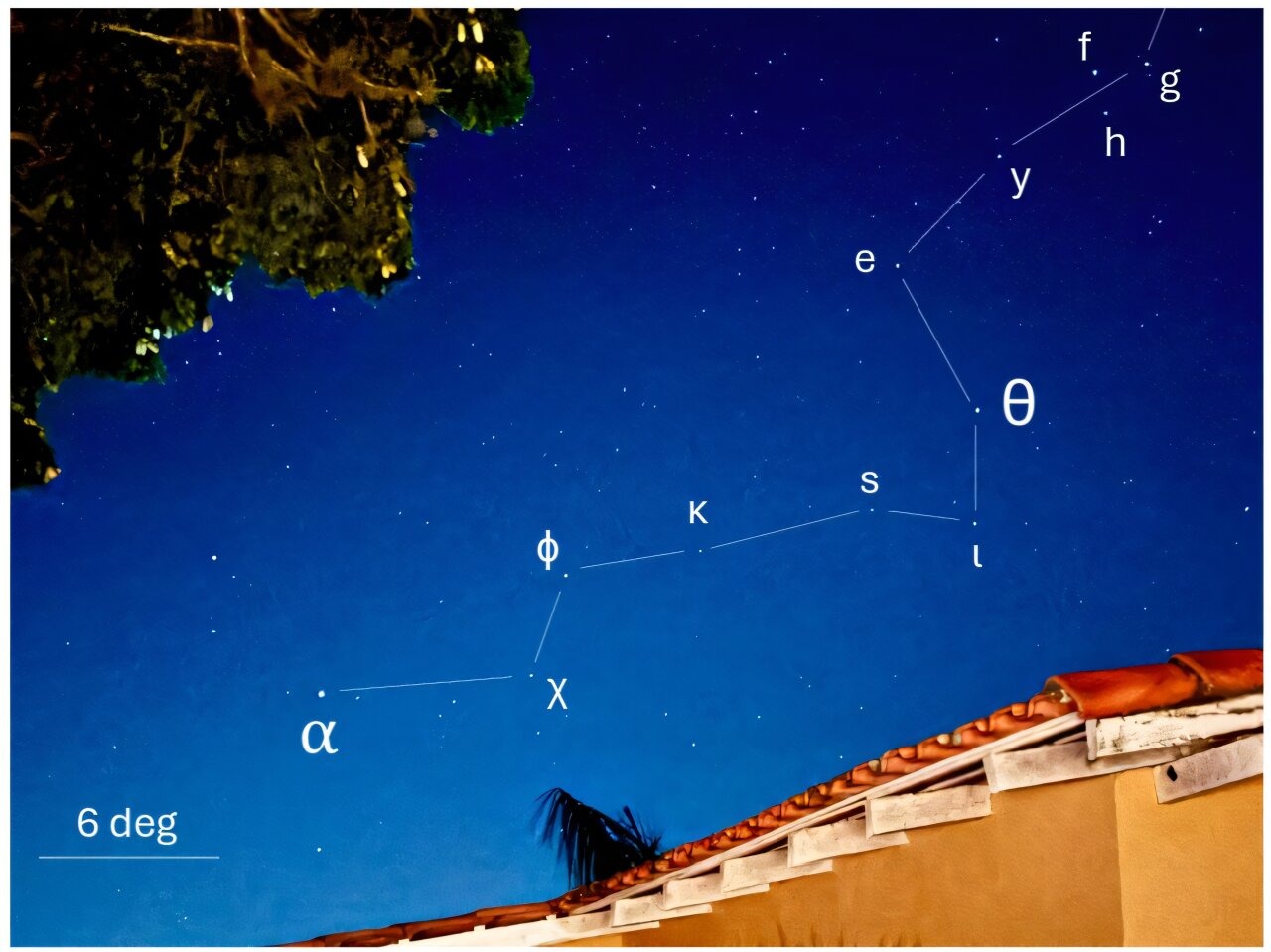
For astronomy enthusiasts and astrophotographers alike, understanding the night sky and its celestial bodies remains a captivating challenge, with some mysteries lasting over a century offering fresh insights into how we view the cosmos. One such enigma involves the star Theta Eridani, located in the Eridanus constellation, a moderately bright star that was described quite differently in ancient astronomical records. This discrepancy has puzzled scientists for decades.
Currently, Theta Eridani ranks as the third brightest star in the Eridanus constellation, boasting an apparent magnitude of about 2.9. Yet, the ancient astronomers` descriptions imply a significantly higher brightness, raising the question: how could such a glaring difference persist unresolved for so long? A recent study, posted on the arXiv preprint server on June 29, 2026, proposes a plausible explanation that might finally solve this century-old stellar puzzle.
The scientific context behind this stellar mystery hinges on the fact that stars are not static entities fixed in time and space but dynamic objects capable of substantial changes due to internal and external processes. Stellar brightness can vary, atmospheres can shift, and interactions with other bodies can alter the way stars appear to Earth observers. However, when large discrepancies exist between ancient observations and modern data, deeper explanations are needed that may involve natural stellar changes or interpretative errors in historic texts.
The recent research suggests that the observed variability of Theta Eridani may be linked to a combination of factors, including the complex orbits of multiple components within the stellar system and temporary shifts in brightness caused by unusual stellar phenomena like luminous outbursts or sporadic magnetic activity. This interpretation is backed by a thorough analysis of historical data combined with current observations, employing advanced techniques such as high-precision spectroscopy and photometry.
More than just resolving a historical question, this discovery highlights the importance of comparative studies between ancient and modern data, showcasing how advanced astrophysical methods can illuminate the long-term evolution of stars. It also illustrates the scientific worth of carefully preserved past observations, which aid in confirming or refuting theories about the nature of our universe.
Furthermore, the explanation offered for Theta Eridani`s anomaly may influence how astronomers interpret similar discrepancies found in other star catalogs. It invites a careful reevaluation of observations and reports from different epochs, taking into account not only the technological and methodological context of the time but also potential astronomical phenomena that might alter star behavior over extended periods.
For astrophotographers, this discovery has practical significance: understanding the variable behavior of stars helps in adjusting camera settings and planning observation sessions to capture rare phenomena or avoid periods of low brightness, thereby optimizing image quality.
The star Theta Eridani continues to captivate the astronomy community not only as a bright point in the night sky but also as a symbol of the mysteries waiting to be unraveled through modern science. Although it may seem like a modest star to the unaided eye, its story teaches us about the complexity of the universe and how much more there is to learn when we look up at the heavens above.
As new technologies and research methods emerge, the door remains open for revisiting and solving other similar cosmic enigmas, ensuring that astronomy and astrophotography stay vibrant fields full of surprises and continuous discovery.
Source: Phys.org Astronomy