
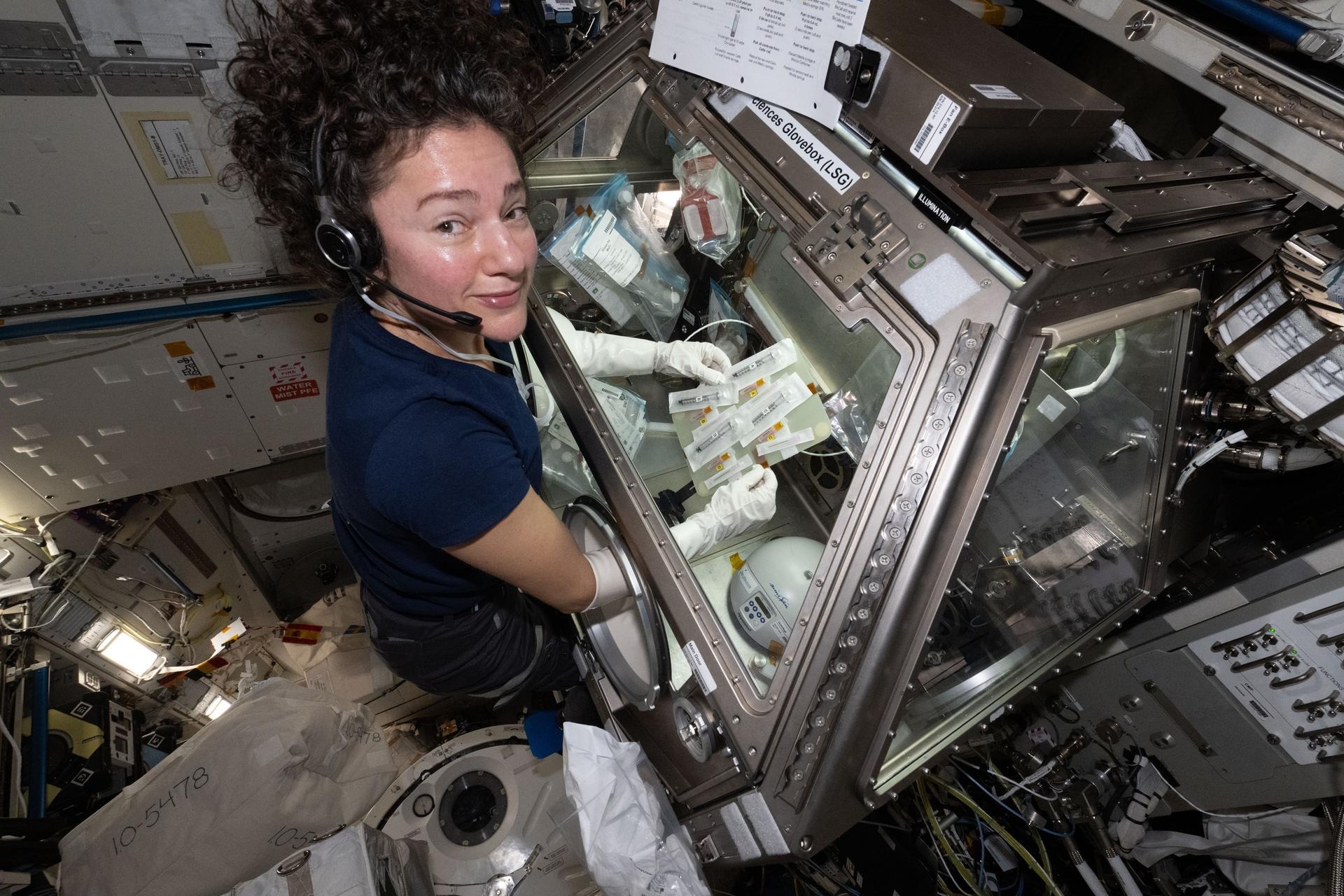
In early July 2023, the SpaceX Dragon CRS-34 capsule successfully returned to Earth after a mission packed with scientific experiments and research conducted aboard the International Space Station (ISS). This mission marked the 34th commercial resupply flight by SpaceX for NASA and played a crucial role in advancing fundamental research that could open new horizons in fields such as medicine, biology, physics, and material sciences.
The capsule carried back a vast array of samples and equipment used in the ISS laboratories, and scientists eagerly await the analysis of this data, which could provide essential insights into complex phenomena occurring in microgravity. The Dragon`s return was dramatic, concluding with a splashdown in the Pacific Ocean, the final stage of this several-week-long mission.
The scientific context of these experiments is firmly rooted in the ability to study materials and processes without the interference of Earth`s gravity. In microgravity conditions, cells and molecules can behave differently, and studying these changes offers new perspectives, such as understanding cellular development, fluid dynamics, or crystal growth. These findings can directly impact the development of treatments for diseases, improvement of industrial materials, or even the nutrition of future space explorers.
A key highlight of the CRS-34 mission was the transport of experiments investigating how the human microbiome adapts to space environments and how microgravity affects tissue regeneration. The capsule also carried novel materials tested under extreme conditions, aimed at observing their stability and durability. This knowledge may lead to new technologies in spacecraft design or medical equipment.
The significance of these missions lies not only in returning theoretical data but also in bringing back physical samples that can be analyzed with advanced instruments. For instance, analyzing biological samples on Earth allows scientists to detect nuances that may go unnoticed when studying the phenomena directly in space or remotely. This strengthens the link between space research and practical applications.
For astronomy and astrophotography enthusiasts, the Dragon capsule`s return is a spectacular technological event. Stunning images captured during the vehicle`s reentry into Earth`s atmosphere — showcasing the fiery braking and debris dispersion — have produced breathtaking photos and videos that inspire future generations to explore the cosmos.
In the long run, missions like SpaceX CRS-34 enhance the ability of countries to conduct research under space conditions, which is essential for preparing human expansion to the Moon and Mars. Continuous experimentation in low Earth orbit provides a perfect laboratory for developing the technologies and knowledge necessary for the next giant leap.
NASA, along with commercial partners such as SpaceX, once again demonstrates the effectiveness of public-private cooperation in space exploration, where fast and safe transport of scientific materials is key to success. The safe completion of the CRS-34 mission is a step forward in building a future where space science drives positive changes on Earth and beyond.
In conclusion, the Dragon CRS-34 return marks a critical stage in space research, bringing to Earth laboratories materials and data that will revolutionize our understanding of the universe and the practical use of discoveries made from low Earth orbit. As technical as this subject may seem, it connects us more closely to the cosmos and opens the doors to a future where humans will live and explore beyond the boundaries of our planet.
Source: NASA