
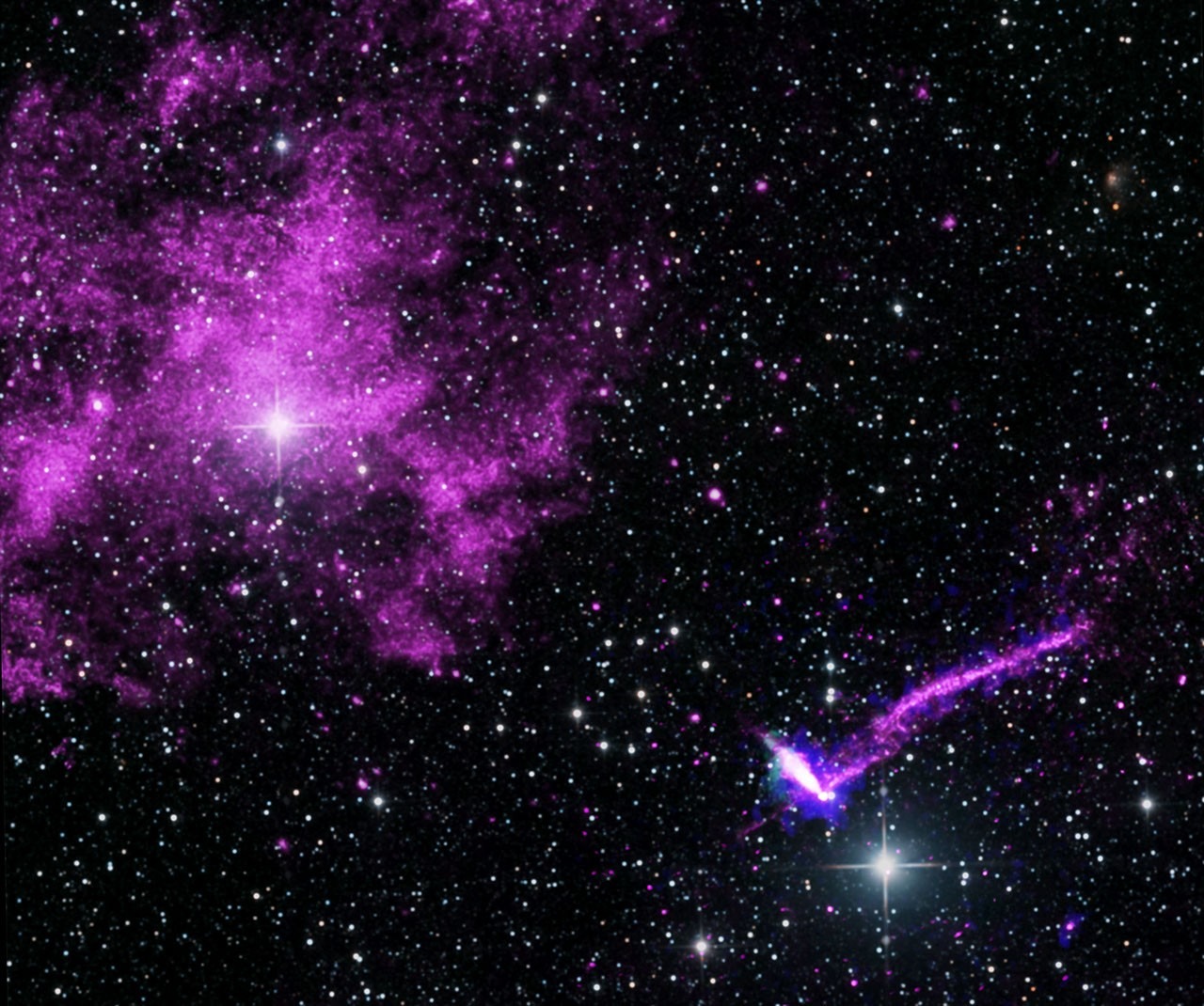
For the first time in history, scientists have achieved a direct measurement of the magnetic fields surrounding a pulsar using NASA`s Imaging X-ray Polarimetry Explorer (IXPE) space telescope. This groundbreaking study focuses on PSR J1101−6101, a pulsar famously known as the `lighthouse pulsar` because of its sharply defined X-ray beams that shine through space much like a lighthouse beacon cutting through the darkness.
Pulsars are incredibly dense neutron stars born from the explosive deaths of massive stars in supernova events. They spin at incredible speeds and emit beams of electromagnetic radiation that sweep across the cosmos with astonishing regularity. PSR J1101−6101 serves as a fascinating specimen, located thousands of light-years away, emitting precisely timed X-ray pulses that until now had been analyzed only through indirect methods. The observations conducted by IXPE have opened an unprecedented window into the true magnetic properties of this cosmic lighthouse.
Understanding pulsars` magnetic fields is vital to decoding the extreme physical phenomena occurring near these objects, including particle acceleration and radiation generation. Previously, these magnetic fields were explored mainly through theoretical models and variations in brightness, without direct measurements of X-ray polarization. IXPE is the first mission to detect and analyze the polarization of X-rays emitted by a pulsar, providing crucial insights into the orientation and strength of its magnetic fields.
The findings revealed that the magnetic field around PSR J1101−6101 is complex in structure, likely shaped by the dynamic processes in the magnetosphere and interactions with the interstellar medium. Once again, these discoveries highlight how much remains to be understood about neutron stars and the extreme environments that surround them.
The images collected by IXPE combine X-ray observations with optical and radio data to provide a comprehensive view of this pulsar. Such a magnetic field mapping tool offers scientists a valuable resource to unravel the cosmic mechanisms subtly yet profoundly influencing our galactic environment.
This advancement proves NASA`s remarkable technological contributions to astronomy, marking a new phase of exploration by X-ray polarimetry. The IXPE mission continues to yield fascinating insights about neutron stars, black holes, and other exotic cosmic phenomena, helping the scientific community better understand the origins and behavior of matter under extreme conditions.
For astronomy enthusiasts and astrophotographers alike, this achievement presents both a challenge and an inspiration, inviting ongoing exploration of the night sky with increasingly sophisticated instruments and ever deeper insight.
Source: NASA