

- name: Comet C/2025 A6 (Lemmon)
- optimal viewing/imaging period: October – early November 2025
About Comet C/2025 A6 (Lemmon)
Comet C/2025 A6 (Lemmon) was discovered on January 3, 2025, and became visible to the naked eye or with binoculars during October–November 2025. The optimal imaging period was October 2025.
Comet C/2025 A6 (Lemmon) has an orbital period of approximately 1300 years. It made its closest approach to Earth on October 21, 2025, at a distance of about 89 million km (0.6 AU), and reached perihelion (closest point to the Sun) on November 8, 2025. Real-time positional data can be found at https://theskylive.com/c2025a6-info.
The comet provided an exceptional celestial display, featuring both a dust tail and a highly visible ion tail. The ion tail was particularly spectacular, changing its shape within minutes. For this reason, the best way to capture the tail was by using short exposures of a few seconds (10–30 seconds per frame).
I photographed Comet C/2025 A6 (Lemmon) shortly after sunset, towards the west, on October 24, 27, and 29 from Orlești (Vâlcea, Bortle 4–5), using an EQ6-R Pro mount, a SW Esprit 100ED telescope with a TS-Optics reducer (@443mm, f/4.4), an ASI 533MC camera (gain 101), a Baader UV/IR filter, ASIAIR+, 2 astro batteries, and 2 dew heaters.
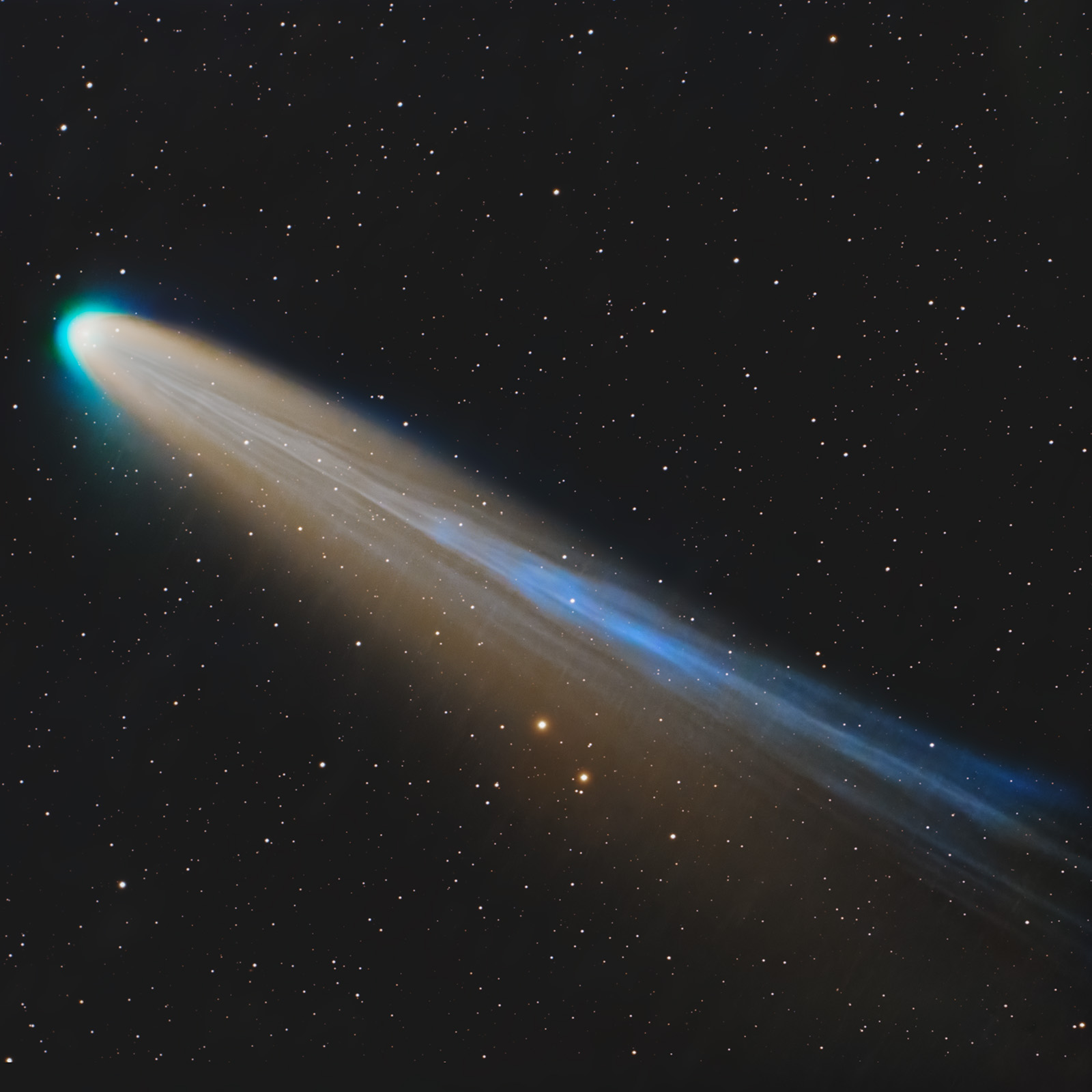
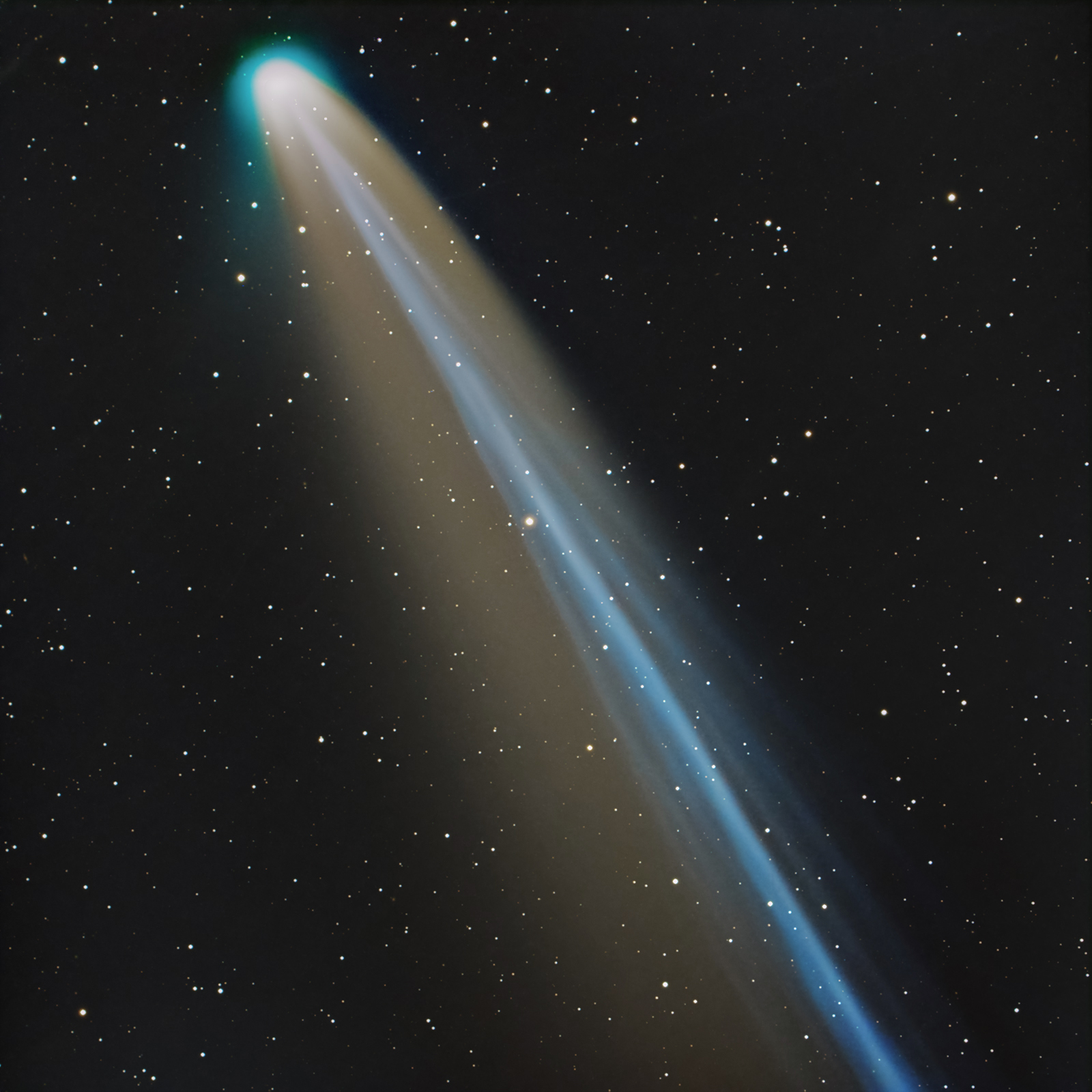
Three images from October 29, 2025 – Comet C/2025 A6 (Lemmon)
Integration time: 30 minutes (92 frames x 20 seconds).
Processing 1

Processing 2
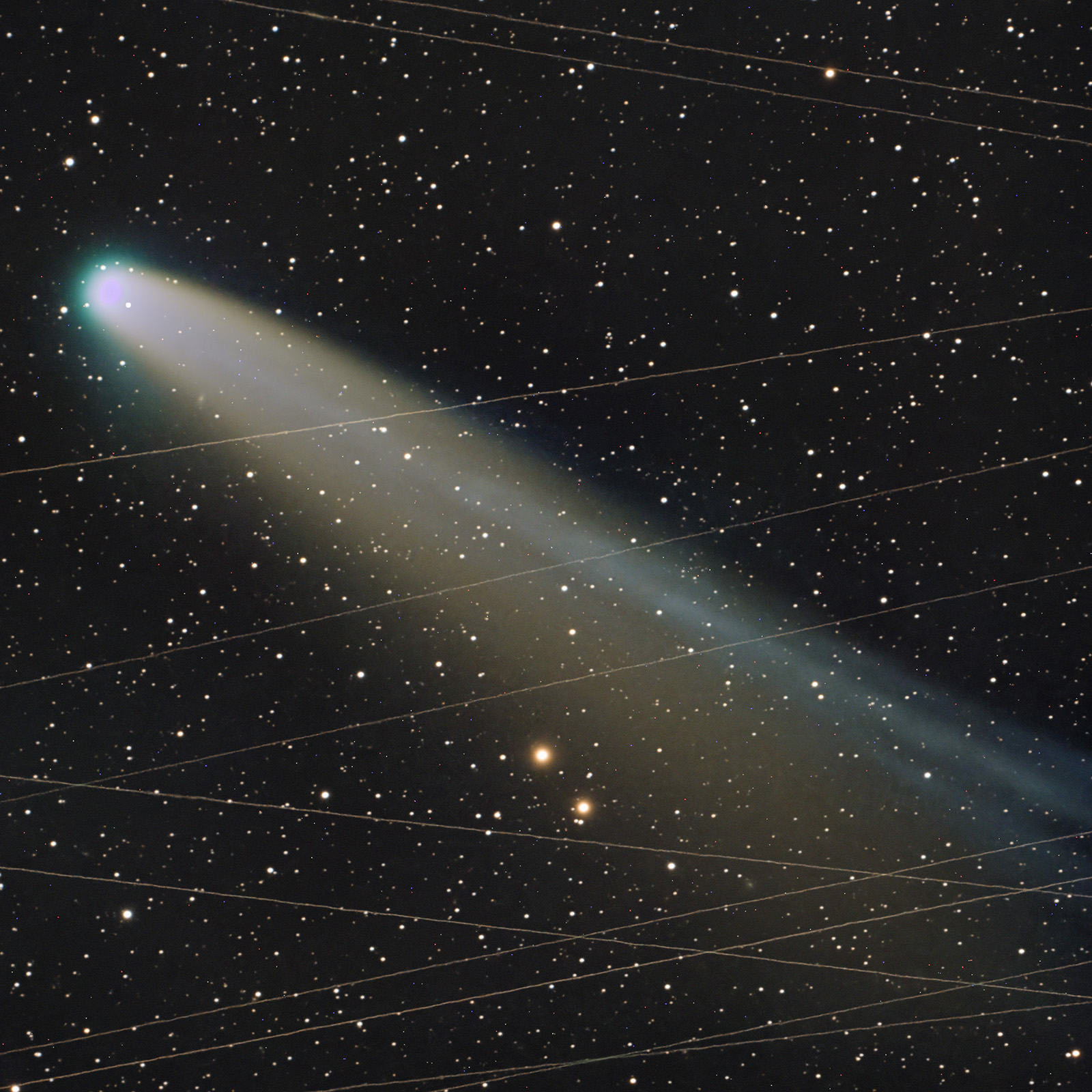
Single 10-minute frame, without calibration frames
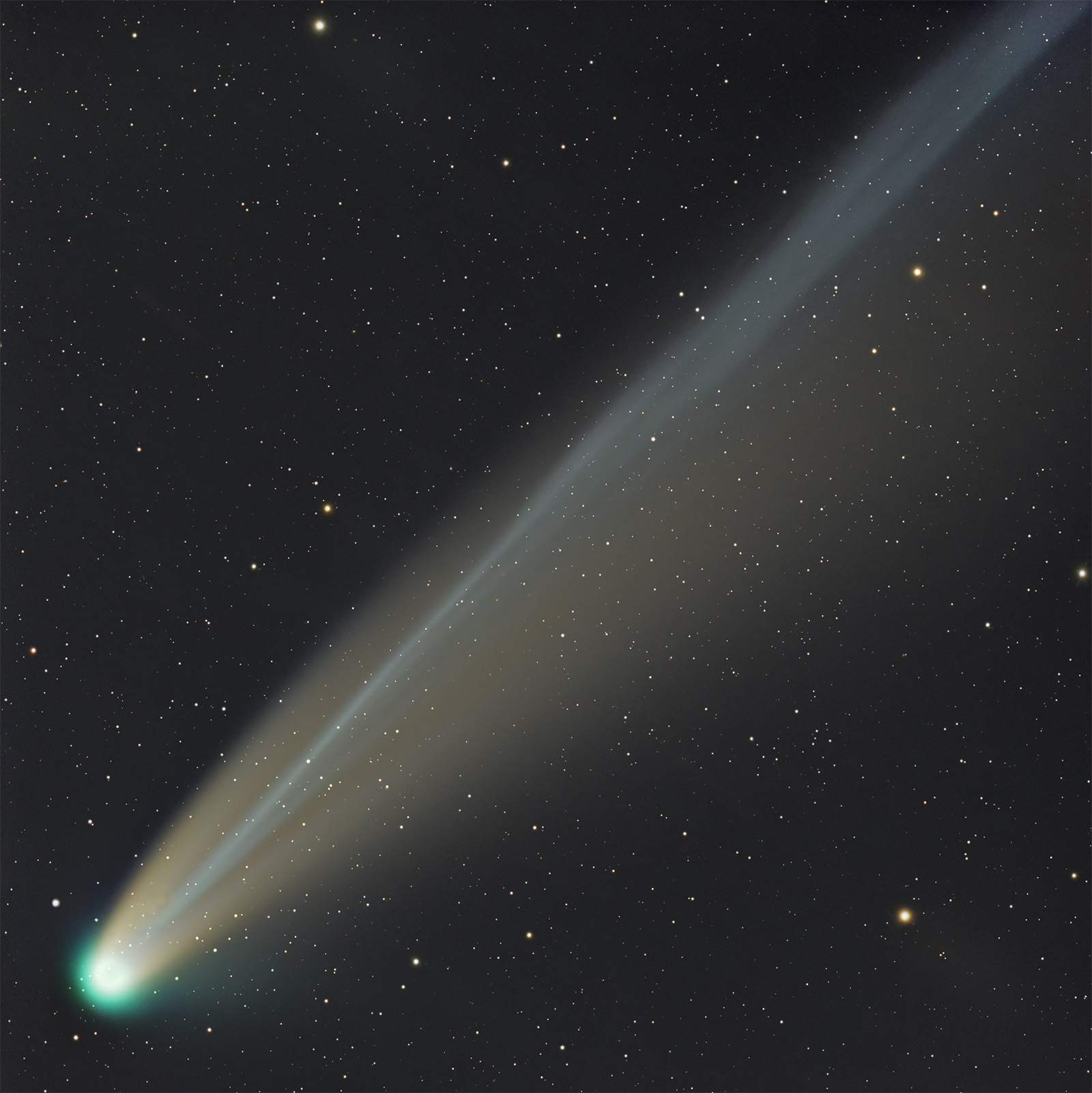
Images from October 27, 2025 – Comet C/2025 A6 (Lemmon)
1. Integration time: 60 minutes (20 frames x 3 minutes).
2. Single 3-minute frame of Comet C/2025 A6 (Lemmon) from October 27, 2025.
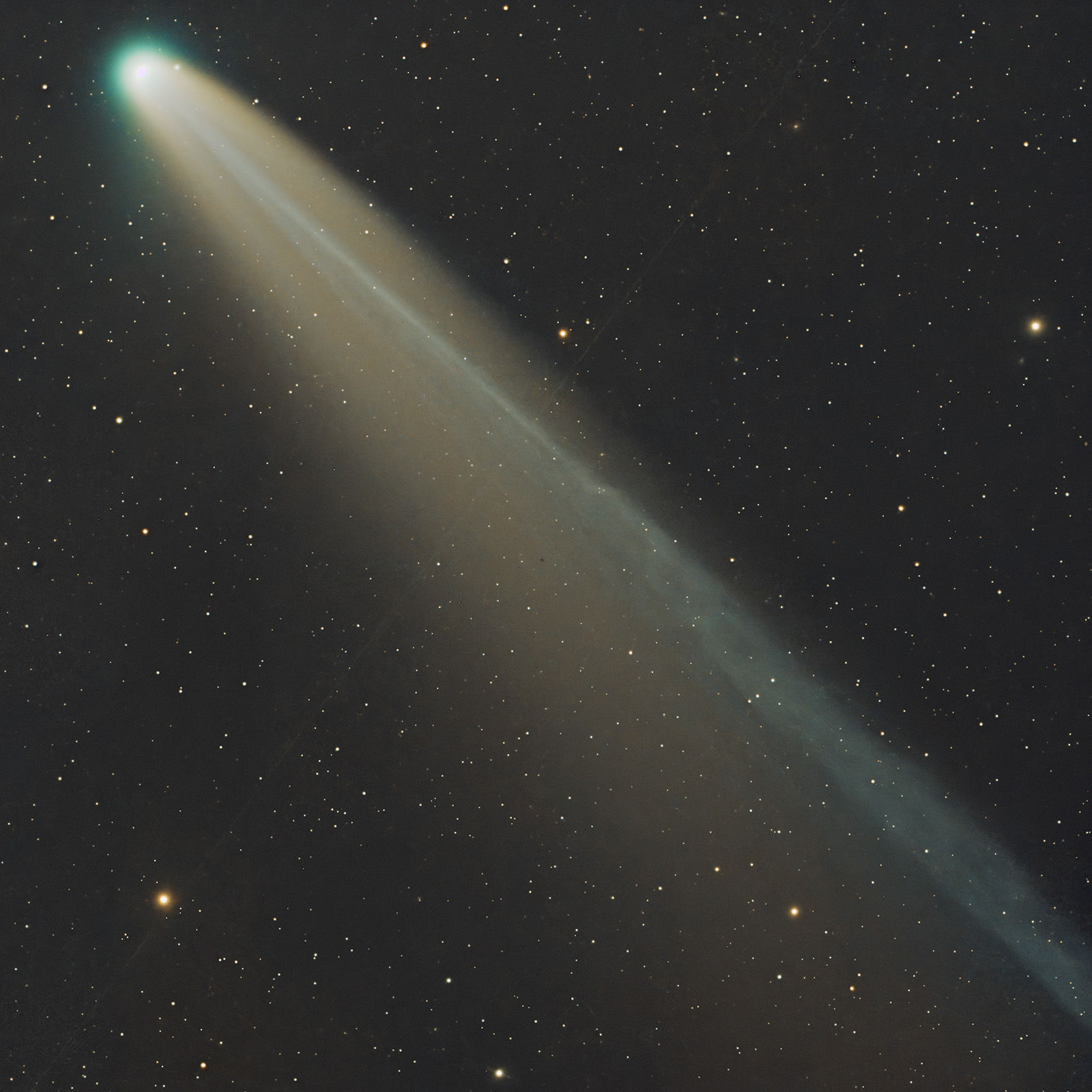
Images from October 24, 2025 – Comet C/2025 A6 (Lemmon)
Integration time: 48 minutes (16 frames x 3 minutes).

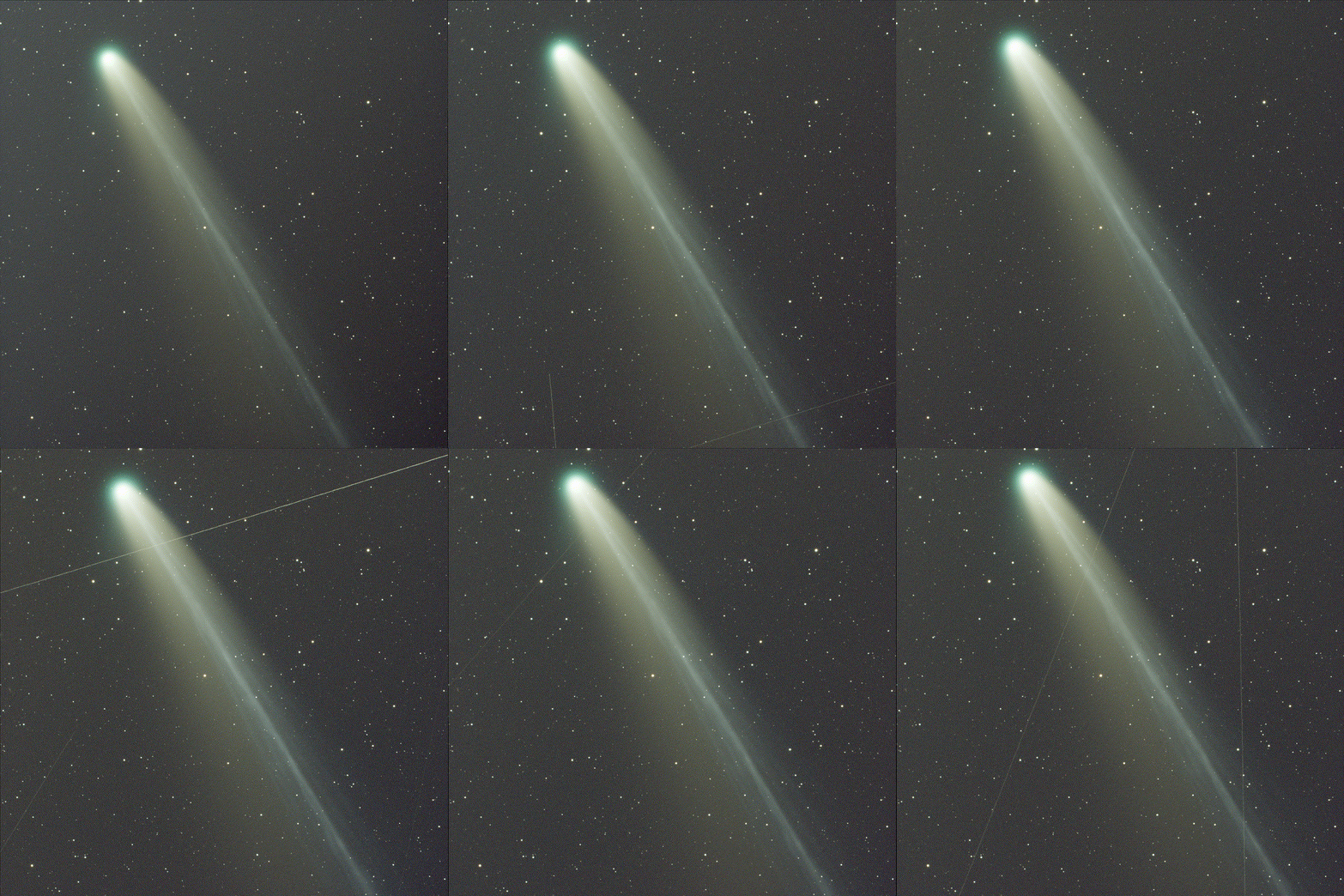
Motion of Comet C/2025 A6 (Lemmon) among the stars over 50 minutes, on October 29, 2025
Useful tips for photographing Comet C/2025 A6 (Lemmon) and processing the images
Comets that are bright enough to be visible to the naked eye can be relatively easy to photograph. You can use any camera (DSLR / mirrorless / etc.) with a lens chosen depending on the apparent size of the comet in the sky and the sensor size of your camera. Regardless of the lens used, you will likely capture a photogenic result, even if you frame only the comet’s head and a small portion of its tail, as I did.
Ideally, you should use a tracking mount to follow the motion of the stars and allow longer exposures of tens of seconds or even minutes. However, if you do not have one, you can use short exposure times of a few seconds (5–10 seconds) and then stack the frames using specialized software. A simple PixInsight tutorial can be found here: Updated 2023! Easy Comet Stacking in PixInsight - VisibleDark
In short, the steps are:
1. Stack the frames to generate the master image for the stars (initial alignment is done on the stars, not the comet; the mount tracks the stars, not the comet). Extract the stars from this image and keep them for the final step.
2. Perform alignment on the comet using the frames obtained in the previous step (from the ../debayered folder) and save the aligned frames into a new folder.
3. From the frames in this new folder, extract the stars and save the starless images into another folder.
4. Integrate the resulting images to obtain the starless frame containing only the comet. Process this image.
5. Overlay the stars saved in step 1 onto the final processed comet image.