
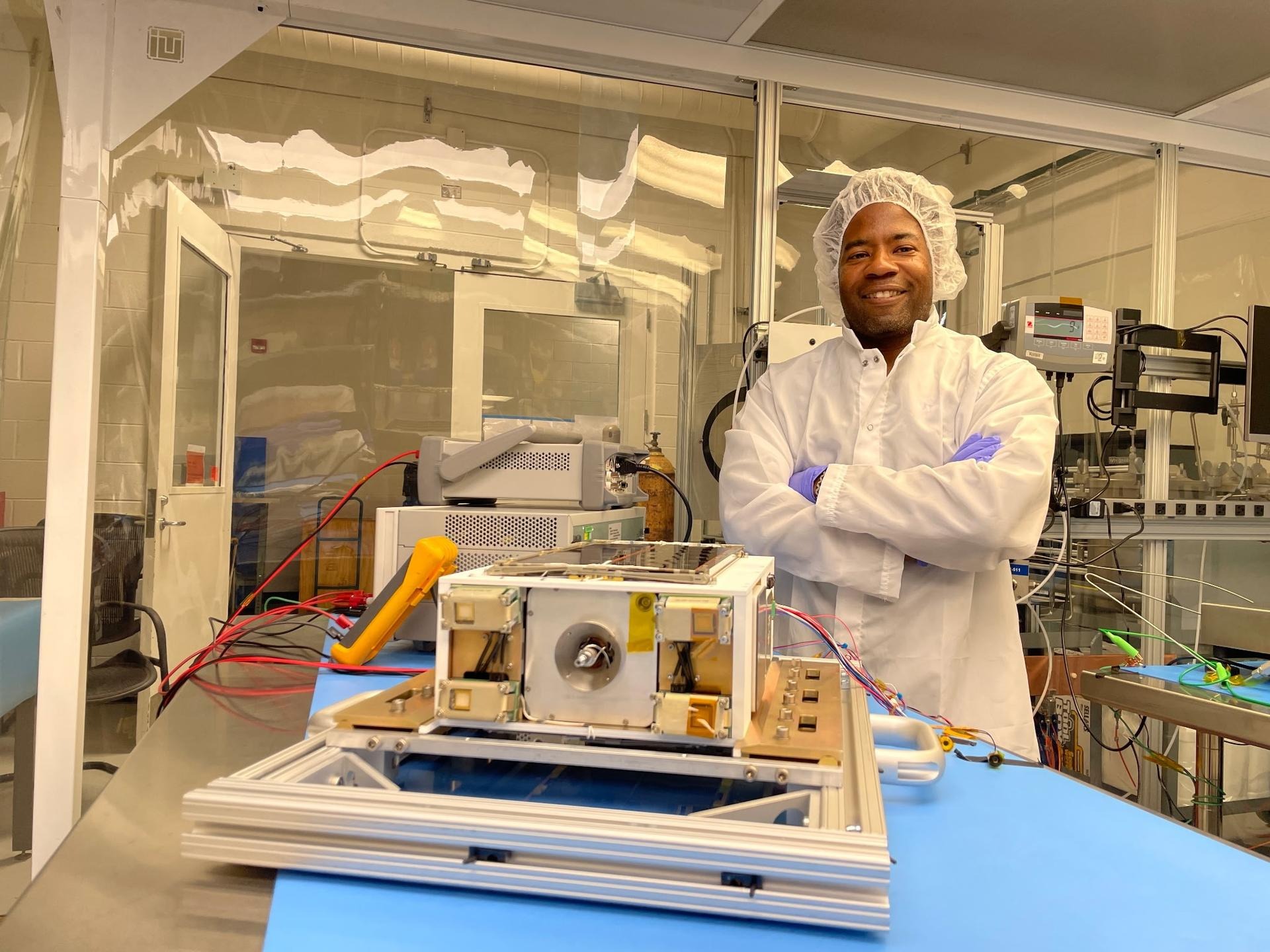
CubeSats are small, compact satellites designed for space exploration in an innovative and cost-effective manner. Over recent years, these miniature spacecraft have gained increasing importance due to their reduced costs and flexibility in conducting space research. NASA recently announced the completion of a series of rigorous tests for a particular CubeSat called ASCENT Propulsion, which uses a dual-mode propulsion system, preparing it for its upcoming mission in space.
ASCENT Propulsion is a 6-U CubeSat, meaning its dimensions are roughly 10 x 20 x 30 cm. It features a modular structure that allows the integration of sophisticated technologies within a limited volume. The significance of this project lies in its dual-mode propulsion system, which offers major advantages in maneuverability and fuel efficiency—two crucial factors for small space missions.
Such CubeSats are critical for testing future technologies that can aid exploration of distant regions in our solar system or serve as practical instruments for scientific observations from Earth orbit. The dual-mode propulsion system typically combines two types of thrusters: one optimized for fine maneuvers and the other for larger orbital adjustments, thereby enhancing control capabilities in space.
Before launch, ASCENT underwent a series of stringent trials to ensure the resilience of its components. Among these were spin tests, thermal vacuum tests, and leak tests. Spin tests verify the stability of the satellite while it spins in orbit, ensuring that its structure and systems withstand the centrifugal forces encountered during motion.
Thermal vacuum testing subjects the CubeSat to extreme temperature changes and a vacuum environment designed to simulate real conditions in space. This assessment is critical to validate whether the electronic equipment and structural elements operate correctly without an atmosphere. Leak tests aim to detect any escape of propellants or gases used in the propulsion systems, since any loss in space could severely impair the mission`s performance and safety.
Rigorous testing is integral to the satellite development process, particularly for CubeSats implementing novel technologies like ASCENT. By conducting these evaluations, NASA aims to demonstrate the reliability of this innovative dual-mode propulsion system, which could pave the way for much more efficient missions with extended operational autonomy.
In the long term, dual-mode propulsion could revolutionize how CubeSats are managed, from optimized trajectories to enhanced capabilities in avoiding space debris and fine orbital adjustments. Such technologies are especially promising for more complex missions, such as lunar exploration or asteroid studies, where precision and maneuvering flexibility are paramount.
Astronomy and astrophotography enthusiasts will likely find these tiny space explorers fascinating, especially given their potential to gather valuable data and unique space imagery accessible even to smaller teams or individuals thanks to their compact sizes and affordable costs.
The next step for ASCENT is its official space launch, which will allow real-world testing of its dual-mode propulsion system and demonstrate its promised performance. Should these tests succeed, we may well witness a new era of CubeSats with significantly enhanced capabilities, leading to major positive impacts in advancing space knowledge and technology.
In conclusion, ASCENT Propulsion not only represents a key piece in the puzzle of space exploration but also a vital step toward miniaturizing and optimizing satellite technology, shaping the future of astronomical research and both commercial and scientific space applications.
Source: NASA